S&P 500 — US Large Cap Index
 FTSE 100 — UK Blue Chips
 Euro Stoxx 50 — Eurozone Leaders
 DAX 40 — German Equities
 CAC 40 — French Market Index
 Nikkei 225 — Japan Benchmark
 Hang Seng — Hong Kong Index
 Shanghai Composite — China Mainland
 ASX 200 — Australian Market
 TSX Composite — Canada Index
 Nifty 50 — India Large Cap
 STI Index — Singapore Market
 KOSPI — South Korea Index
 Bovespa — Brazil Equities
 JSE Top 40 — South Africa Index
 IPC Index — Mexico Market
SpaceX Isn’t Giving Up – What Could Stop the buying pressure of Musk’s “Stellar” Company?


SpaceX shares (SPCX.US) continued their upward trend on Monday, retesting the recent local highs of 12 August. A sharp rebound from the $106 level and growing institutional involvement have enabled the market to successfully absorb the recent first tranche of share releases; however, the coming months may pose a more serious test for the company’s elevated valuations.
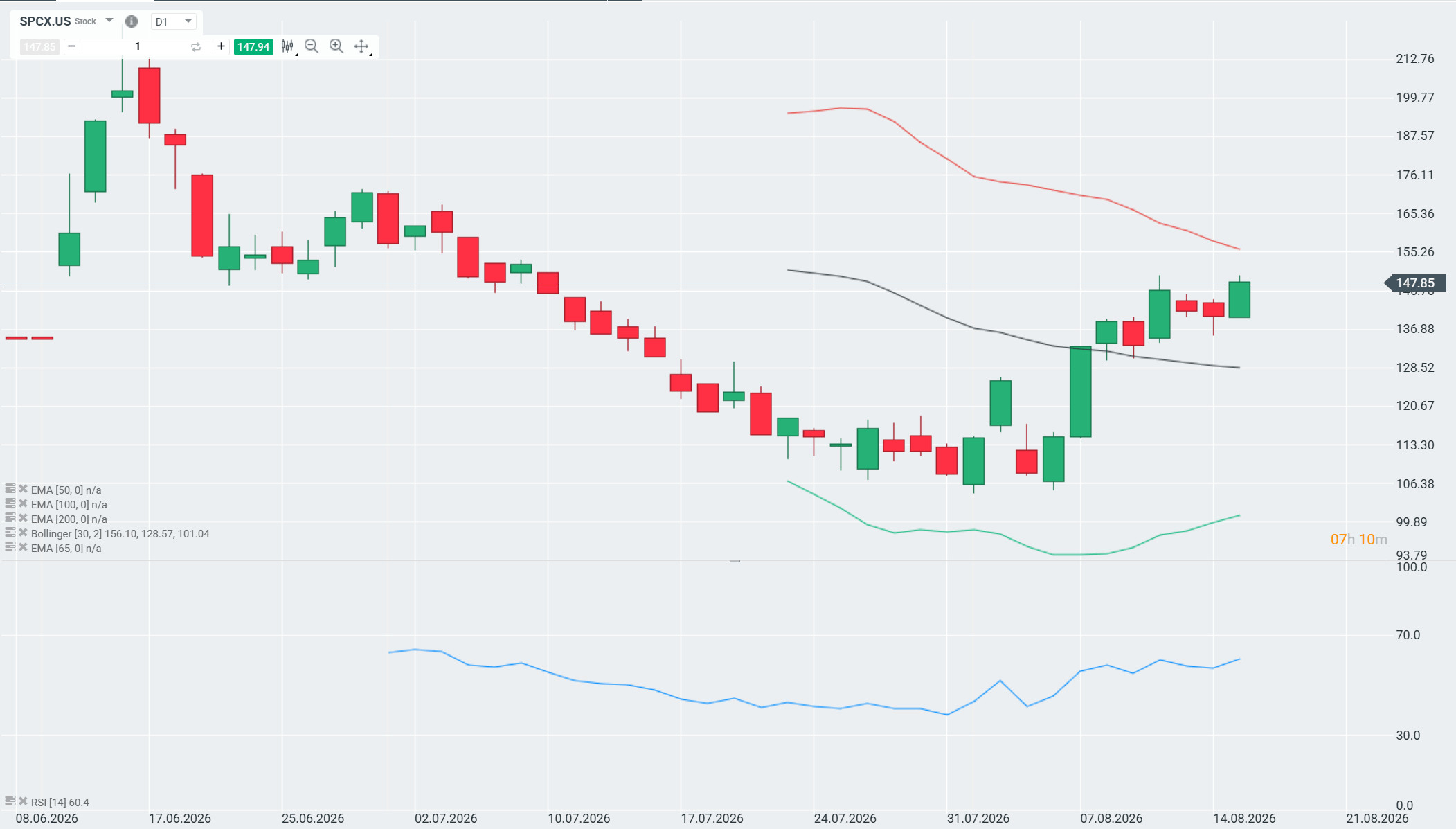
The company’s share price chart confirms strong upward momentum following the summer correction. The company’s shares are once again approaching a key resistance level of around USD 147. The return to steady gains is largely driven by reports of a significant inflow of capital from the market’s largest players. Source: xStation According to the latest regulatory filings, Harvard Management has taken a stake in SpaceX worth US$2.2 billion (approximately 12.94 million shares), which currently accounts for more than half of its disclosed US equity portfolio. Alongside Harvard, other institutional investors have also accumulated significant stakes, including Intesa Sanpaolo (approximately $966 million) and the University of California (approximately $1 billion). The current share price remains comfortably above the IPO price ($135), valuing the entire company at around $1.85 trillion.
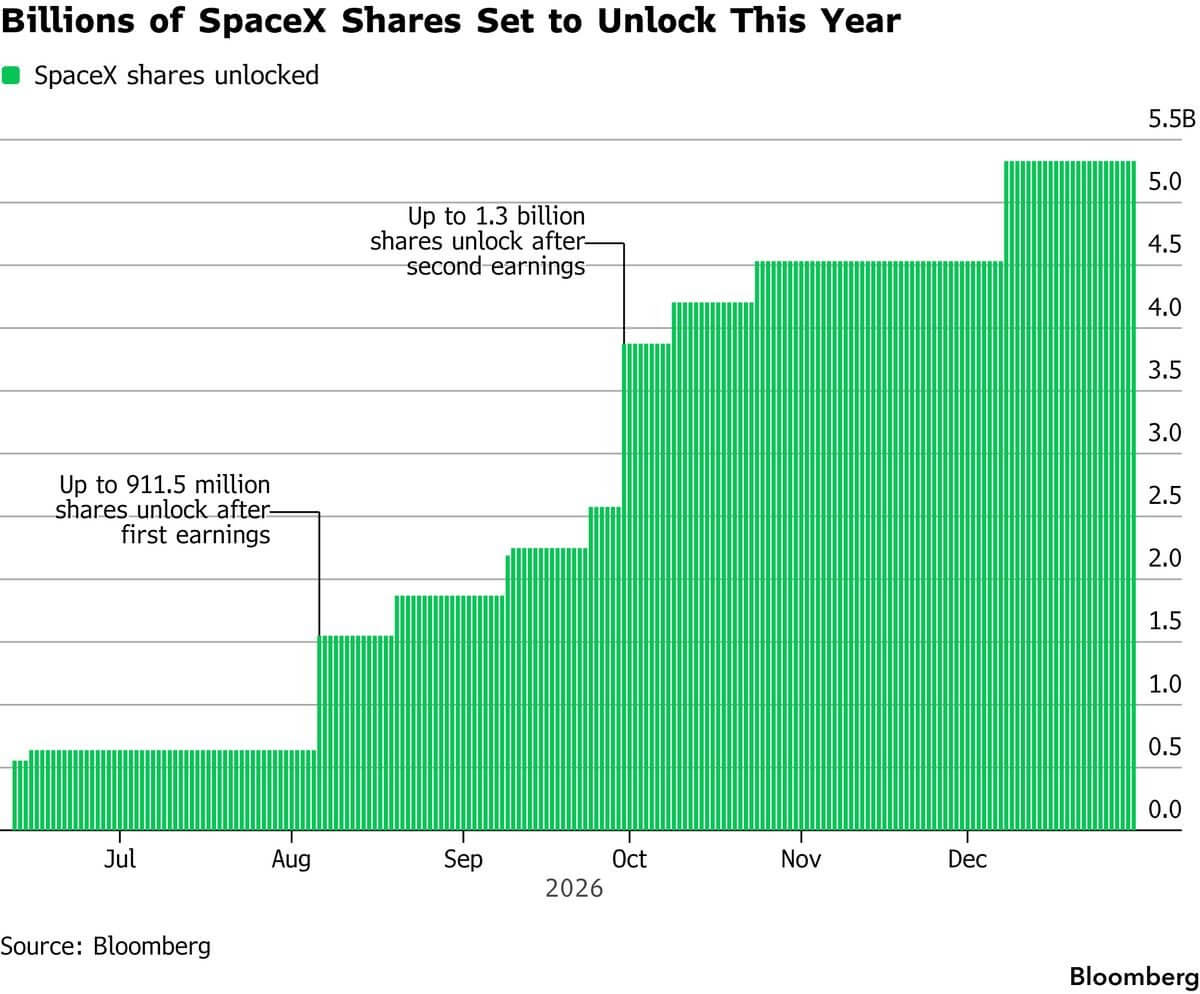
The schedule for the expiry of lock-up periods for early shareholders remains a key factor determining the share price’s performance in the coming quarters. The market has already seen the first large tranche of shares released (up to 911.5 million). Contrary to the fears of some market participants, this event did not trigger supply pressure. On the contrary, it provided the backdrop for a dynamic rebound from support levels around US$106, recorded just before the expiry of the lock-up period. Source: Bloomberg Financial Lp However, analysts are raising questions about the market’s reaction to subsequent tranches. The table above sets out the schedule for upcoming releases, the largest of which – potentially involving up to 1.3 billion shares – will take place following the publication of the second financial report (around October).