S&P 500 — US Large Cap Index
 FTSE 100 — UK Blue Chips
 Euro Stoxx 50 — Eurozone Leaders
 DAX 40 — German Equities
 CAC 40 — French Market Index
 Nikkei 225 — Japan Benchmark
 Hang Seng — Hong Kong Index
 Shanghai Composite — China Mainland
 ASX 200 — Australian Market
 TSX Composite — Canada Index
 Nifty 50 — India Large Cap
 STI Index — Singapore Market
 KOSPI — South Korea Index
 Bovespa — Brazil Equities
 JSE Top 40 — South Africa Index
 IPC Index — Mexico Market
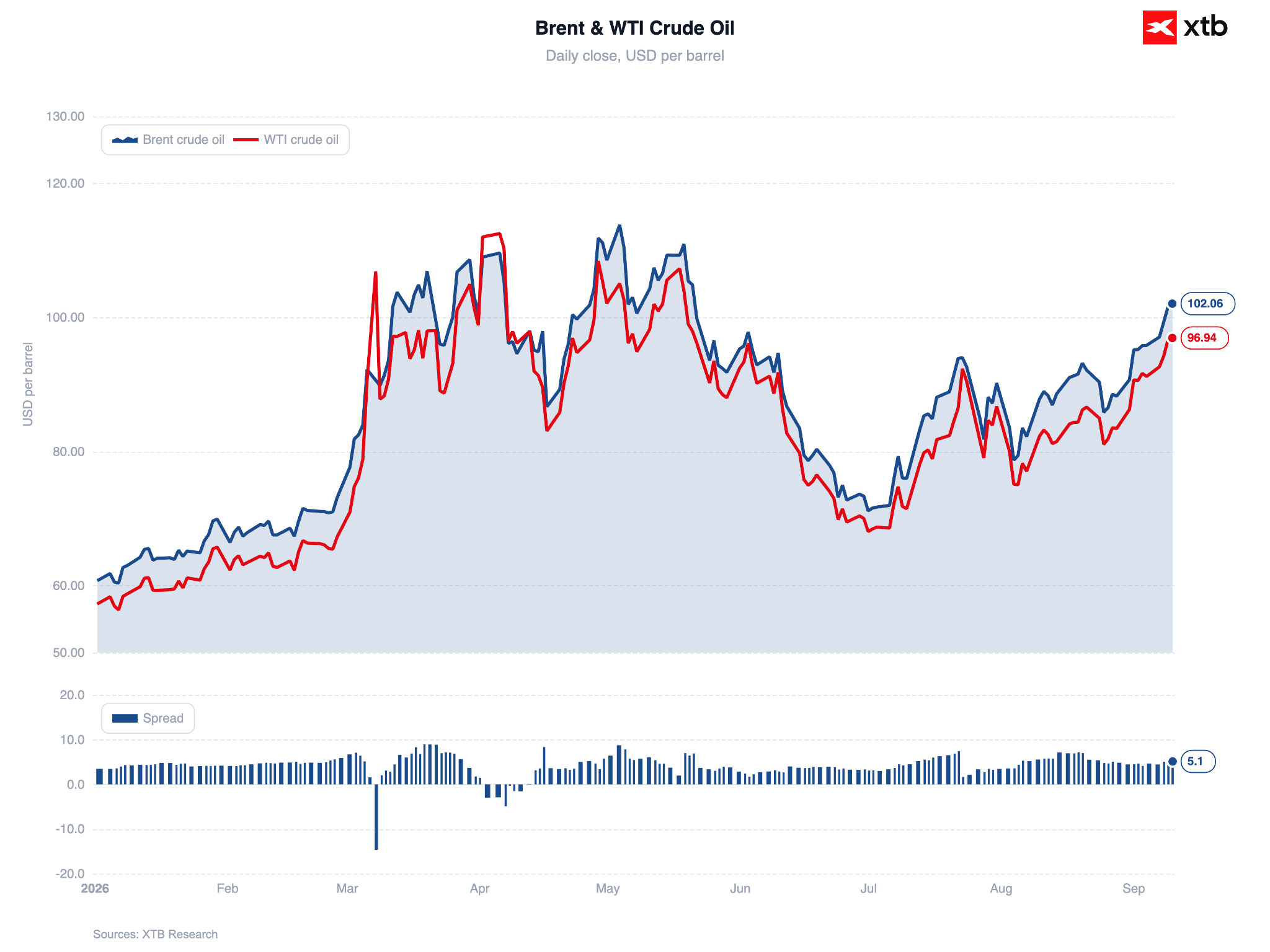
The European Central Bank is highly likely to raise interest rates by 25 bps today. What does this decision mean for the markets? A sharp rise in energy commodity prices in mid-July led to a hawkish repricing in the market (representing an increase in expectations of tighter monetary policy). Figure 1: Brent and WTI Crude Oil (2026)
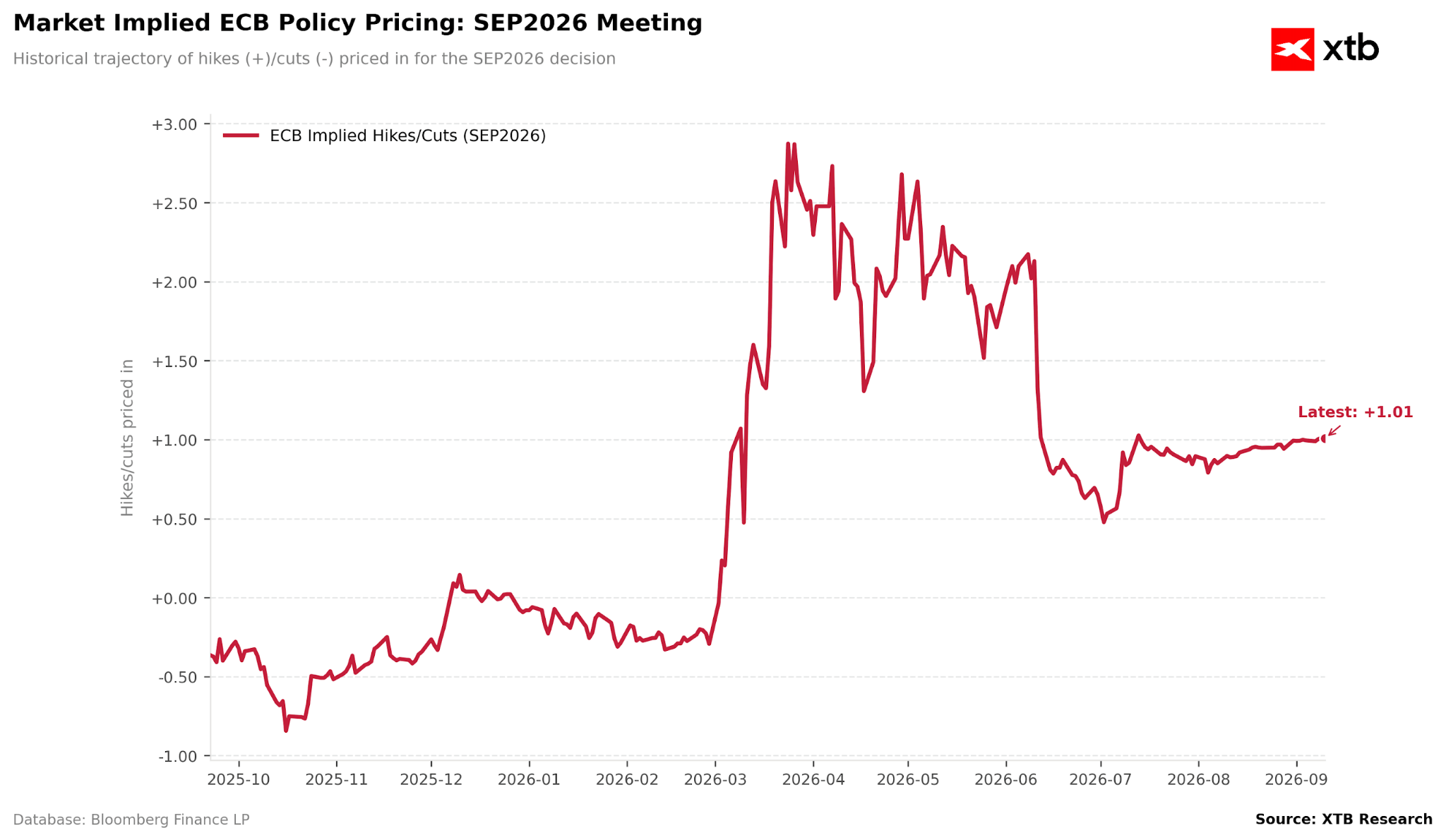
Source: XTB Research, 10.09.2026 For nearly two months, the market has been almost certain that today’s European Central Bank meeting will conclude with an interest rate hike. This move is currently fully priced in – any other decision would be a minor sensation for investors. Figure 2: Shift in Market Expectations for Rate Changes Ahead of the October Meeting (2025 – 2026)
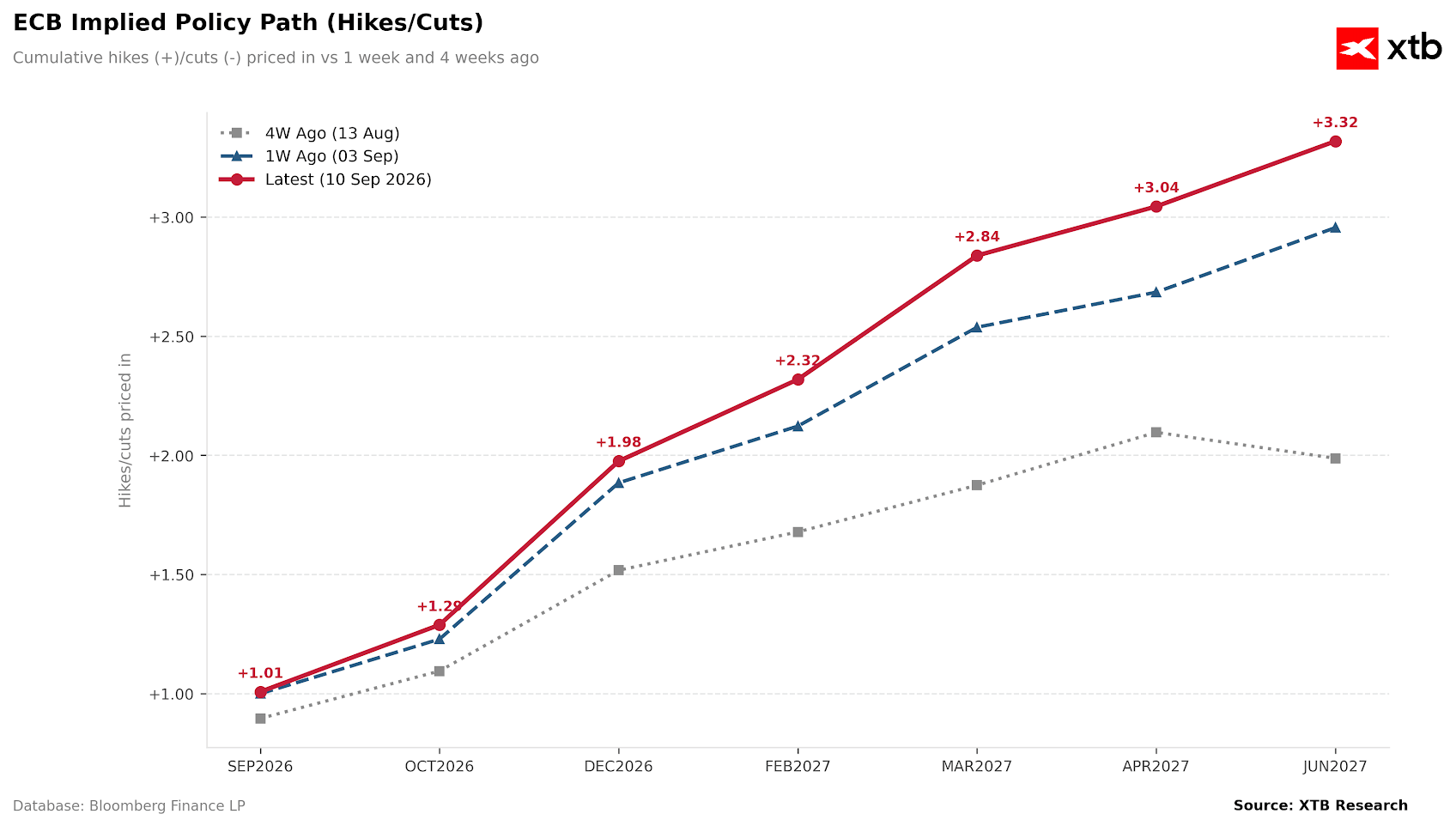
Source: Bloomberg, 10.09.2026 These expectations have been reinforced by highly intensified hawkish communications from Governing Council members. Many of them have recently pointed out that until the main interest rate exceeds 2.5%, it is difficult to speak of a restrictive monetary policy. Those speaking in this tone included Philip Lane (Chief Economist of the ECB), Gabriel Makhlouf (Governor of the Central Bank of Ireland), and Gediminas Simkus (Governor of the Bank of Lithuania). At the forefront is the persistence of the inflationary shock caused by the war in Iran. In August, eurozone inflation reached 3.3%, its highest level in nearly three years. The headline figure has now remained above the ECB’s 2% target for six months. Proponents of rate hikes are also supported by the surprising resilience of the eurozone – despite rising energy costs, the European economy is performing better than expected, and robust GDP growth data for the second quarter of 2026 has prompted analysts to upgrade their full-year forecasts. Furthermore, hawks argue that structural factors, such as population ageing, deglobalisation, and a growing supply of safe assets in global capital markets, are pushing us towards higher rates (or rather, a higher neutral rate level). Today, investors will focus their attention on President Lagarde’s remarks, particularly those regarding the prospects of another rate hike in December. The market is already almost fully pricing in such a move. Figure 3: Market-Implied Path of ECB Interest Rates (2026 – 2027)
Source: Bloomberg, 10.09.2026 However, this does not mean that the path to further hikes will be smooth. The dovish faction is already expressing concern about over-cooling the economy, pointing out that core inflation remains at very subdued levels (2.4% in August). Crucial will be how the ECB chief assesses the persistence of the current energy shock – emphasis on this issue will be interpreted as a strong argument for another rate hike in December. The new macroeconomic projections will also attract interest. Analysts expect the 2027 inflation projection to be revised upwards by approximately 0.2-0.3 pp., which in our view would be a relatively minor adjustment. As a side note, speculation is growing over Lagarde’s potential early departure. The Frenchwoman is the leading candidate to take over as head of the World Economic Forum.