S&P 500 — US Large Cap Index
 FTSE 100 — UK Blue Chips
 Euro Stoxx 50 — Eurozone Leaders
 DAX 40 — German Equities
 CAC 40 — French Market Index
 Nikkei 225 — Japan Benchmark
 Hang Seng — Hong Kong Index
 Shanghai Composite — China Mainland
 ASX 200 — Australian Market
 TSX Composite — Canada Index
 Nifty 50 — India Large Cap
 STI Index — Singapore Market
 KOSPI — South Korea Index
 Bovespa — Brazil Equities
 JSE Top 40 — South Africa Index
 IPC Index — Mexico Market
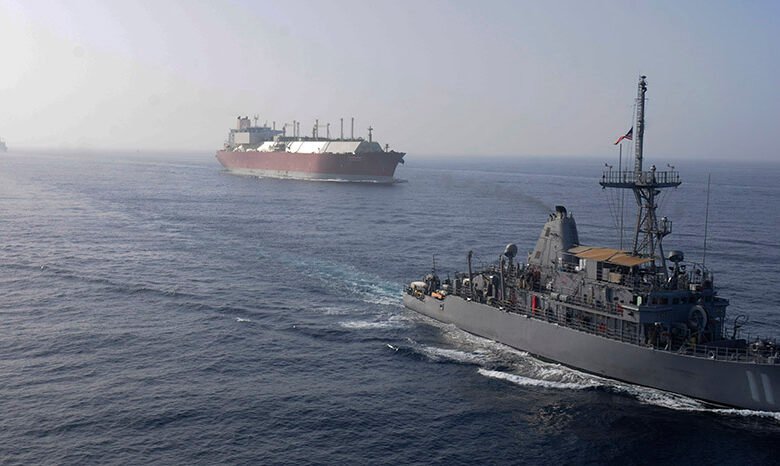
The risk of shipping in the Red Sea being paralyzed again has clearly increased along with the escalation of the conflict between Iran and the United States. According to Reuters sources, Tehran was reportedly to have asked Yemen’s Houthi movement to remain ready to close the Bab al-Mandab Strait if the United States attacked Iranian energy infrastructure.
This would mean expanding the conflict from the Strait of Hormuz to a second strategic transport route in the Middle East. In June, about 7.4 million barrels per day of crude oil and petroleum products were passing through the strait, which corresponds to roughly 7% of global production. This volume increased from about 4.2 million barrels per day in 2025, because some supplies from the region were redirected to routes bypassing the Strait of Hormuz (such as the “East-West” pipeline).
Existing and under-construction pipelines on the Arabian Peninsula
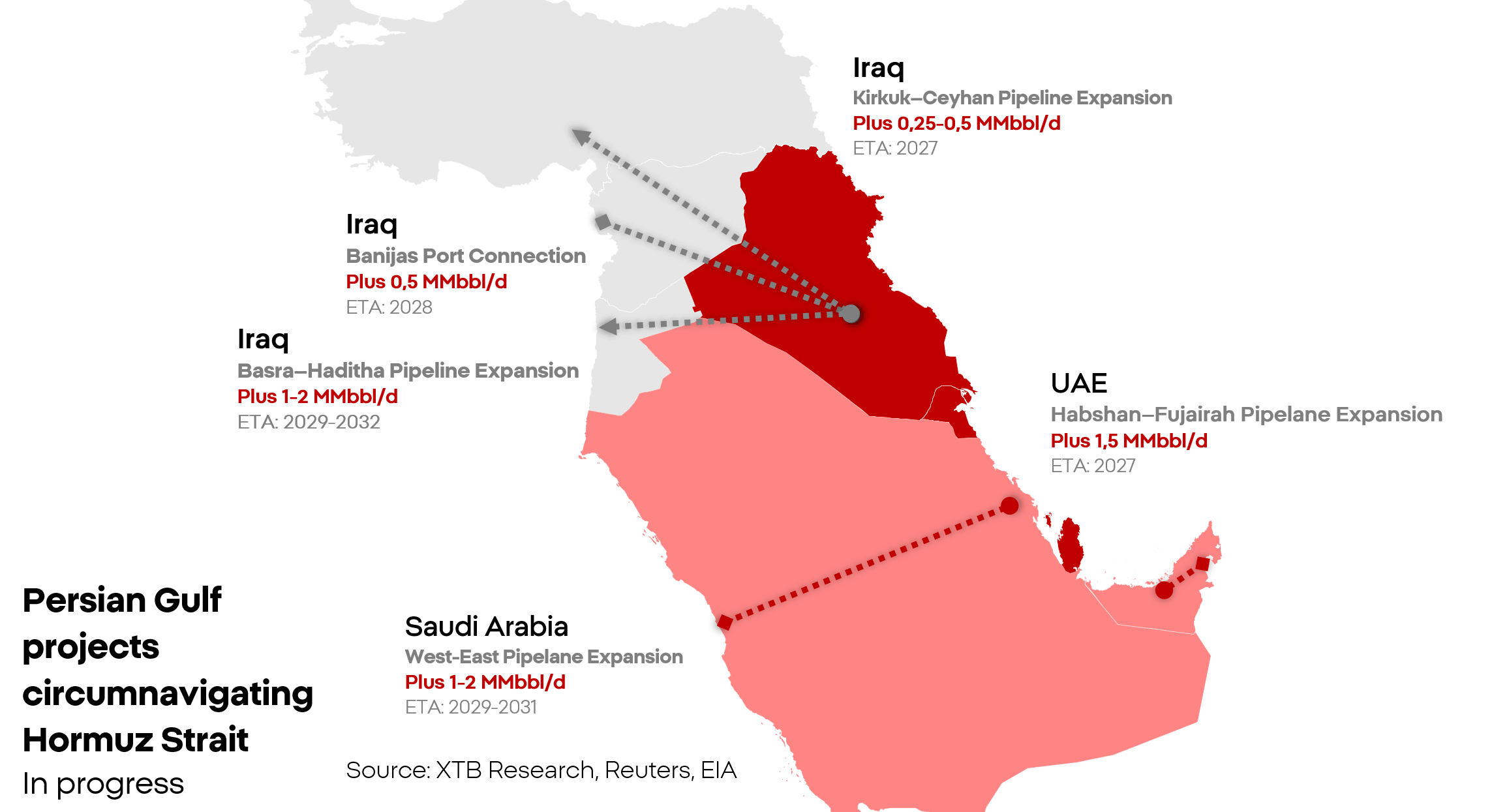
The importance of the Red Sea increased especially after shipping in the Persian Gulf was limited. Saudi Arabia can transport some crude via pipeline to terminals on the Red Sea, bypassing Hormuz. The Red Sea has become an alternative whose sudden loss would be devastating for the oil supply situation. Under “normal” conditions, the corridor running through the Red Sea and the Suez Canal handled about 12–15% of global trade. However, traffic remains significantly below the historical average from before the Houthi attacks began in autumn 2023. Daily shipping volumes through Bab al-Mandab and the Suez Canal remain about 60% lower than before the attacks began.
A large share of shipowners still choose the longer route around the Cape of Good Hope. The Houthis do not need to physically control the strait to cause its economic closure, which they do not have the means to do. Regular missile and drone attacks, the threat of mines, or damage to a large vessel would be enough. Rising insurance costs and the risk of losing a ship and crew may lead shipowners to abandon voyages even if the actual threat is low.
Experience from 2023–2025 shows that military protection of the route does not guarantee a return of commercial shipping. The United States and European countries shot down hundreds of missiles and drones and carried out countless strikes on Houthi positions. Despite this, as many as four ships sank, and most major shipping companies continued to avoid the region. The declaration itself is alarming not only because of the Houthis. If Iran has genuine concerns about its energy infrastructure, that means the risk of a major escalation in the region is hanging in the air, which will be reflected in oil prices.
Technical analysis: OIL (D1)
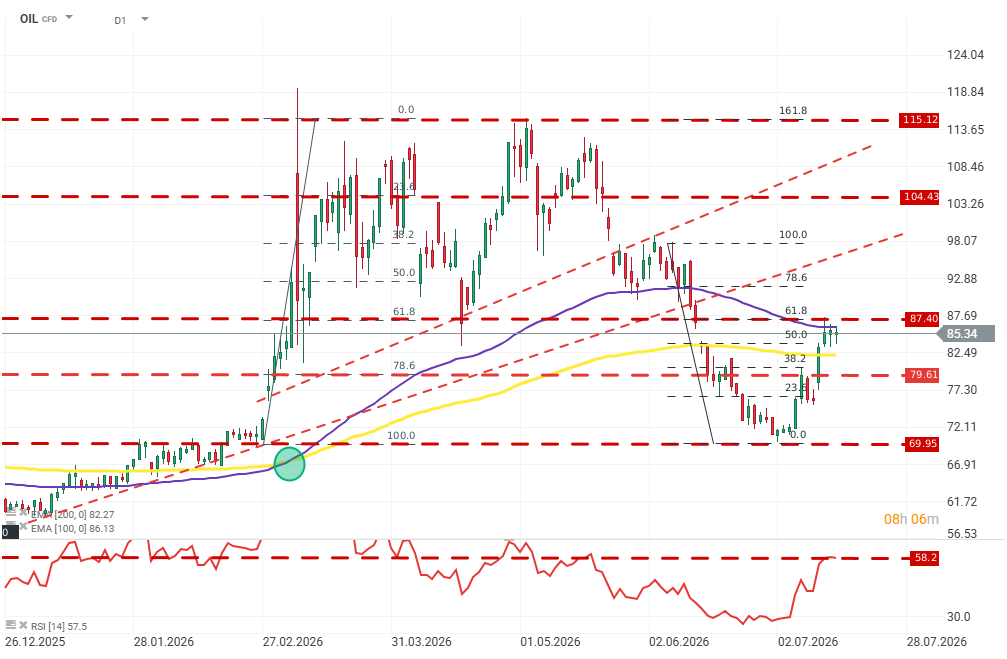
Oil prices bounced off local lows and quickly returned above the 200-day EMA, crossing the downward trendline, which indicates strength on the demand side. Fibonacci retracements suggest the next significant resistance is not until USD 92. A potential increase may also be supported by the still-rising momentum of the 100- and 200-day EMAs after generating a “golden cross” in March. Source: xStation5