S&P 500 — US Large Cap Index
 FTSE 100 — UK Blue Chips
 Euro Stoxx 50 — Eurozone Leaders
 DAX 40 — German Equities
 CAC 40 — French Market Index
 Nikkei 225 — Japan Benchmark
 Hang Seng — Hong Kong Index
 Shanghai Composite — China Mainland
 ASX 200 — Australian Market
 TSX Composite — Canada Index
 Nifty 50 — India Large Cap
 STI Index — Singapore Market
 KOSPI — South Korea Index
 Bovespa — Brazil Equities
 JSE Top 40 — South Africa Index
 IPC Index — Mexico Market
The Korean index has fallen by ~40% from its peak . From a historical perspective, this decline is not the largest and is certainly not the longest. Is there any chance of reversing the trend?
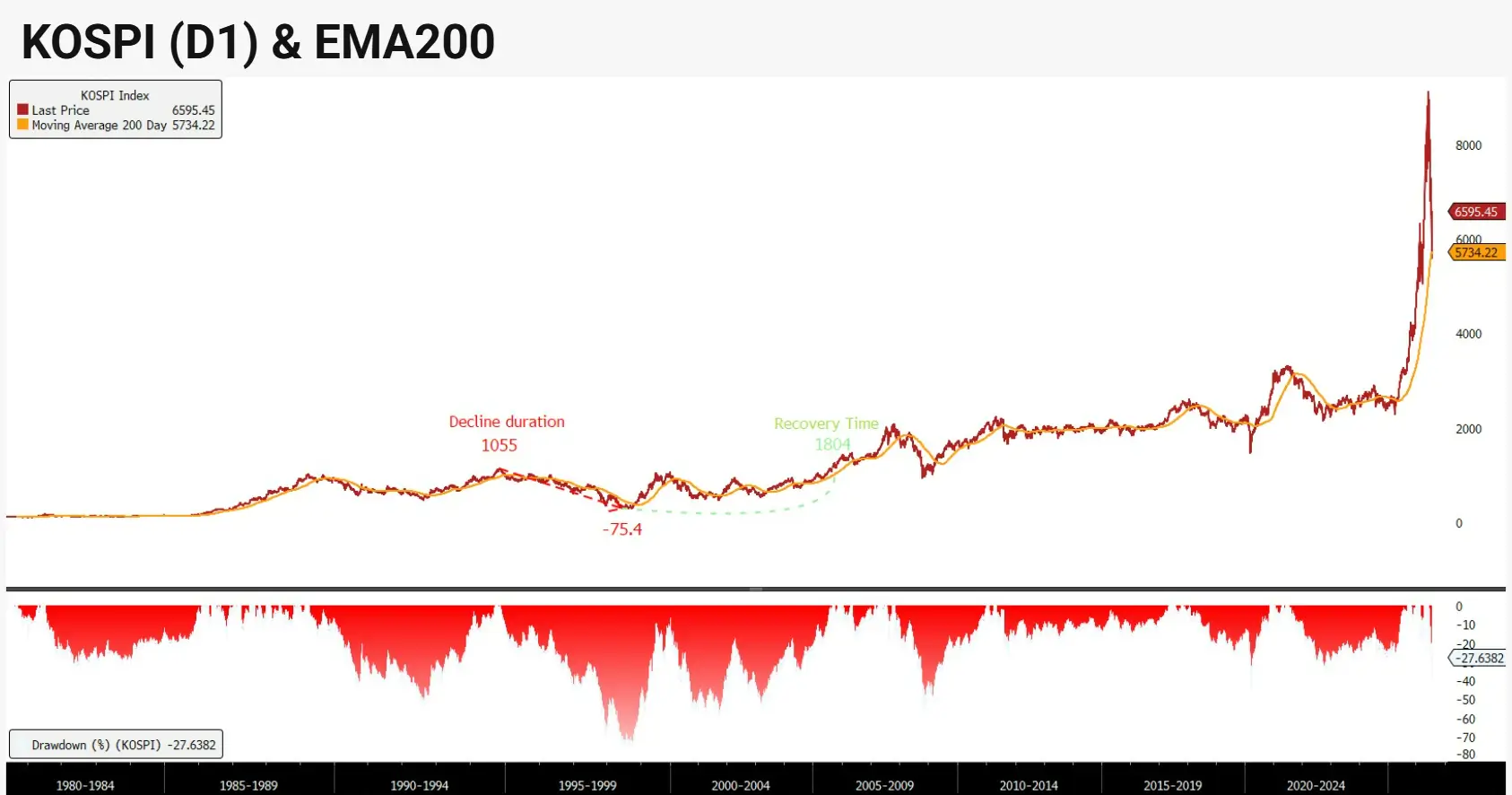
The “astronomical” falls of recent weeks have brought the KOSPI back into the 200-day moving average range. The index has fallen by nearly 27.6% from its peak (as of today). Source: Bloomberg Financial Lp
The Korean index or the memory index?
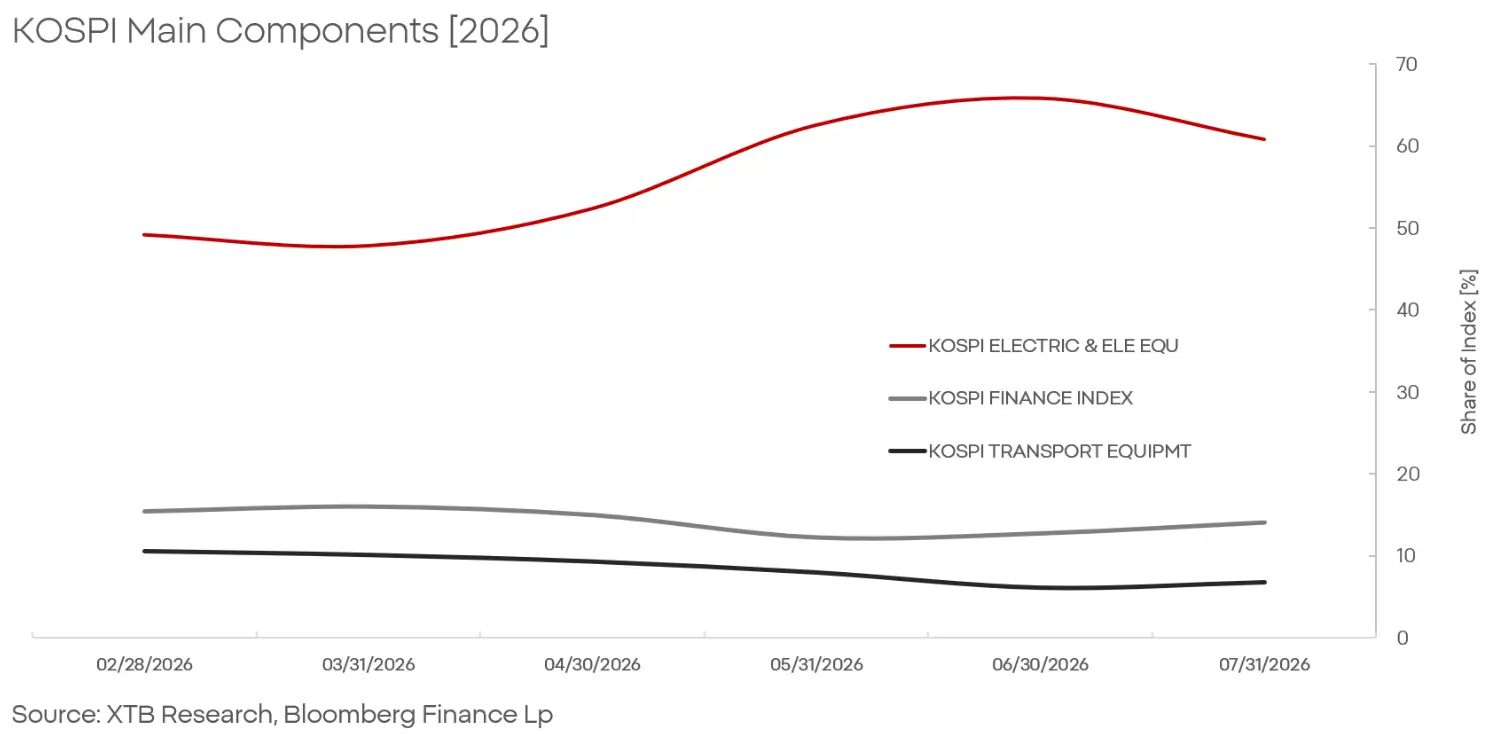
The KOSPI remains an index heavily dominated by semiconductors. This accounts for over half of the entire index. Significant exposure to memory companies is both the greatest weakness and strength of the KOSPI . Source: Bloomberg Financial Lp
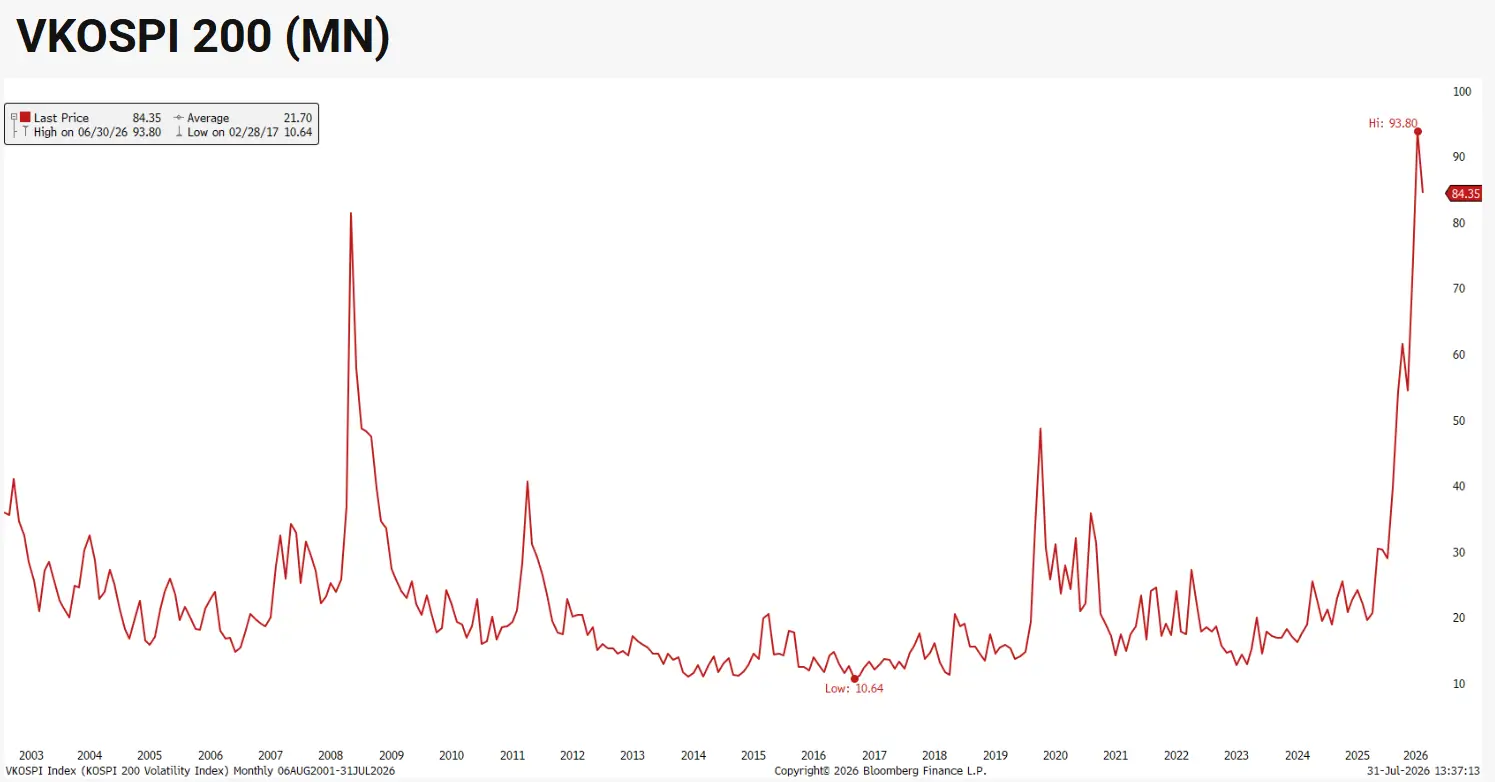
Historically, the Korean KOSPI index has been characterised by above-average volatility , due, amongst other things, to the significant involvement of retail investors and a high concentration of holdings in a few cyclical companies. The current episode is unprecedented even in this context. Source: Bloomberg Financial Lp Leveraged ETFs tracking individual companies in the memory sector are one of the key contributors to record volatility Recent market turbulence has led to a sell-off in their assets and a reduction in the potential for increased volatility Recent regulatory changes have left their mark on the index:
- Ban on the launch of new leveraged ETFs on individual companies
- A 300 per cent increase in minimum deposits
- Prohibition on the use of financial assets as collateral for a deposit
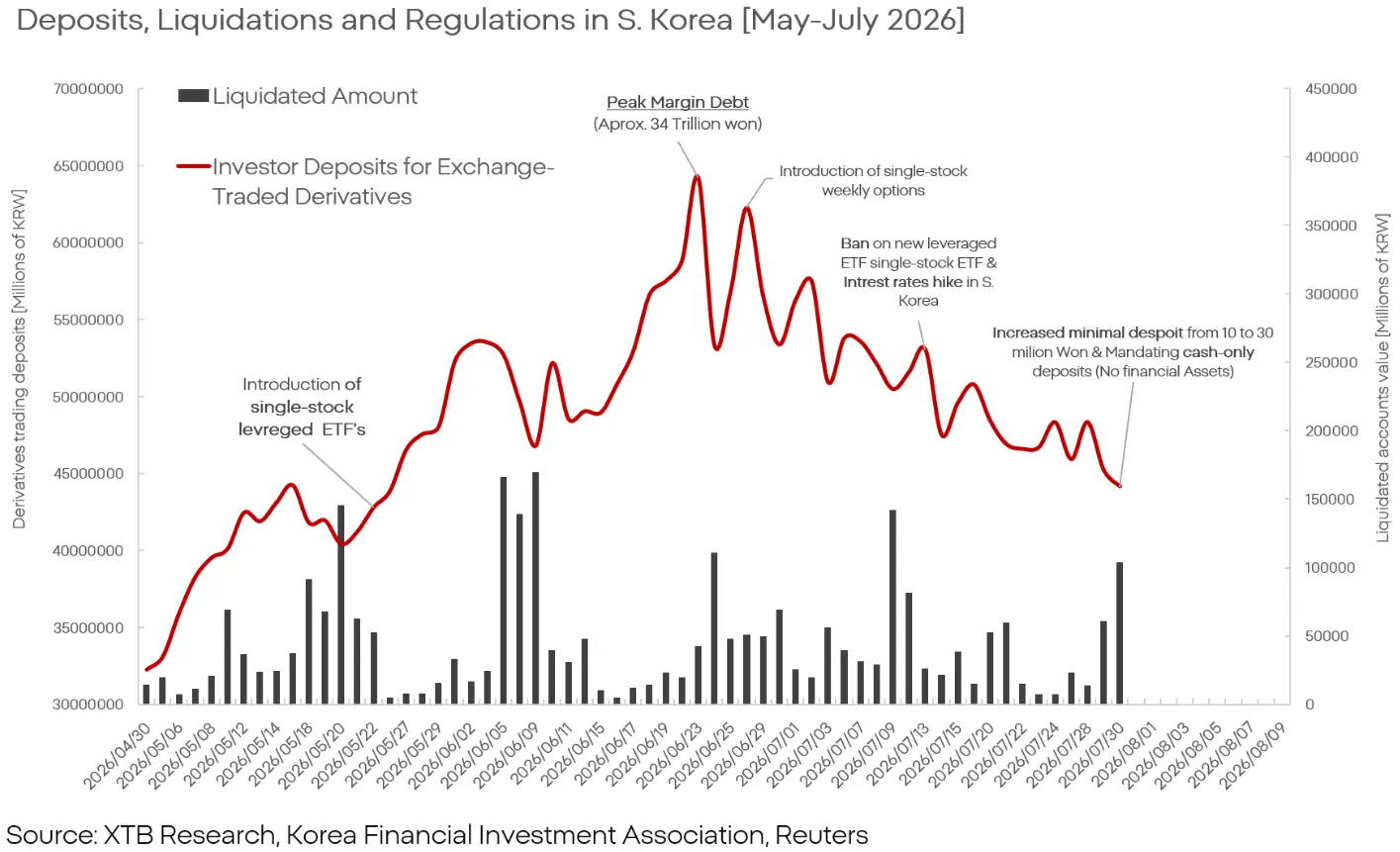
Regulatory changes in Korea have accelerated the ‘deleveraging’ process – but have not reversed the trend. Signs of capitulation amongst Korean retail investors, regulatory changes and a marked reduction in the value of margin deposits and debt suggest that the quality of growth on the KOSPI may improve and stabilise. Source: Bloomberg Financial Lp
Is it cheap?
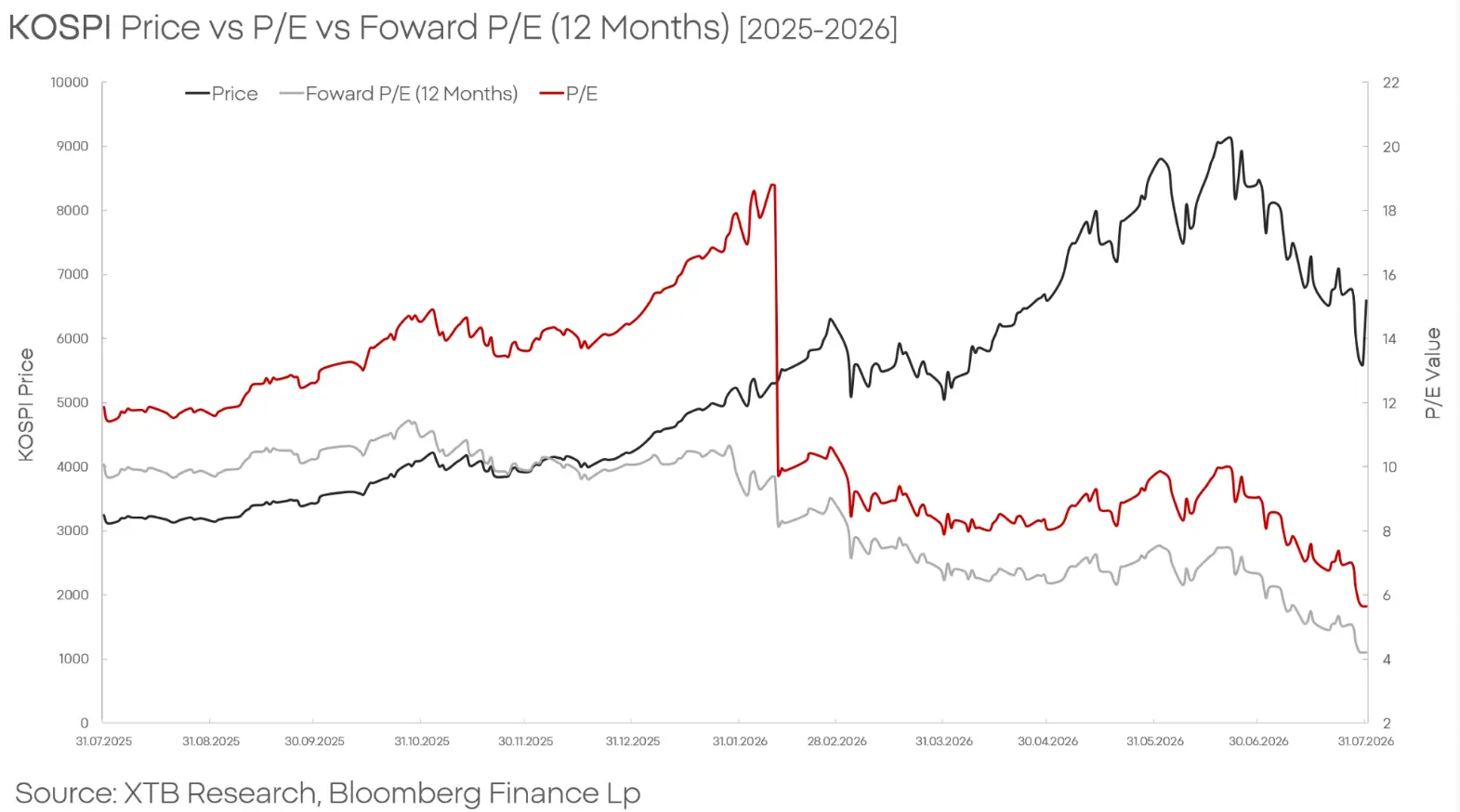
From a fundamental analysis perspective, the KOSPI is not so much “ cheap ” as “the cheapest in history”. The question remains as to whether record results can be sustained and whether companies will meet equally record expectations ? Source: Bloomberg Financial Lp