S&P 500 — US Large Cap Index
 FTSE 100 — UK Blue Chips
 Euro Stoxx 50 — Eurozone Leaders
 DAX 40 — German Equities
 CAC 40 — French Market Index
 Nikkei 225 — Japan Benchmark
 Hang Seng — Hong Kong Index
 Shanghai Composite — China Mainland
 ASX 200 — Australian Market
 TSX Composite — Canada Index
 Nifty 50 — India Large Cap
 STI Index — Singapore Market
 KOSPI — South Korea Index
 Bovespa — Brazil Equities
 JSE Top 40 — South Africa Index
 IPC Index — Mexico Market
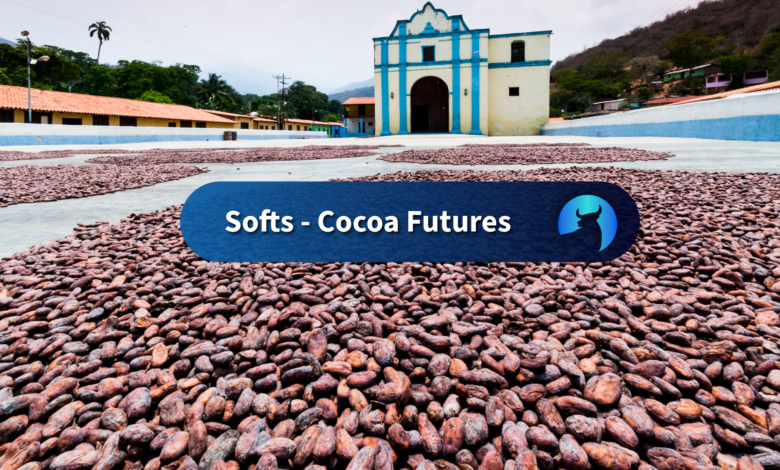
July ICE NY cocoa (CCN26) on Wednesday closed up +61 (+1.50%), and July ICE London cocoa #7 (CAN26) closed up +37 (+1.21%).
Cocoa prices extended this week’s sharp rally on Wednesday, with NY cocoa posting a 2.75-month high and London cocoa posting a 3-month high. Cocoa prices have support from early surveys of the 2026/27 West African cocoa crop that show below-average cherelle formation on cocoa trees, signaling a weak outlook for the main cocoa harvest, which begins in October.
An excessive short position by funds in NY cocoa could exacerbate any short-covering rally. Last Friday’s weekly Commitment of Traders (COT) report showed that funds boosted their short positions in NY cocoa by 3,499 net-short positions in the week ended April 28 to 19,885 short positions, the most in more than three years.
Signs that consumer demand for chocolate is holding up are a positive factor for cocoa prices. Better-than-earnings results last week from top chocolate makers Hershey and Mondelez International show consumer chocolate demand remains steady despite high prices.
The prospects of a smaller global surplus are also supportive for cocoa prices. Last Wednesday, StoneX cut its 2026/27 global cocoa surplus estimate to 149,000 MT from a January forecast of 267,000 MT, citing risks to the West African cocoa crop from an expected El Niño weather event. StoneX also cut its 2025/26 global cocoa surplus forecast to 247,000 MT from a January estimate of 287,000 MT.
The prolonged closure of the Strait of Hormuz is disrupting global cocoa supplies and is also a supportive factor for prices. The closure of the strait supports cocoa prices by reducing fertilizer supplies, boosting global shipping rates, insurance costs, and fuel prices, thereby raising cocoa importers’ costs.
Weak global cocoa demand is bearish for prices. The National Confectioners Association reported April 23 that North American Q1 cocoa grindings fell -3.8% y/y to 106,087 MT. Also, the European Cocoa Association reported that Q1 European cocoa grindings fell -7.8% y/y to 325,895 MT, a bigger decline than expectations of -6% y/y and the lowest for a Q1 in 17 years. Conversely, the Cocoa Association of Asia reported that Q1 Asian cocoa grindings unexpectedly rose +5.2% y/y to 223,503 MT, stronger than expectations of a decline of -6.7% y/y.
Signs of weak chocolate demand are negative for cocoa prices after Circana on April 14 reported that chocolate candy sales in North America in the 13 weeks ending March 22 fell -1.3% from the same period a year ago. Also, Bloomberg Intelligence said that chocolate candy sales during this past Easter holiday, a prime seasonal time for chocolate consumption, fell about 5% from last year.
Abundant current cocoa supplies are bearish for prices as ICE cocoa inventories rose to a 20.5-month high of 2,667,760 bags on Tuesday.
Current cocoa supplies from the Ivory Coast are stable. Today’s cumulative data from the Ivory Coast showed that farmers shipped 1.54 MMT of cocoa to ports in the current marketing year (October 1, 2025, through May 3, 2026), +0.7% from the same period a year ago.
Smaller cocoa supplies from Nigeria, the world’s fifth-largest cocoa producer, are supportive for prices. On April 22, Bloomberg reported that Nigerian cocoa exports in Feb fell -4.6% y/y to 40,110 MT. Nigeria’s Cocoa Association projects that Nigerian cocoa production in 2025/26 will fall by -11% y/y to 305,000 MT, from a projected 344,000 MT for the 2024/25 crop year.
Recent rainfall in West Africa has been insufficient to ease drought concerns in the Ivory Coast and Ghana. According to the African Flood and Drought Monitor, as of March 29, drought conditions blanket more than half of the Ivory Coast and about two-thirds of Ghana.
Last month, Ghana cut the official price it pays its cocoa farmers by nearly 30% for supplies for the 2025/26 growing season, and the Ivory Coast also said it would cut cocoa farmer pay by 57% that would kick in for the mid-crop harvest that started this month. The Ivory Coast and Ghana produce more than half of the world’s cocoa.
On the bullish side, the Ivory Coast said its cocoa production in 2025/26 would fall -10.8% y/y to 1.65 MMT from 1.85 MMT in 2024/25. On February 10, Rabobank cut its 2025/26 global cocoa surplus estimate to 250,000 MT from a November forecast of 328,000 MT.
As a bearish factor, the International Cocoa Organization (ICCO) on March 2 raised its global 2024/25 cocoa surplus estimate to 75,000 MT from 49,000 MT in November, which was the first surplus in four years. ICCO estimated that global cocoa production in 2024/25 climbed by +8.4% y/y to 4.7 MMT.