S&P 500 — US Large Cap Index
 FTSE 100 — UK Blue Chips
 Euro Stoxx 50 — Eurozone Leaders
 DAX 40 — German Equities
 CAC 40 — French Market Index
 Nikkei 225 — Japan Benchmark
 Hang Seng — Hong Kong Index
 Shanghai Composite — China Mainland
 ASX 200 — Australian Market
 TSX Composite — Canada Index
 Nifty 50 — India Large Cap
 STI Index — Singapore Market
 KOSPI — South Korea Index
 Bovespa — Brazil Equities
 JSE Top 40 — South Africa Index
 IPC Index — Mexico Market
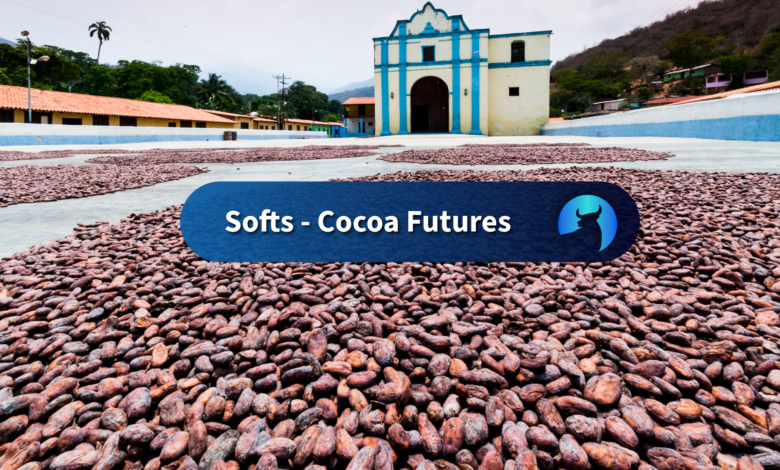
Today Markets Analysis: Cocoa prices moved higher on Monday as concerns over Ghana’s upcoming crop and deteriorating crop quality in West Africa outweighed evidence of stronger current supplies from the Ivory Coast.
December New York cocoa futures settled 1.04% higher, while December London cocoa gained 1.20%, with the market continuing to balance potentially tighter future production against increasingly comfortable near-term inventories.
Ghana Farmer Payments Could Tighten Supply
One of the key bullish developments is coming from Ghana.
The country’s cocoa regulator has proposed increasing farmer payments by 6% for the 2026/27 season. Higher producer prices could encourage farmers to hold back beans while waiting for more favourable selling opportunities, potentially reducing the amount of cocoa reaching the market in the short term.
More importantly, Ghana’s longer-term production outlook remains concerning.
The Cocoa Board has estimated that the 2026/27 crop could fall to around 650,000 metric tons, down from approximately 750,000 tons in the previous season.
A separate projection from COCOBOD has placed potential production even lower, at 450,000–550,000 tons, citing swollen shoot disease, ageing farms and the potential impact of adverse weather.
Ivory Coast Is Providing a Powerful Bearish Counterweight
The supply picture is considerably stronger in the Ivory Coast.
Farmers had shipped approximately 2.14 million metric tons of cocoa to ports between October 1, 2025 and September 13, 2026, an increase of 18% from the same period a year earlier.
The country’s regulator has also reported production of approximately 2.06 million tons between June 2025 and June 2026, up around 30% from the previous season.
That creates an important distinction for cocoa traders.
The current supply situation is relatively comfortable, while concerns are increasingly focused on the 2026/27 crop.
Cocoa Inventories Are Also Rising
Exchange inventories provide another bearish signal.
ICE cocoa stocks reached a two-year high of 3.44 million bags on September 4. Although inventories have eased slightly, they remained elevated at around 3.42 million bags on Monday.
Higher inventories indicate that physical availability is currently much less constrained than it was during the extreme supply shortage that drove cocoa prices to record highs.
Barry Callebaut, the world’s largest cocoa processor, recently described the global cocoa market as well supplied, suggesting the industry is better positioned to absorb supply disruptions than it was during the 2023/24 El Niño period.
Weather and Crop Quality Remain the Biggest Bullish Risk
Despite strong current supplies, weather is keeping the longer-term cocoa outlook uncertain.
Cloudy conditions and limited sunshine across parts of the Ivory Coast and Ghana are increasing the risk of black pod disease, which can reduce bean quality.
Early assessments of the next Ivory Coast crop have also shown weak cherelle formation and poor pod development.
Current estimates suggest Ivory Coast’s 2026/27 production could average around 1.8 million tons, approximately 18% below the estimated 2.2 million tons produced during the previous season.
That potential decline is one of the main reasons cocoa prices have remained supported despite rising inventories.
Global Surplus Expectations Are Falling
Several industry forecasts have also become more supportive.
StoneX recently reduced its estimate for the 2026/27 global cocoa surplus to just 25,000 tons, down sharply from its previous forecast of 149,000 tons.
Transgraph Consulting expects the global surplus to shrink to approximately 80,000 tons, compared with 415,000 tons in 2025/26.
The underlying message is clear: the current market may be well supplied, but the expected surplus is becoming considerably smaller.
Cocoa Market Balance
| Factor | Market Impact |
|---|---|
| Ghana crop forecast | Bullish |
| Ghana farmer payment increase | Potentially bullish |
| Ivory Coast shipments +18% | Bearish |
| Ivory Coast production +30% | Bearish |
| ICE inventories near two-year high | Bearish |
| Black pod disease risk | Bullish |
| Weak West African crop development | Bullish |
| Potential El Niño conditions | Bullish |
| Falling global surplus forecasts | Bullish |
| Mixed global grindings | Neutral/Mixed |
Demand Signals Are Mixed
Demand is providing little clear direction.
European cocoa grindings fell 4.6% year-on-year in Q2, reaching their lowest level for the second quarter in six years.
North America provided a much more positive signal, with grindings rising 7.7% year-on-year.
Asian demand was even stronger, with Q2 grindings increasing 25% year-on-year.
This creates another important divide in the cocoa market: European demand remains weak, while North American and Asian processing activity is showing considerably greater resilience.
Sterling Adds Another Layer for London Cocoa
The decline in the British pound also helped support London cocoa prices.
Because London cocoa is priced in sterling, a weaker pound can make the commodity relatively more attractive in other currencies and can influence the pricing dynamics of the futures market.
Sterling weakness therefore provided an additional short-term catalyst for the move higher in London cocoa.
What Traders Are Watching Next
Cocoa traders will be focused on several developments:
- The final outcome of Ghana’s farmer-payment policy.
- Early harvesting data from the Ivory Coast.
- Weather conditions across West Africa.
- Evidence of black pod disease and crop-quality deterioration.
- ICE warehouse inventories.
- Global cocoa grindings.
- El Niño developments and their impact on West African weather.
- Whether the projected 2026/27 global surplus continues to shrink.
The key question is whether current strong supplies can offset the possibility of a significantly smaller West African crop next season.
Currency Hedger View
Currency movements are becoming increasingly relevant to cocoa pricing, particularly for London cocoa, where sterling fluctuations can amplify moves in the futures market.
For cocoa producers, processors and international buyers, changes in GBP/USD and West African currencies can affect realised revenues and procurement costs even when the underlying commodity price is unchanged.
The current combination of cocoa volatility and uncertain currency conditions reinforces the importance of managing both commodity exposure and FX risk rather than viewing them as separate risks.
Market analysis contributed by Currency Hedger, an Octalas Group division specialising in foreign exchange, currency risk and hedging.
Today Markets View
Cocoa’s latest rally is not simply a reaction to tighter current supply.
The market is effectively looking beyond today’s strong Ivory Coast production numbers and increasingly focusing on the possibility that 2026/27 supply could deteriorate sharply.
That creates a two-sided market.
Near-term inventories and strong Ivory Coast shipments argue against another immediate supply crisis, while Ghana’s declining production outlook, disease risks and potential El Niño effects provide a powerful medium-term bullish argument.
The result is likely to be a market that remains highly sensitive to weather reports, crop surveys and physical supply data.
Bottom Line
Cocoa prices are rising as traders balance strong current supplies against growing risks to next season’s West African crop.
Ghana’s weaker production outlook, crop-quality concerns and falling global-surplus estimates are providing support, while the Ivory Coast’s strong shipments and elevated ICE inventories are limiting the bullish case.
For now, the cocoa market remains caught between comfortable present supply and increasingly uncertain future production.
Analysis by Louis Roche, Analyst, Today Markets
With contribution from Currency Hedger — currencyhedger.com