S&P 500 — US Large Cap Index
 FTSE 100 — UK Blue Chips
 Euro Stoxx 50 — Eurozone Leaders
 DAX 40 — German Equities
 CAC 40 — French Market Index
 Nikkei 225 — Japan Benchmark
 Hang Seng — Hong Kong Index
 Shanghai Composite — China Mainland
 ASX 200 — Australian Market
 TSX Composite — Canada Index
 Nifty 50 — India Large Cap
 STI Index — Singapore Market
 KOSPI — South Korea Index
 Bovespa — Brazil Equities
 JSE Top 40 — South Africa Index
 IPC Index — Mexico Market
Fed presents its semi-annual report. Stocks are expensive but no bubble?


Only days before Kevin Warsh’s first congressional testimony as Fed Chair, the Federal Reserve has published its semi-annual report on US economic and financial developments. The release comes out as EURUSD is trying to recover from 1-year lows, motivated by a hawkish stance from the FOMC, inflation-focused language from Warsh and safe-heaven inflows towards the US dollar.
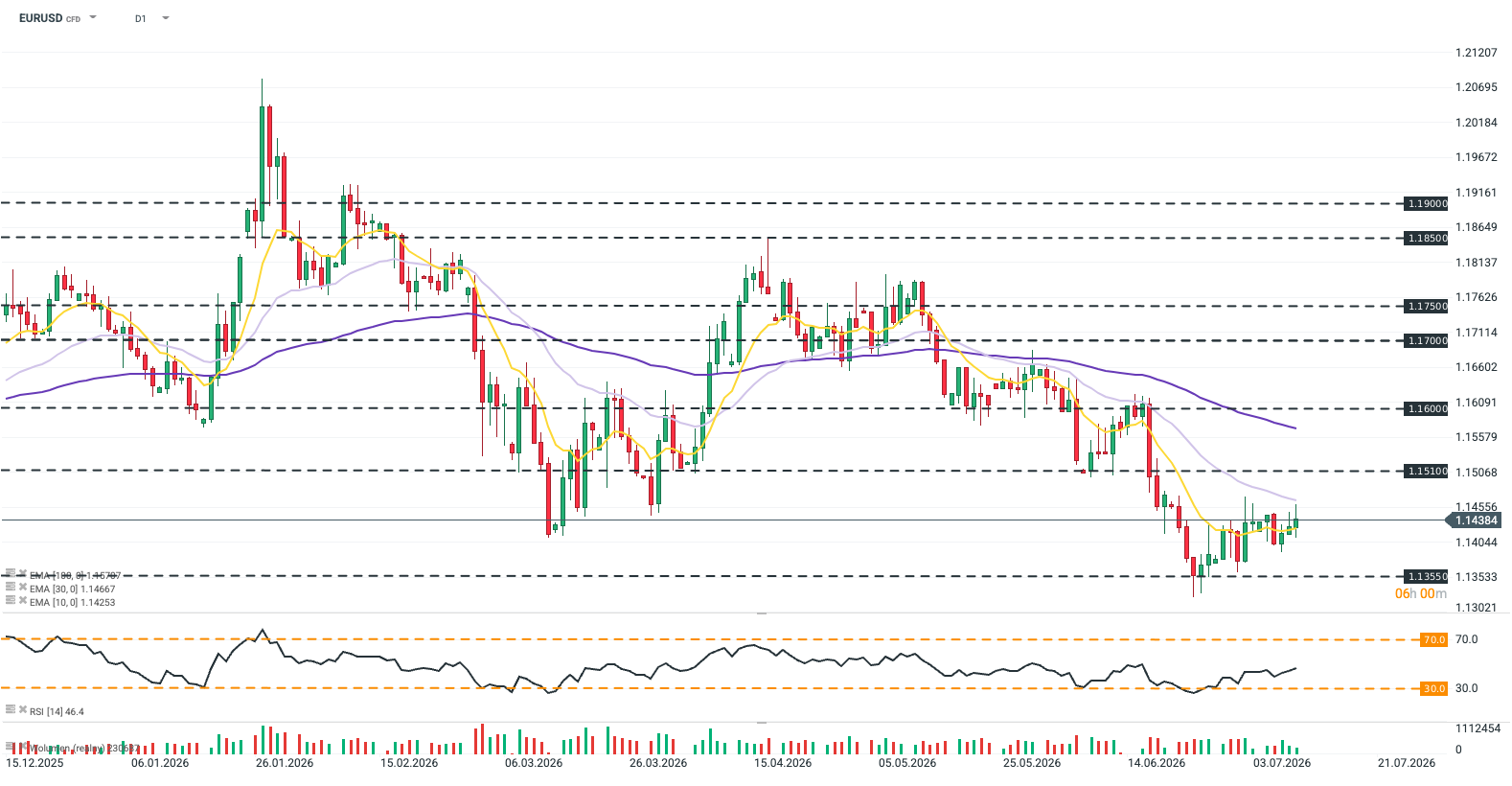
EURUSD is attempting a minor recovery from recent lows, trading near 1.1435. The pair found solid support around the 1.1355 level and is currently testing the 10-day EMA (1.1424). However, the broader bias remains bearish as price action trades well below the 30-day and 100-day EMAs, which signal heavy overhead resistance near 1.1466 and 1.1510. The RSI at 45.7 sits in neutral territory, suggesting consolidation before the next directional move. Source: xStation5
What insights can we find in the report?
Both the report and the upcoming Q&A session carry far more weight than usual following Warsh’s recent decision to abandon forward guidance. This policy shift has left the market with almost no insight into how the Fed’s new chair views the economic outlook and future monetary policy, turning this report into a critical roadmap for investors searching for clues on interest rates.
US Economic Developments
- Q1 2026 Expansion: Economic growth was boosted by technology investments and government outlays.
- Productive Capacity & Manufacturing: US productive capacity is growing at a solid pace, with robust factory output fueled by data center investments linked to AI.
- Housing Market: Activity in the housing market remains stagnant.
- Inflation Expectations: Long-term inflation expectation indicators broadly align with the 2% target.
- Labor Supply: Growth in the labor supply has declined due to slower immigration and demographic changes.
Financial System & Credit Conditions
- System Resilience: The financial system is classified as “sound and resilient,” with overall vulnerabilities remaining unchanged.
- Asset Valuations: Prices for equities, corporate bonds and residential housing exceed their historical averages.
- Credit Accessibility: Small businesses and households persistently encounter restrictive credit conditions.
- Banking Reserves: Bank reserves stay in the “ample” range, supported by reserve management purchases.
Private Credit & Fund Activity
- Market Status: Private credit markets continue to operate normally, and funds have frequently set redemption limits.
- Redemption Demands: Certain private credit funds experienced significant rises in redemption demands during Q1, signaling underlying defaults and worries over asset quality.
What is this report?
The Fed Semi-Annual Report (formally known as the Monetary Policy Report) is a mandatory document submitted by the Federal Reserve Board to Congress twice a year. It outlines the current state of the U.S. economy, monetary policy implementation, and the Fed’s outlook on inflation, employment and financial stability.
Why does it matter for markets?
This report gives investors the most comprehensive look into the central bank’s macroeconomic assessment, directly influencing expectations for future interest rate cuts or hikes. Key details—such as asset valuations exceeding historical averages, tightening private credit conditions, and well-anchored 2% inflation expectations—provide essential signals that dictate trading sentiment across global bond, equity and currency markets.