S&P 500 — US Large Cap Index
 FTSE 100 — UK Blue Chips
 Euro Stoxx 50 — Eurozone Leaders
 DAX 40 — German Equities
 CAC 40 — French Market Index
 Nikkei 225 — Japan Benchmark
 Hang Seng — Hong Kong Index
 Shanghai Composite — China Mainland
 ASX 200 — Australian Market
 TSX Composite — Canada Index
 Nifty 50 — India Large Cap
 STI Index — Singapore Market
 KOSPI — South Korea Index
 Bovespa — Brazil Equities
 JSE Top 40 — South Africa Index
 IPC Index — Mexico Market

Contributor: Currency Hedger | Market Analysis: Louis Roche, Today Markets
Lumentum Holdings (NASDAQ: LITE) is drawing renewed investor attention as demand for optical components used in artificial intelligence infrastructure continues to exceed available production capacity. The company’s latest comments suggest that supply constraints could persist for several years, potentially supporting pricing power and revenue visibility across parts of the photonics industry.
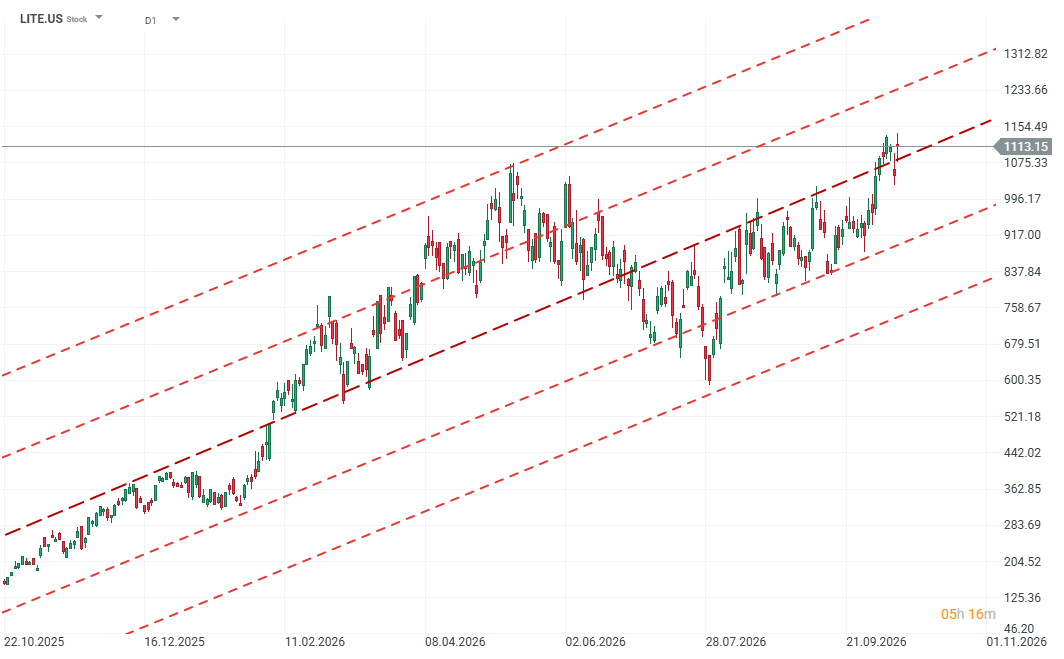
Shares of Lumentum rose more than 6% during Friday’s session on 9 October, recovering some of the previous session’s decline. The move followed comments from CEO Michael Hurlston indicating that the company’s production capacity was fully booked through early 2029.
The update highlights a growing challenge for the AI industry: investment in data centres and computing infrastructure is expanding rapidly, but the specialised optical components required to connect increasingly powerful systems remain difficult to produce at sufficient scale.
For investors, the opportunity lies in the potential for sustained demand and stronger pricing. The risk is whether manufacturers can convert that demand into profitable growth without excessive capital expenditure or operational bottlenecks.
Market Snapshot
| Factor | Market implication |
|---|---|
| Lumentum (LITE) | Strong demand visibility, with production capacity constrained |
| AI infrastructure | Increasing requirements for high-speed optical connectivity |
| Photonics sector | Potential benefits for suppliers able to meet unmet demand |
| Production outlook | Capacity expansion, manufacturing costs and delivery schedules remain critical |
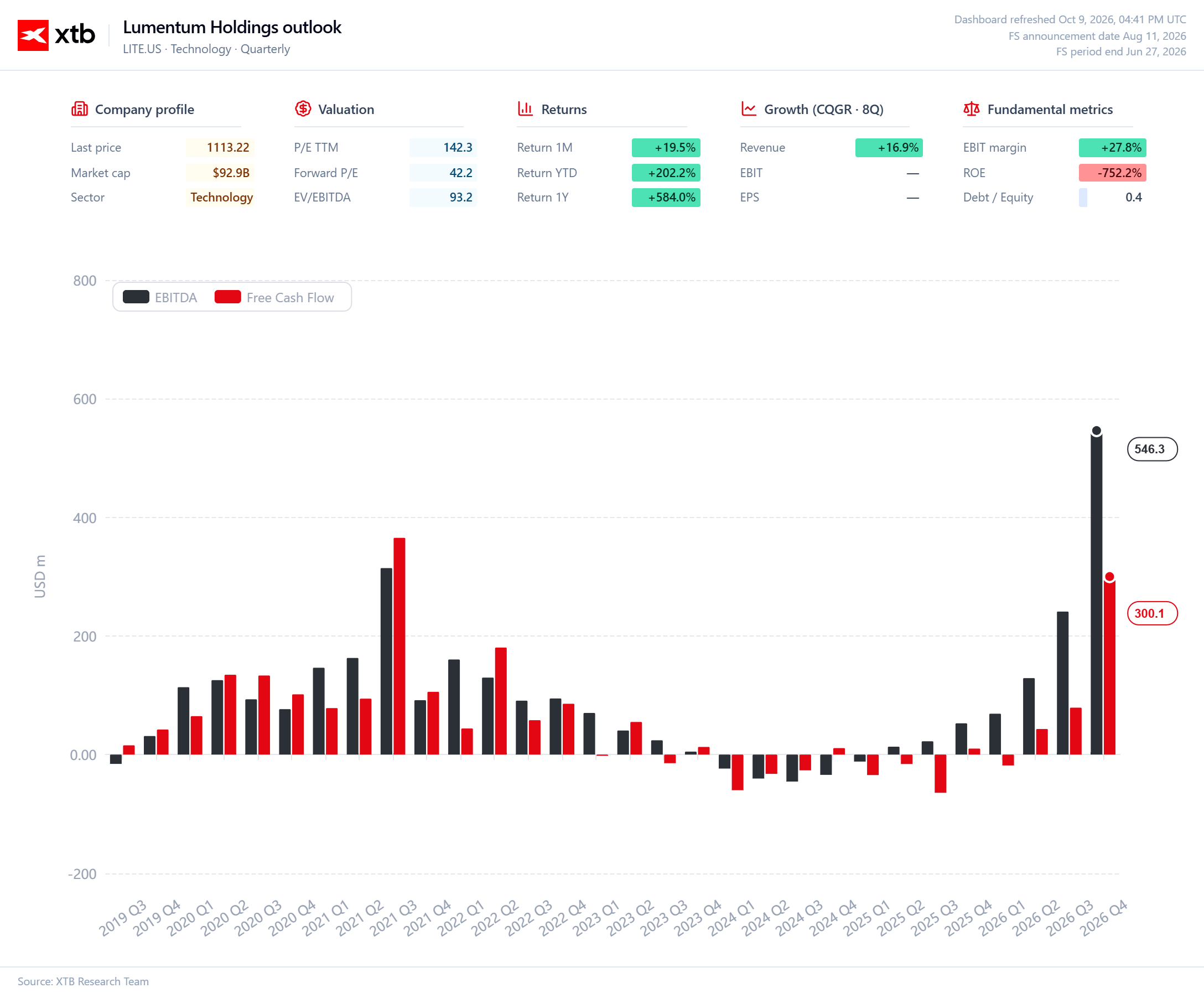
| Investor focus | Margins, cash flow, capital expenditure and valuation |
Lumentum: Production Capacity Booked Through 2029
Lumentum’s latest capacity outlook points to a substantial imbalance between demand and available supply. According to the reported comments from its CEO, the company expects to be unable to meet as much as 70% of demand for many of its products in 2027, while shortages affecting certain components could persist into 2028.
The outlook represents an improvement in the visibility of future demand compared with expectations six months earlier, when management anticipated full capacity utilisation through 2028.
For the market, the significance extends beyond a single quarterly earnings period. When production capacity is booked well in advance, investors may gain greater confidence in the demand pipeline. If customers continue competing for limited supply, manufacturers may also gain negotiating leverage over pricing and product allocation.
However, a full order book does not automatically translate into higher profits. Revenue recognition depends on actual deliveries, while margins remain sensitive to manufacturing costs, product mix, customer agreements and the expense of expanding production.
The next stage of the investment story will therefore depend on how effectively Lumentum converts strong demand into delivered products and sustainable cash generation.
Why Photonics Is Becoming Critical to AI Infrastructure
The rapid development of AI is increasing the amount of data that must move between processors, memory systems, networking equipment and storage infrastructure. As data centres grow in scale and complexity, conventional electrical interconnects face increasing challenges relating to bandwidth, power consumption, signal integrity and heat.
Optical technologies use light to transmit information and can provide important advantages in suitable high-speed networking applications.
Lumentum operates in photonics, supplying technologies including lasers and optical components used across communications and other markets. These products form part of the infrastructure needed to move growing volumes of data efficiently.
The strategic importance of optical connectivity is increasing as AI infrastructure expands. More powerful processors alone cannot deliver the full benefits of large-scale computing if the systems connecting them cannot transfer data efficiently.
This creates a potential long-term opportunity for suppliers of optical components, lasers and related technologies. However, the pace of adoption will depend on system design, customer investment, competing technologies and the economics of deploying optical solutions at scale.
Nvidia’s Investment Highlights the Strategic Importance of Optics
Nvidia’s reported USD 2 billion investment in Lumentum earlier in 2026 further highlights the strategic relevance of optical technology to the AI supply chain.
The development reflects a broader industry priority: improving connectivity as computing infrastructure becomes more demanding. Faster data transmission, greater bandwidth and improved energy efficiency are increasingly important considerations when designing large AI systems.
For Lumentum, strategic interest from major participants in the AI ecosystem could reinforce the importance of its technology and relationships within the supply chain.
Nevertheless, strategic investment should not be interpreted as a guarantee of future earnings or share-price appreciation. Investors still need to evaluate commercial terms, customer concentration, execution risks and the extent to which expected growth is already reflected in the valuation.
Sector-Wide Gains: Applied Optoelectronics and Coherent
Lumentum’s capacity constraints may also have implications for competitors.
Shares of Applied Optoelectronics reportedly gained approximately 7% during the session, while Coherent advanced around 5%. These moves suggest that investors were assessing the possibility that unmet demand could benefit other optical component manufacturers.
When a major supplier cannot satisfy all customer requirements, buyers may seek alternative suppliers, subject to technical compatibility, qualification processes, production availability and commercial agreements.
This creates an opportunity for competing companies with suitable products and spare capacity. However, demand does not automatically transfer between suppliers. Optical components can involve lengthy qualification cycles, specific performance requirements and close integration with customer systems.
The companies best positioned to benefit will be those that can deliver the required products at the necessary scale while maintaining quality, competitive costs and acceptable margins.
The Bullish Case: Demand Visibility and Pricing Power
The positive investment case for Lumentum and the wider photonics industry rests on several factors.
Persistent AI infrastructure investment: Continued expansion of AI data centres could sustain demand for high-speed optical connectivity.
Limited near-term supply: Manufacturing constraints may support pricing and give established suppliers greater visibility over production schedules.
Technology requirements: Increasing bandwidth and efficiency requirements could accelerate adoption of advanced optical components.
Potential competitor opportunities: Companies with suitable products and available manufacturing capacity may capture demand that constrained suppliers cannot fulfil.
If these conditions persist, the sector could benefit from a prolonged period of strong demand. The key is whether suppliers can translate that demand into improving operating margins and free cash flow rather than simply higher order volumes.
The Bearish Case: Capacity Expansion and Valuation Risk
Despite the favourable demand outlook, several risks remain.
Capital expenditure: Expanding specialised manufacturing capacity can require substantial investment in equipment, facilities, process development and workforce capabilities.
Execution risk: New capacity may take time to commission, qualify and bring to commercially viable production levels.
Customer concentration: Dependence on a limited number of large customers can create exposure to changes in purchasing plans, product design or negotiating power.
Technology changes: Advances in optical architectures and competing connectivity solutions may alter the mix of products required by the market.
Valuation pressure: After substantial gains in AI-related shares, even strong operational results may disappoint if investors have already priced in aggressive growth assumptions.
Supply shortages can support pricing, but they can also limit revenue by preventing companies from fulfilling orders. The market will increasingly distinguish between businesses that have strong demand and those that can profitably meet it.
Lumentum Stock Forecast: What Investors Should Watch
The outlook for Lumentum will depend on whether production capacity, pricing and demand develop in line with management’s expectations.
In the near term, investors are likely to focus on updates to production schedules, customer commitments, revenue guidance and margins. Evidence that the company is successfully expanding output without excessive cost inflation would strengthen the positive outlook.
A more cautious scenario could emerge if capacity expansion is delayed, customers adjust spending plans or rising capital requirements weaken cash generation. A broader slowdown in AI infrastructure investment would also challenge expectations for sustained demand.
Rather than relying solely on the latest share-price reaction, investors should monitor several operational indicators:
- The timing and scale of planned capacity additions.
- Revenue growth and product mix.
- Gross-margin trends and manufacturing efficiency.
- Capital expenditure and free cash flow.
- Customer concentration and order visibility.
- Demand trends across the wider optical components industry.
The central question is whether Lumentum can turn its current supply constraints into a durable competitive advantage.
Supply Outlook: Can Manufacturers Keep Pace With AI Demand?
The imbalance between demand and supply could remain an important theme across the photonics sector. However, the duration of shortages will depend on how quickly manufacturers expand production and how customers adapt their infrastructure plans.
Additional capacity may gradually ease supply constraints, but the process is not necessarily straightforward. Specialised manufacturing equipment, technical expertise, production yields and customer qualification requirements can limit how quickly output increases.
If demand continues to outpace supply, established suppliers could retain favourable pricing conditions. If capacity expands faster than demand or customers reduce investment, the balance could shift towards greater competition and margin pressure.
Investors should therefore look beyond industry growth forecasts and assess each company’s ability to execute its own production strategy.
Analysis — Louis Roche, Today Markets
Lumentum illustrates an increasingly important feature of the AI investment cycle: the bottlenecks are no longer limited to processors and computing capacity. Connectivity, power consumption and the movement of data are becoming equally important considerations in the development of large-scale AI infrastructure.
The reported production outlook provides a positive signal for demand visibility and reinforces the strategic importance of optical technology. It also creates potential opportunities for competitors that can supply products in short supply.
However, the distinction between demand and profitability remains critical. A company can have more orders than it can fulfil while still facing pressure from manufacturing costs, investment requirements and operational complexity.
The next phase of the sector’s performance will depend on execution. Investors will want evidence that capacity is expanding, margins remain resilient and strong demand is translating into sustainable cash flow.
For the wider AI market, photonics is becoming an increasingly important part of the infrastructure story. For Lumentum and its competitors, the challenge is to convert that strategic relevance into long-term shareholder value without allowing elevated expectations to outrun operating performance.
Disclaimer
This article is for informational and market commentary purposes only. It does not constitute investment advice or a recommendation to buy or sell any security. Share prices can be volatile, and investments in technology and AI-related companies carry risks, including valuation, competition, execution and capital expenditure risks. Investors should conduct their own research and consider their individual circumstances before making investment decisions.