S&P 500 — US Large Cap Index
 FTSE 100 — UK Blue Chips
 Euro Stoxx 50 — Eurozone Leaders
 DAX 40 — German Equities
 CAC 40 — French Market Index
 Nikkei 225 — Japan Benchmark
 Hang Seng — Hong Kong Index
 Shanghai Composite — China Mainland
 ASX 200 — Australian Market
 TSX Composite — Canada Index
 Nifty 50 — India Large Cap
 STI Index — Singapore Market
 KOSPI — South Korea Index
 Bovespa — Brazil Equities
 JSE Top 40 — South Africa Index
 IPC Index — Mexico Market
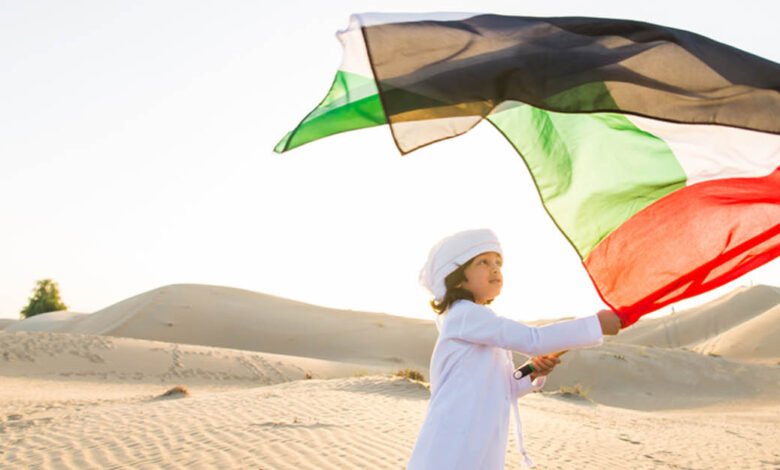
No country is perfect. No economy is perfect. Every nation has its strengths and weaknesses, challenges and opportunities. Yet when I look around the world today, I believe the United Arab Emirates stands comfortably among the top five nations globally in terms of economic vision, social stability, and future preparedness.
Of course, there are things one could improve. The summer temperatures can be relentless, and there is always the occasional petrol head with a modified exhaust who seems determined to wake half the neighborhood at three o’clock in the morning. But beyond these minor inconveniences lies a remarkable success story that deserves global recognition.
The UAE has become a destination for ambitious people from Europe, Africa, Asia, and across the Middle East. It attracts entrepreneurs, investors, professionals, engineers, scientists, and innovators who are looking for opportunity and a better future. In many ways, it has become a magnet for human capital.
What makes the UAE unique is its ability to welcome people from every culture, religion, and nationality while maintaining a strong national identity. The country respects diversity, but it also makes it clear that there is one overriding priority: the success, security, and prosperity of the UAE itself.
In my view, this is entirely fair.
The social contract is simple. People are welcome to come, work, invest, build businesses, and improve their lives. In return, they are expected to respect the country, its laws, and its culture.
The result is something increasingly rare in the modern world: social harmony.
Walk through Dubai, Abu Dhabi, Sharjah, or any of the Emirates and you will encounter people from virtually every corner of the globe living and working alongside one another. Different cultures, religions, languages, and traditions coexist with remarkably little friction.
Contrast that with parts of Europe, where social and political divisions often dominate public discourse. Increasing polarization, ideological battles, and cultural tensions have become commonplace. In many cities, public demonstrations, political activism, and competing identity movements regularly disrupt daily life and create further division.
The UAE has largely avoided this trap.
Its focus remains on economic growth, opportunity, infrastructure, investment, education, security, and national development. Rather than becoming consumed by ideological conflicts, the country concentrates on delivering practical outcomes.
That focus has helped transform the UAE from a regional economy into one of the most dynamic business hubs in the world.
Critics often point to the tax environment as one of the primary reasons people relocate to the Emirates. While the tax advantages are certainly attractive, I believe most successful individuals would gladly pay reasonable taxes if they were making money and receiving value in return. What attracts people to the UAE is not simply taxation; it is the overall ecosystem. Efficient government services, world-class infrastructure, safety, opportunity, connectivity, and a clear vision for the future.
Like every successful economy, the UAE also attracts individuals with less honorable intentions. Scammers, fraudsters, and criminals inevitably attempt to take advantage of a thriving financial center. However, one of the strengths of the UAE is its willingness to act decisively when such individuals are identified. The authorities have little patience for those who abuse the system, and the consequences are often swift.
Looking ahead, artificial intelligence may prove to be one of the defining opportunities for the Emirates.
The UAE has demonstrated a willingness to embrace new technologies, invest in digital infrastructure, and position itself at the forefront of innovation. While many countries continue debating the future, the UAE is actively building it.
I remain more cautious regarding certain aspects of the cryptocurrency sector. While blockchain technology has legitimate applications, many of the promises surrounding digital assets remain unproven. Financial systems ultimately depend on trust, regulation, stability, and widespread adoption. Around the world, regulators are increasingly scrutinizing the sector as they attempt to separate innovation from speculation.
Artificial intelligence, however, is different. AI is already transforming industries, improving productivity, enhancing decision-making, and creating new economic opportunities. The UAE recognizes this reality and is positioning itself accordingly.
In many respects, today’s UAE reminds me of Israel fifteen years ago. At that time, technology, innovation, and entrepreneurship were becoming the primary drivers of economic growth. The foundations being built today in the Emirates suggest a similar trajectory, albeit on a much larger scale.
The long-term future of the UAE will not depend solely on oil and gas. It will depend on its ability to attract talent, encourage innovation, build global businesses, and remain one of the world’s most attractive destinations for investment and enterprise.
Based on what I have witnessed over the past decade, I believe the UAE is exceptionally well positioned to achieve exactly that.
Nothing is perfect.
But the UAE comes remarkably close.