S&P 500 — US Large Cap Index
 FTSE 100 — UK Blue Chips
 Euro Stoxx 50 — Eurozone Leaders
 DAX 40 — German Equities
 CAC 40 — French Market Index
 Nikkei 225 — Japan Benchmark
 Hang Seng — Hong Kong Index
 Shanghai Composite — China Mainland
 ASX 200 — Australian Market
 TSX Composite — Canada Index
 Nifty 50 — India Large Cap
 STI Index — Singapore Market
 KOSPI — South Korea Index
 Bovespa — Brazil Equities
 JSE Top 40 — South Africa Index
 IPC Index — Mexico Market
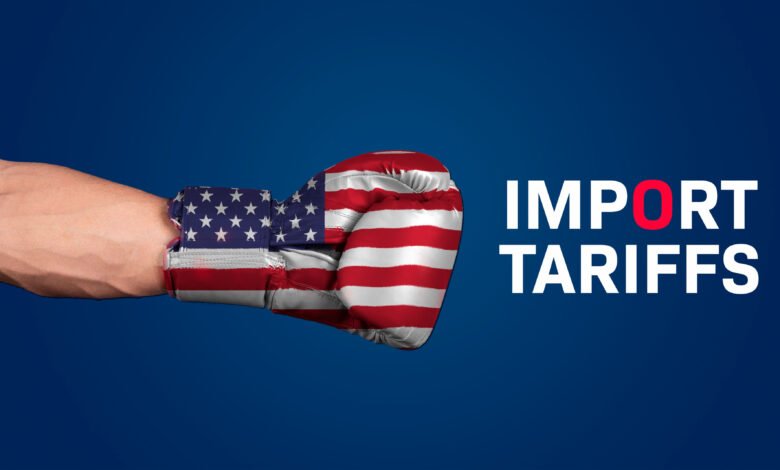
Trump Threatens Massive EU Tariffs Over Canada Alliance as New Trade War Risk Sends Shockwaves Through Global Markets

Today Markets Analysis
A fresh U.S.–European trade confrontation is emerging after President Donald Trump threatened “very serious tariffs” against the European Union — and potentially reduced trade with the bloc — if Brussels proceeds with plans to make Canada its first associate member.
The threat followed European Commission President Ursula von der Leyen’s announcement on September 16 that she wanted to open the door for Canada to become the EU’s first “associate member.” The proposed status does not currently exist under EU treaties and would require further discussion and ratification by member states.
Trump said he could impose significant tariffs or stop trading with Europe on certain goods if he considered the EU’s move to be hostile toward the United States. His comments add another layer of uncertainty to already strained U.S.–Canada and U.S.–EU trade relations.
The European proposal would seek to deepen cooperation between Canada and the EU beyond their existing CETA free-trade agreement, with discussions potentially extending across trade, energy, critical minerals, technology, manufacturing and defence.
For financial markets, the immediate question is whether Trump’s comments remain a political warning or develop into concrete tariff measures.
U.S.–EU Trade Conflict Market Overview
| Market Driver | Current Situation | Potential Market Impact |
|---|---|---|
| Trump tariff threat | New tariffs against EU possible | Bearish risk assets |
| EU–Canada proposal | Associate membership being explored | Trade diversification |
| Existing CETA | Already provides extensive EU–Canada trade access | Supports Canada–EU commerce |
| EU treaty position | Associate membership not currently established | Significant uncertainty |
| U.S.–EU trade | Large two-way commercial relationship | High economic exposure |
| Canada | Seeking broader international partnerships | Potential trade reorientation |
| European manufacturing | Exposed to U.S. demand | Tariff-sensitive |
| U.S. consumers | Potentially exposed to higher import costs | Inflation risk |
| EUR/USD | Sensitive to trade and growth expectations | Volatility risk |
| Global equities | Vulnerable to tariff escalation | Risk-off potential |
Bullish Sentiment
Although the immediate headline is negative for global trade sentiment, several factors could limit the economic impact.
1. The EU–Canada Relationship Could Expand
The proposed Canadian associate membership is designed to deepen an already significant relationship.
Canada and the EU already operate under CETA, their comprehensive economic and trade agreement. The proposed arrangement would move cooperation into a broader strategic framework covering areas such as energy, technology, critical minerals and defence.
For Canada, deeper European integration could provide additional avenues for trade diversification.
For Europe, Canada offers resources and strategic capabilities in areas including critical minerals, energy and Arctic cooperation.
2. Canada Is Looking to Diversify Its Trade
The proposal comes as Canada seeks to reduce its dependence on the United States.
The U.S. remains Canada’s overwhelmingly dominant trading partner, meaning any deterioration in bilateral relations creates a powerful incentive for Ottawa to develop alternative markets. Reuters and other reporting describe the EU initiative as part of a broader effort to strengthen Canada’s international economic relationships.
Greater Canadian access to European markets could eventually provide additional demand for Canadian commodities and manufactured goods.
3. Europe Has an Interest in Critical Minerals
Canada possesses significant natural resources that are strategically important to European industry.
Closer EU–Canada cooperation could strengthen European access to critical minerals and energy resources while reducing reliance on individual external suppliers.
That could become increasingly important for European manufacturing, electric vehicles, batteries and advanced technology.
4. Trade Diversification Could Reduce Long-Term Concentration Risk
The broader economic argument behind the EU–Canada initiative is diversification.
Canada already trades extensively with Europe, while the EU has been attempting to strengthen supply chains and economic-security relationships with trusted partners.
The proposed “Alliance for the Future” would seek to expand those links beyond the existing trade agreement.
If implemented successfully, the arrangement could eventually create additional trade routes rather than simply redirecting existing commerce.
Bearish Sentiment
The immediate market concern is that the dispute could escalate into another major tariff confrontation.
1. Trump Has Threatened New EU Tariffs
Trump has explicitly warned that the United States could impose “very serious tariffs” on European goods if he regards the Canadian initiative as hostile.
He has also raised the possibility of reducing or stopping trade with Europe in certain areas.
No new tariff schedule covering the EU has been established solely as a result of this latest statement, meaning the market is currently pricing risk rather than a confirmed new tariff regime.
That distinction is important.
2. European Exporters Could Face New Costs
Europe’s major industrial economies remain heavily dependent on international trade.
Automobiles, machinery, pharmaceuticals, chemicals, industrial equipment and luxury goods are among the sectors that can be sensitive to tariff barriers.
If additional U.S. tariffs were introduced, European exporters could face higher costs accessing the American market.
The effect would depend heavily on the eventual tariff rate, product coverage and whether exemptions were negotiated.
3. U.S. Import Costs Could Also Increase
Tariffs do not affect exporters alone.
Higher import duties can increase the landed cost of foreign goods entering the United States.
Depending on the products affected and how businesses respond, that can create additional inflation pressure for U.S. consumers and companies.
This becomes particularly important because the Federal Reserve has recently shifted toward a more restrictive policy stance.
Additional tariff-driven inflation could therefore complicate the U.S. interest-rate outlook.
4. Global Supply Chains Could Become More Fragmented
The bigger issue may be the cumulative effect of repeated trade barriers.
Businesses increasingly have to consider not just production costs but also:
- Tariff exposure
- Country-of-origin rules
- Supply-chain concentration
- Shipping routes
- Political risk
- Currency volatility
- Export restrictions
A more fragmented trading system can increase operating costs and reduce the efficiency of international supply chains.
5. Canada–EU Associate Membership Is Still Undefined
There is another major uncertainty.
Associate membership is not currently an established EU treaty category.
Von der Leyen’s proposal would require further negotiations and agreement among EU member states. The precise rights and obligations — including market access, political participation and other forms of cooperation — have not been fully defined.
Therefore, markets should not treat Canada becoming an EU associate member as an established outcome.
Why This Matters for the Dollar
The latest development comes at a particularly important time for the U.S. dollar.
The Federal Reserve has just raised interest rates to 3.75%-4.00%, while signalling that another increase could occur before the end of 2026.
A new tariff escalation could therefore create two opposing forces for the dollar.
The first is safe-haven demand.
If investors become concerned about global trade and economic growth, capital can move toward traditionally defensive assets, including U.S. government securities and the dollar.
The second is inflation risk.
If tariffs increase the cost of imported goods, U.S. inflation could become more persistent.
That could keep U.S. interest rates higher for longer, potentially supporting the dollar but simultaneously putting pressure on economic growth.
The result could be significant volatility rather than a simple one-directional currency move.
European Markets Face a Complicated Equation
For the euro, the calculation is equally complex.
Additional U.S. tariffs could reduce European exports to the world’s largest economy, potentially weighing on industrial activity and corporate earnings.
However, greater European trade diversification could eventually reduce the bloc’s dependence on the United States.
The Canada initiative is therefore potentially part of a much broader restructuring of Europe’s international economic relationships.
Von der Leyen described the proposed relationship as an effort to move beyond the existing trading relationship toward a broader strategic partnership covering economic security, energy, manufacturing, AI and critical minerals.
Canada Becomes the Key Swing Factor
Canada is at the centre of the latest dispute.
Ottawa is already attempting to diversify its international relationships as tensions with Washington increase.
Prime Minister Mark Carney has described the desired relationship with Europe as a “unique alliance,” while also making clear that Canada is not currently seeking full EU membership.
The distinction between full membership, associate membership and an enhanced strategic partnership will therefore be critical.
Canada already has a comprehensive trade agreement with the EU. The proposed initiative is primarily about expanding that relationship into a much broader strategic framework.
What Traders Are Watching Next
Financial markets will be watching several developments closely:
- Whether the U.S. announces specific EU tariff measures
- The eventual details of the proposed Canada–EU arrangement
- EU member-state reaction
- Canada–U.S. trade negotiations
- EUR/USD volatility
- USD/CAD volatility
- European industrial data
- U.S. inflation expectations
- U.S. Treasury yields
- European equity markets
- Canadian commodity exports
- EU–Canada negotiations ahead of their next summit
The most important distinction for traders is between rhetoric and implementation.
Trump’s latest comments create a clear risk premium, but actual economic consequences would depend on whether new tariffs are formally introduced, which products are targeted and how the EU responds.
Currency Hedger View
Trade disputes can quickly become currency events.
For Canadian businesses, increased European trade could increase exposure to EUR/CAD alongside the existing USD/CAD relationship.
For European companies, the possibility of additional U.S. tariffs creates uncertainty around future dollar revenues, import costs and international payment flows.
For American businesses, tariffs on European imports could increase the dollar cost of goods purchased from the EU, while exporters could face retaliatory measures from trading partners.
The result is a potentially more volatile FX environment in which companies may need to manage both trade-policy risk and currency risk simultaneously.
Currency Hedger provides specialist foreign-exchange and currency-risk analysis for businesses managing international payments and currency exposure.
Market analysis contributed by Currency Hedger, an Octalas Group division specialising in foreign exchange, currency risk and hedging.
Today Markets View
The latest Trump–EU confrontation is significant because it connects three separate developments: U.S. tariff policy, Canada’s attempt to diversify its trade relationships, and Europe’s push for deeper strategic partnerships.
The immediate bearish risk is further escalation of tariffs, potentially damaging trade flows and increasing costs for businesses on both sides of the Atlantic.
The counterargument is that Canada and the EU already have a substantial trading relationship through CETA, while broader cooperation could eventually create new supply chains and markets.
The biggest uncertainty is therefore what happens next.
Trump’s threat is clear, but the proposed Canadian associate membership remains an initiative rather than an established EU status.
Louis Roche, Analyst, Today Markets
“Markets will be watching the difference between political rhetoric and actual trade policy. The Canada–EU initiative has the potential to reshape trade relationships over time, but the immediate risk comes from whether the United States responds with concrete tariffs. For currencies, equities and commodities, the uncertainty itself can become a major source of volatility before any new tariff is actually implemented.”
Bottom Line
President Donald Trump’s threat of very serious tariffs against the European Union has introduced a fresh source of uncertainty into global trade markets after Brussels proposed opening the door for Canada to become the EU’s first associate member.
The proposed associate status does not currently exist under EU treaties, and its eventual structure would require further negotiations and approval by EU member states.
For markets, the key risks are clear:
Higher U.S.–EU tariffs could pressure European exporters, raise import costs and disrupt global supply chains.
At the same time, deeper Canada–EU cooperation could accelerate trade diversification and create new commercial opportunities across energy, critical minerals, technology, manufacturing and defence.
The next major catalyst will be whether Washington moves from tariff threats to specific measures.
Until then, traders should monitor EUR/USD, USD/CAD, European equities, U.S. Treasury yields and industrial commodities for signs that the latest political confrontation is beginning to produce measurable economic effects.
Analysis by Louis Roche, Analyst, Today Markets
Market analysis contributed by Currency Hedger, an Octalas Group division specialising in foreign exchange, currency risk and hedging.