S&P 500 — US Large Cap Index
 FTSE 100 — UK Blue Chips
 Euro Stoxx 50 — Eurozone Leaders
 DAX 40 — German Equities
 CAC 40 — French Market Index
 Nikkei 225 — Japan Benchmark
 Hang Seng — Hong Kong Index
 Shanghai Composite — China Mainland
 ASX 200 — Australian Market
 TSX Composite — Canada Index
 Nifty 50 — India Large Cap
 STI Index — Singapore Market
 KOSPI — South Korea Index
 Bovespa — Brazil Equities
 JSE Top 40 — South Africa Index
 IPC Index — Mexico Market
XAU/USD remain depressed as inflation fears fuel bets for more hawkish central banks

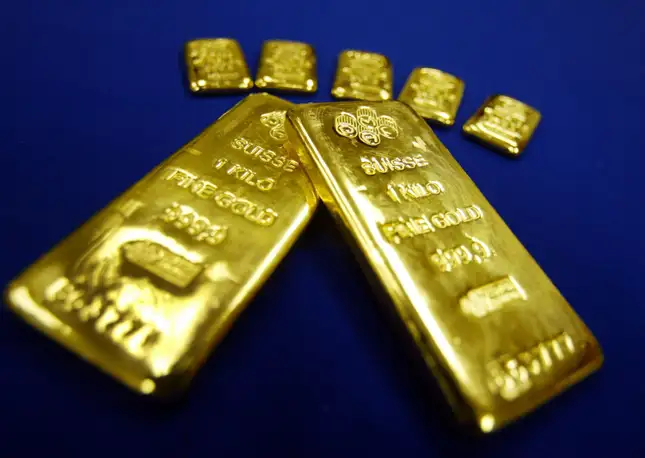
- Gold drifts lower at the start of a new week, though it shows resilience below $4,600.
- Inflation fears fuel hawkish central bank expectations and undermine the commodity.
- The lack of any follow-through selling warrants some caution for the XAU/USD bears.
Gold (XAU/USD) remains on the back foot through the Asian session on Monday, though it lacks follow-through and manages to hold above the $4,600 mark. Major central banks, including the US Federal Reserve (Fed), have turned hawkish in the wake of concerns that energy shocks stemming from geopolitical tensions in the Middle East would revive inflationary pressures. This, in turn, is seen as a key factor undermining demand for the non-yielding yellow metal.
US President Donald Trump announced a plan to guide ships stranded in the Gulf through the Strait of Hormuz under a project called “Project Freedom” and also warned that if this process is disrupted, it will be dealt with forcefully. Top Iranian lawmaker Ebrahim Azizi said that any US interference in the strategic waterway will be considered a violation of the ceasefire. Adding to this, Iran’s Islamic Revolutionary Guard Corps (IRGC) accused the US of failing to honour agreements and said that renewed hostilities are likely. This casts doubt over diplomatic efforts to end the war amid a lack of progress in US-Iran peace talks and helps limit the downside for Crude Oil prices.
This comes on top of the US macro data released last Thursday, which indicated that inflation accelerated in March and reaffirms expectations that the US central bank could keep rates unchanged well into next year. Furthermore, the Fed’s decision to hold its key policy rate unchanged at 3.50%-3.75% saw the highest number of dissents since 1992, with three policymakers voting against the accommodative tone in the policy statement. Adding to this, Minneapolis Fed President Neel Kashkari said on Sunday that a prolonged Iran conflict increases inflation risks and economic damage. Kashkari also raised the possibility of moving rates higher, citing uncertainty around all aspects of the war.
The hawkish outlook, in turn, assists the US Dollar (USD) in attracting some dip-buyers following a modest bearish gap at the start of a new week, which is seen as another factor weighing on the Gold price. The lack of follow-through selling, however, warrants some caution for the XAU/USD bears and positioning for further losses. Investors now look forward to this week’s important US macro data scheduled at the start of a new month, including the closely-watched US Nonfarm Payrolls (NFP) report on Friday, for some meaningful impetus. Nevertheless, the aforementioned fundamental backdrop suggests that the path of least resistance for the precious metal remains to the downside.
XAU/USD 1-hour chart

Gold needs to find acceptance below $4,600 to back the case for further losses
From a technical perspective, the Moving Average Convergence Divergence (MACD) remains below the zero line with a negative reading on the 1-hour chart and hints that downside pressure persists. That said, the Relative Strength Index (RSI) at 49.60 is broadly neutral. Hence, a clear drop through the $4,600 mark, or the 23.6% Fibonacci retracement level of the downfall from the April swing high, is needed to back the case for deeper losses toward the broader structural low anchored near $4,512.28.
On the topside, initial resistance is located at the 200-period EMA at $4,650.47, followed closely by the 38.2% Fibonacci retracement at $4,655.61. A sustained strength above this cluster would expose the 50.0% retracement at $4,699.88 and the 61.8% level at $4,744.15, ahead of higher barriers at $4,807.19 and $4,887.48.