S&P 500 — US Large Cap Index
 FTSE 100 — UK Blue Chips
 Euro Stoxx 50 — Eurozone Leaders
 DAX 40 — German Equities
 CAC 40 — French Market Index
 Nikkei 225 — Japan Benchmark
 Hang Seng — Hong Kong Index
 Shanghai Composite — China Mainland
 ASX 200 — Australian Market
 TSX Composite — Canada Index
 Nifty 50 — India Large Cap
 STI Index — Singapore Market
 KOSPI — South Korea Index
 Bovespa — Brazil Equities
 JSE Top 40 — South Africa Index
 IPC Index — Mexico Market
Shares in Europe’s largest company are up more than 4% on Tuesdat, attempting to return to gains after the latest pullbacks. The move is driven mainly by the newest news from the semiconductor industry and modest but very important agreements with, among others, TSMC and Samsung. Cooperation between industry leaders is entering a new stage, according to the latest statements from company management. ASML and TSMC are moving to a new shared standard for so-called masks used in chip manufacturing. The newest lithography standard, used for today’s most demanding chip production processes (so-called high-NA extreme ultraviolet), has so far had a major limitation. The previous generation of masks did not fit into the new machines, which forced the “stitching” together of several smaller masks or a slower, more fragmented production process. The new agreement set new standards for larger masks. In practice, this enables (in short):
- faster production
- fewer complications and defects
For the companies involved, this means that:
- TSMC will be able to produce more, faster, and at a lower cost. It also implies an even stronger market position for the company, while improving the price-to-benefit ratio for customers.
- For customers such as accelerator makers or AI labs, this means better chips in greater quantities and probably lower costs for older generations of hardware.
- The new standard also means the need to purchase specialized components, for example the masks themselves, which are a separate part of the supply chain that is now expanding. Intel, IBM, and Photronics are up a few percent today.
- For ASML itself, this means the risk around the durability and scale of demand from TSMC becomes smaller.
The new standard is both a benefit and a long-term commitment. It is worth noting that this commitment is not only long-term but also expensive. Designing and purchasing new masks is a lengthy and costly process, and implementing them on assembly lines will be just as difficult. The benefits for the parties involved will likely be significantly delayed and come with substantial investments that will pressure margins. According to ASML’s schedule, mass production using the latest EUV standards is expected to begin at TSMC by the end of 2030. Completion of the rollout of the new masks is expected in 2033.
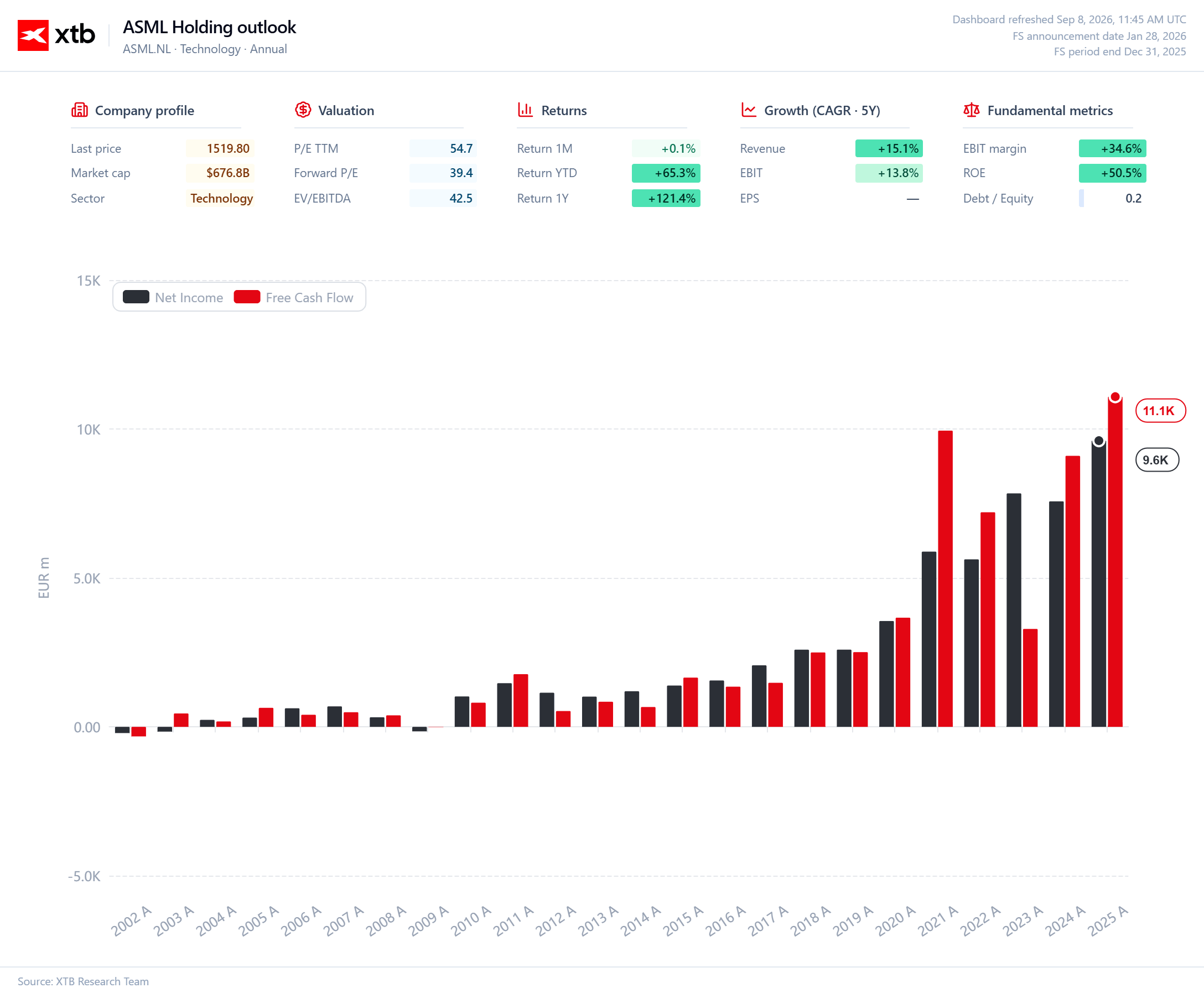
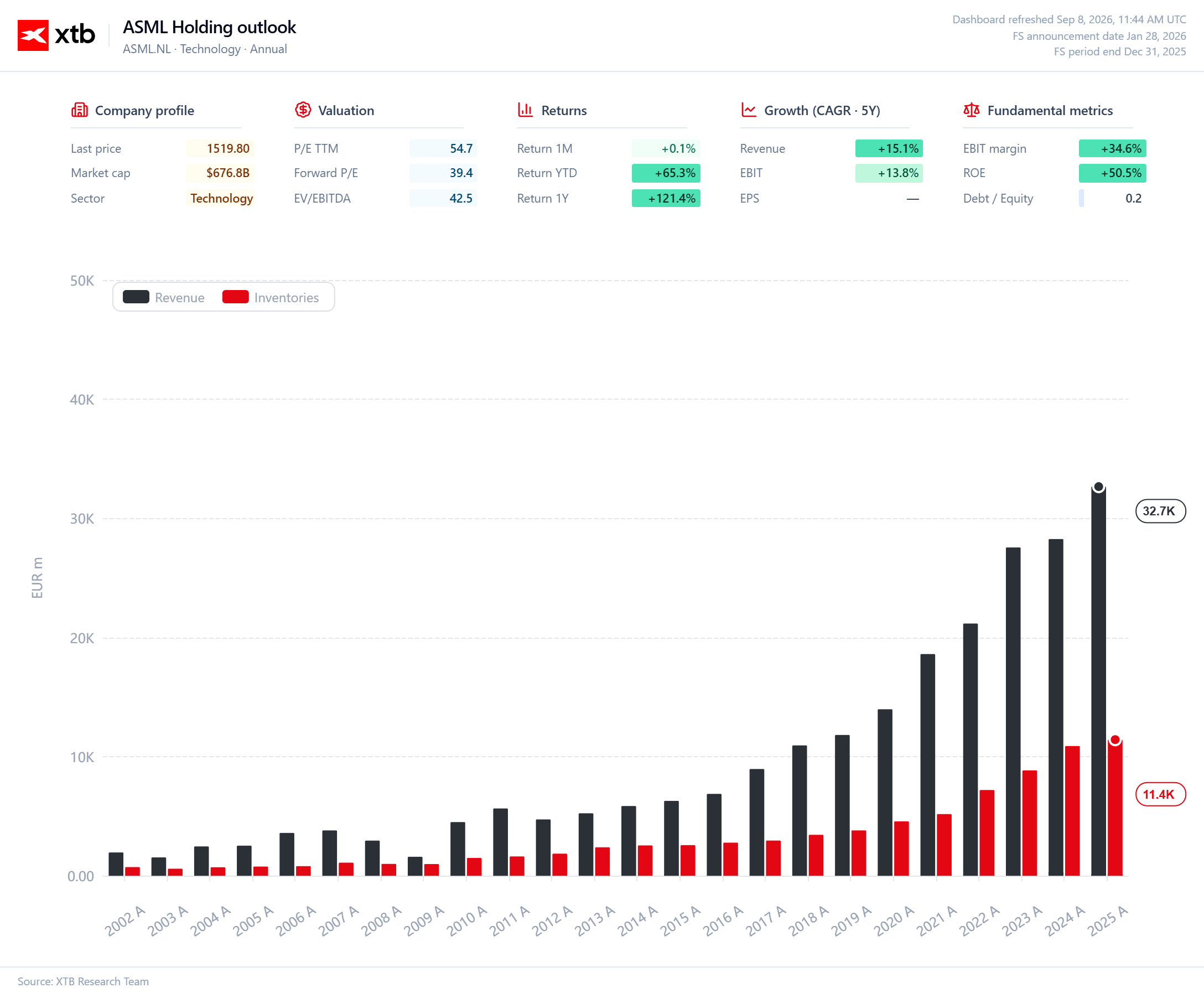
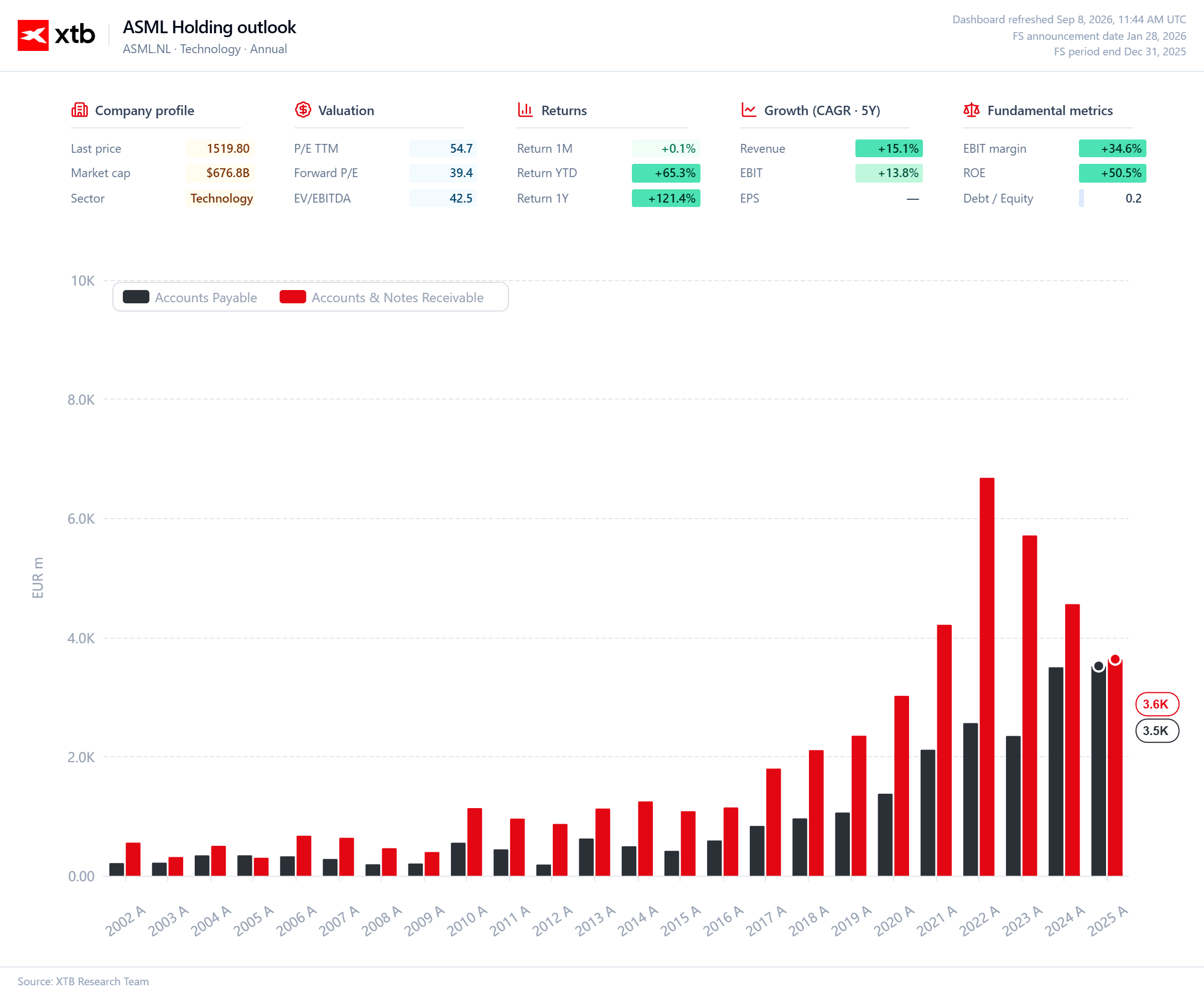
The scale of today’s several-percent gains says a lot about expectations for the company. A rise of around 4% should be viewed in the context of the time value of cash flows. With benefits expected in 2030 to 2033 and later, the market is currently discounting an increase in free cash flow of from the teens to several dozen percent in the later stages of the coming investment cycle. Given the company’s current scale and growth pace, this is not an unlikely scenario.
Technical analysis of ASML (D1)
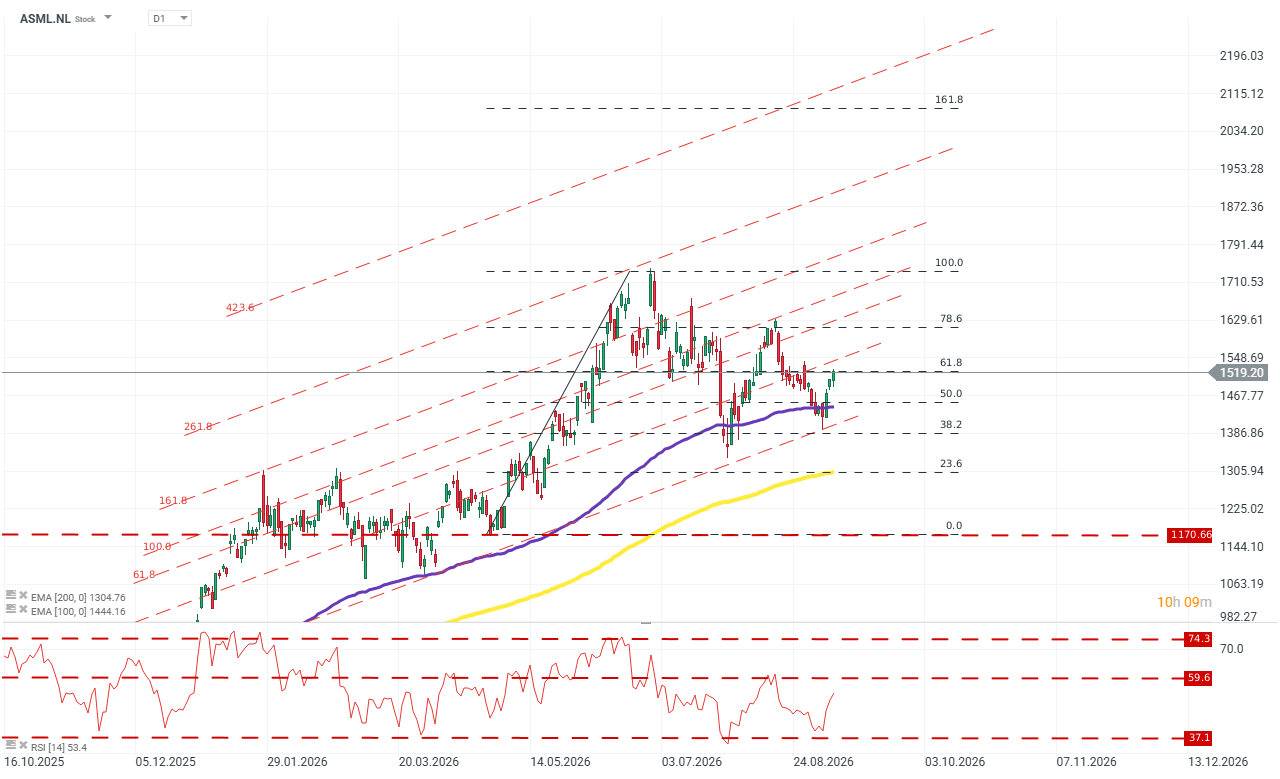
The share price is currently holding within the FIBO channel range between 38.2 and 0 after falling from the highs in June this year. The price has successfully defended the important EMA100 twice; however, despite the declines it remains clearly above the key EMA200. A FIBO retracement based on the most recent upward wave points to a potential move above EUR 1500. The RSI indicator is currently around 53, which, despite being neutral, is still below the long-term regression line. Source: xStation5