S&P 500 — US Large Cap Index
 FTSE 100 — UK Blue Chips
 Euro Stoxx 50 — Eurozone Leaders
 DAX 40 — German Equities
 CAC 40 — French Market Index
 Nikkei 225 — Japan Benchmark
 Hang Seng — Hong Kong Index
 Shanghai Composite — China Mainland
 ASX 200 — Australian Market
 TSX Composite — Canada Index
 Nifty 50 — India Large Cap
 STI Index — Singapore Market
 KOSPI — South Korea Index
 Bovespa — Brazil Equities
 JSE Top 40 — South Africa Index
 IPC Index — Mexico Market
FOMC Preview – Will Trump dissuade Fed from a rate hike?

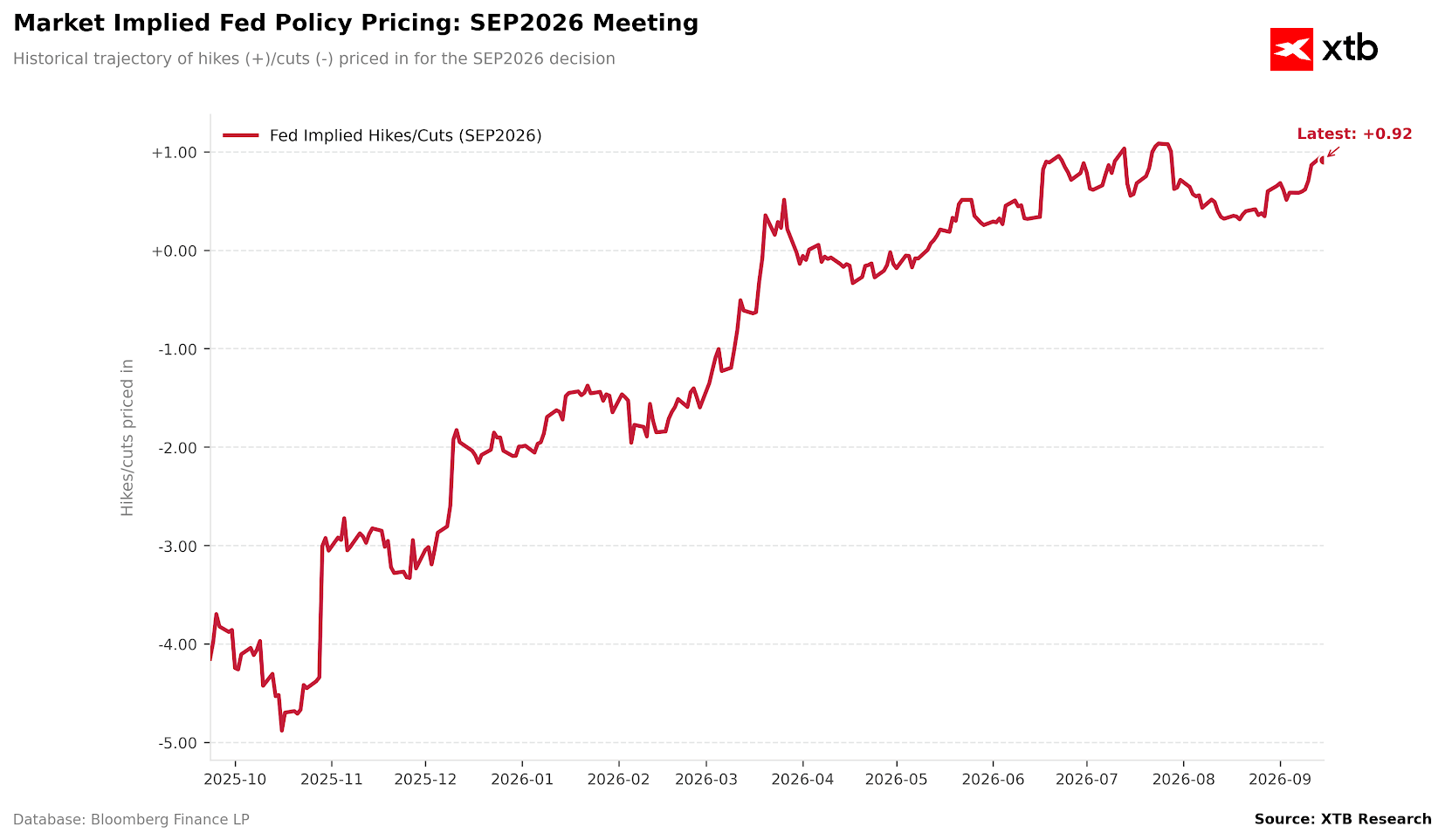
We are facing the most anticipated central bank meeting of 2026. On Wednesday, the Federal Reserve will announce its decision on interest rates. The market currently seems almost convinced that the statement, scheduled for release at 7:00 PM, will mention a 25 basis point rate increase, the first since July 2023.
What does the data say?
The rise in bets on a rate hike has been very dynamic in recent days, which appears somewhat surprising given that fundamentals have largely remained unchanged. Figure 1: Change in Market-Implied Probability of the September Fed Rate Hike (2025 – 2026)
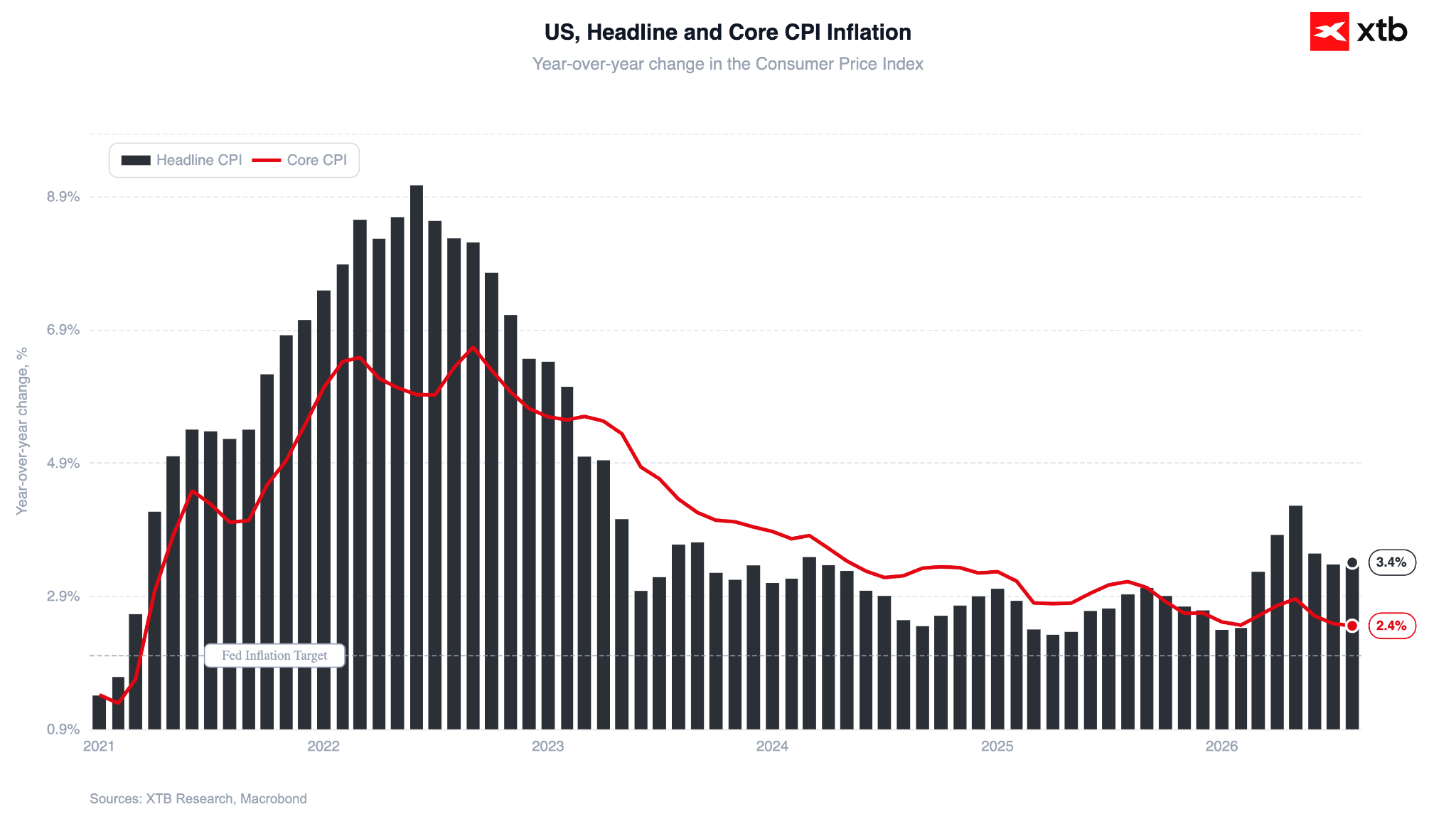
Source: XTB Research, 15.09.2026 Last week’s inflation reading, which according to Christopher Waller was supposed to tip the scales one way or another, did not provide a definitive answer, showing a decline in core inflation to 2.4% year-on-year. Markets focused on the slightly higher-than-expected monthly rise (0.3%), though in our view this is insufficient to prove the necessity of a rate hike. Figure 2: CPI Inflation in the United States (2026 – 2027)
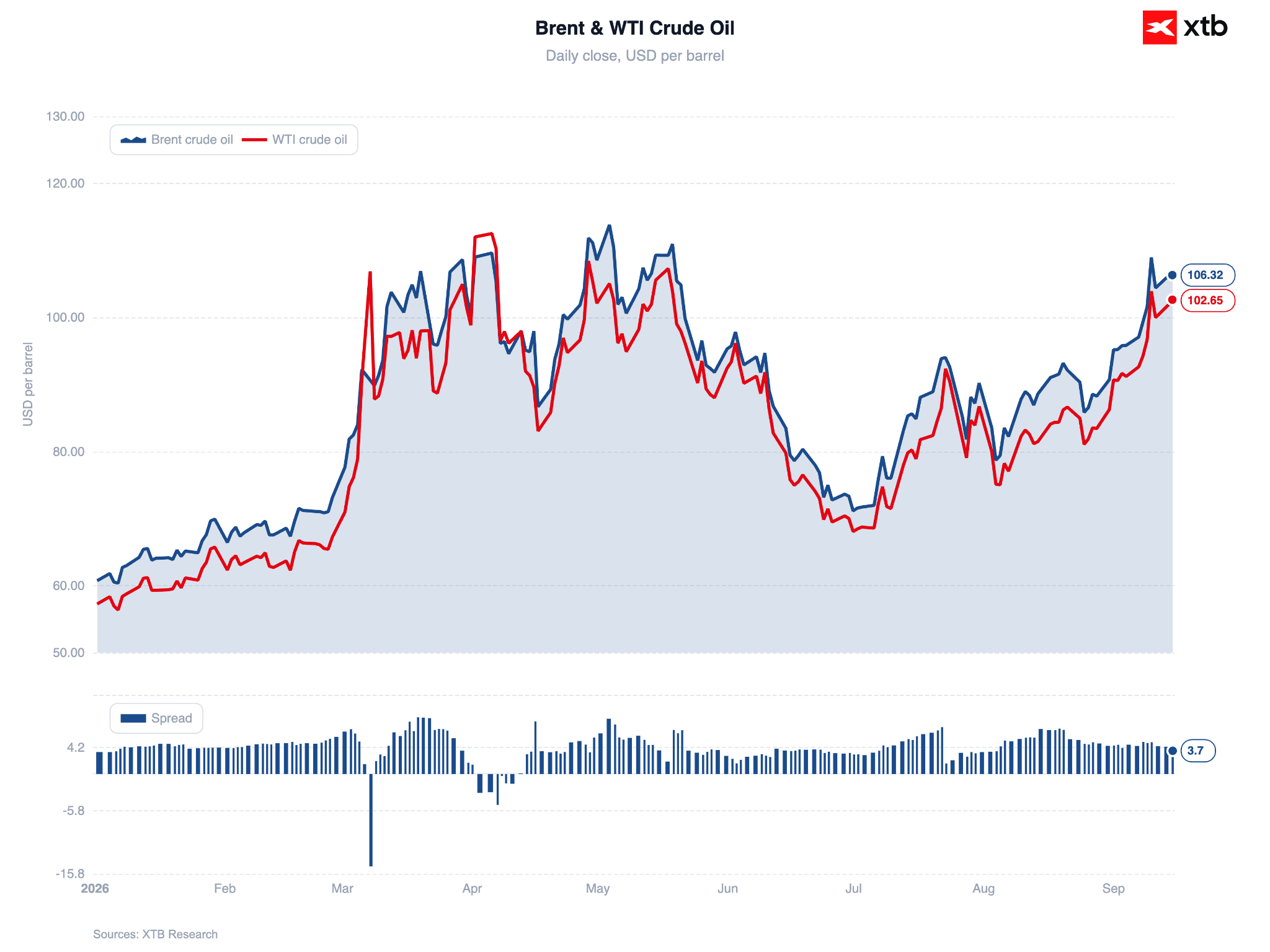
Source: XTB Research, 15.09.2026 Arguments for monetary tightening can be found in elevated services sector inflation (3.1%), but here too momentum is not overly concerning. According to the Fed Wage Growth Tracker, wage growth is accelerating (4.1% in August), which could stimulate consumption in the coming months, though current levels (less than 1% in real terms) do not seem poised to fundamentally alter the outlook. This is particularly true given that American consumer spending in recent months (and indeed quarters) has relied heavily on dwindling savings that will sooner or later need to be rebuilt. This does not mean, of course, that a rate increase is unwarranted or macroeconomically irrational. It can be justified in many ways. A key factor that could explain an upward move is the tight situation in energy commodity markets. High prices for crude oil and LNG have not yet spilled over into the broader US economy to a significant degree, but an intensification of this process in the coming months cannot be ruled out. The Fed could certainly opt for a hike as a form of front-loading, acting proactively to prevent the potential need for much sharper tightening in the future. If the Fed indeed decides on such a move on Wednesday, it may raise questions as to why it did not hike in July, as macroeconomic data published since then have offered little additional support for the tightening thesis. Front-loading was, in fact, the argument presented at the time by policymakers who broke consensus and voted for a hike. Figure 3: Brent and WTI Crude Oil Prices (2026)
Source: XTB Research, 15.09.2026
The decision will be perceived as politicised under any scenario
From a macroeconomic perspective, the decision can be viewed through various lenses across a broad range of data. However, the discourse surrounding the meeting, inflamed by recent comments from President Trump and the White House’s chief economic advisor, Kevin Hassett, means that under any scenario the move will be seen as politicised. Crucial in this context, of course, are the upcoming mid-term elections. Although Hassett stressed that President Trump “100% respects Warsh’s independence” and gives him “100% support”, he also noted that the President would not be “very happy” if a rate hike actually occurred. Markets remember well the pressure faced during the final months of his term by former Fed Chair Jerome Powell, who in Trump’s view kept interest rates insufficiently low. It is also impossible to ignore the context surrounding Lisa Cook, who was “fired” by President Trump. Quotation marks are deliberate here: the ruling was later overturned by the Supreme Court, and Cook remains an FOMC member participating in Wednesday’s deliberations. If a rate hike does happen, as many indicators currently suggest, we can expect another tirade from the US President. An intriguing question is how Warsh himself would be treated by Trump. It is worth recalling that despite his hawkish past (during his tenure on the FOMC from 2006 to 2011, he advocated for higher interest rates despite the Global Financial Crisis), Warsh often signalled support for rate cuts before taking office. Just over a year ago, he openly aligned himself with the President, stating on FOX News that Trump’s frustration with Powell’s handling of monetary policy was fully justified. At the time, he criticized the institution for reducing rates too slowly and relying excessively on backward-looking economic data.
For the Fed and Warsh himself, raising rates is the lesser of two evils
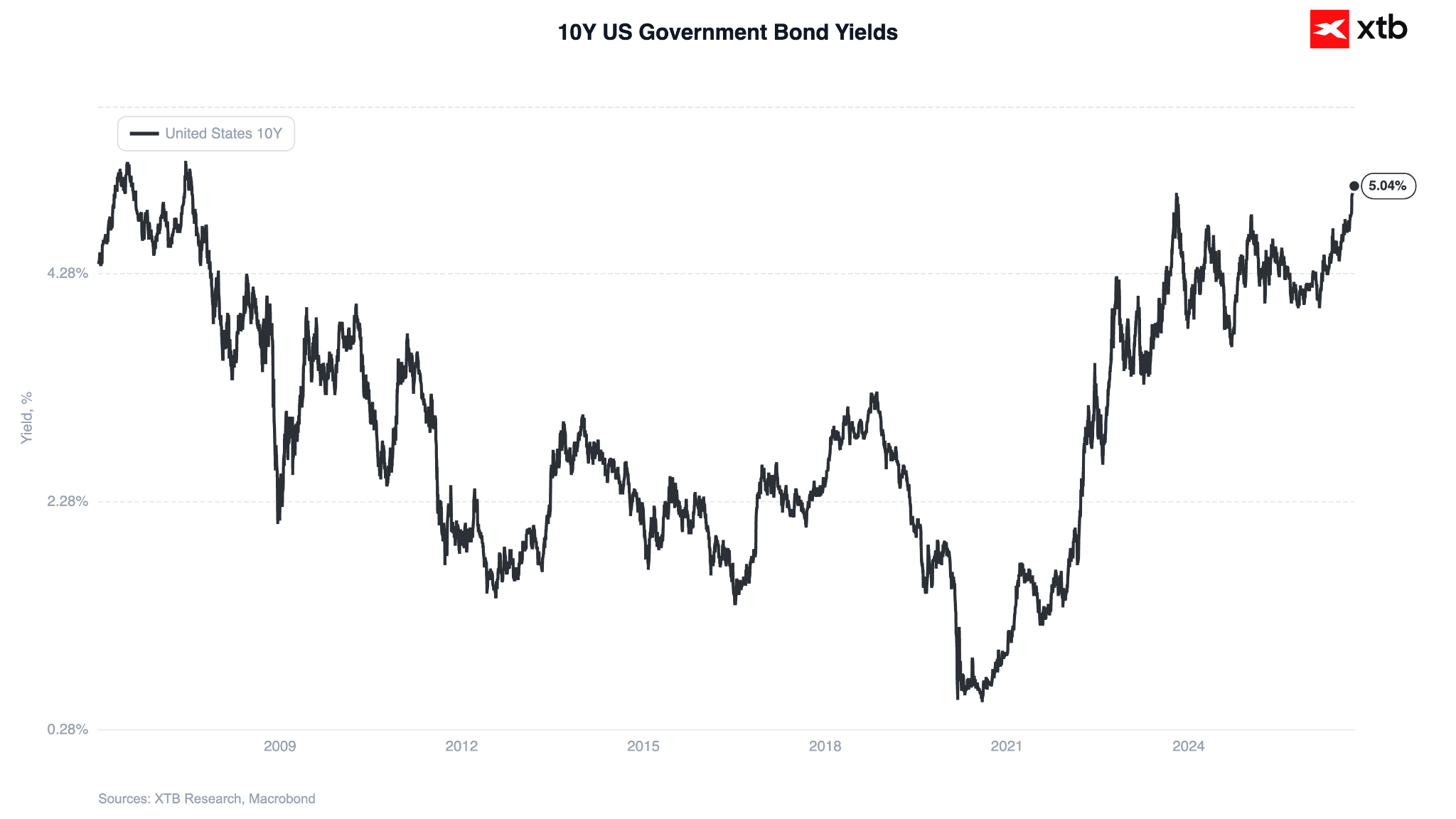
A pause could be interpreted by markets as the Fed caving to pressure from Donald Trump, signalling a loss of independence for the world’s most critical financial institution. This would result in a further rise in long-term bond yields (with 10-year Treasury yields reaching their highest level since 2007 today) and a revival of the debasement trade, a strategy involving a shift away from fiat currencies towards hard assets with limited supply, such as precious metals and Bitcoin. Figure 4: US 10-Year Treasury Yields (2006 – 2026)
Source: XTB Research, 15.09.2026
A rate hike does not necessarily mean a stronger dollar
Raising rates does not automatically guarantee an appreciation of the American currency. Given that such a move is almost fully priced in, a relatively hawkish and, above all, credible narrative is also required. If Warsh, as in July, fails to convince the markets, bets on further rate hikes could fall, putting pressure on the US dollar. Figure 5: Market-Implied Fed Rate Path (2026 – 2027)
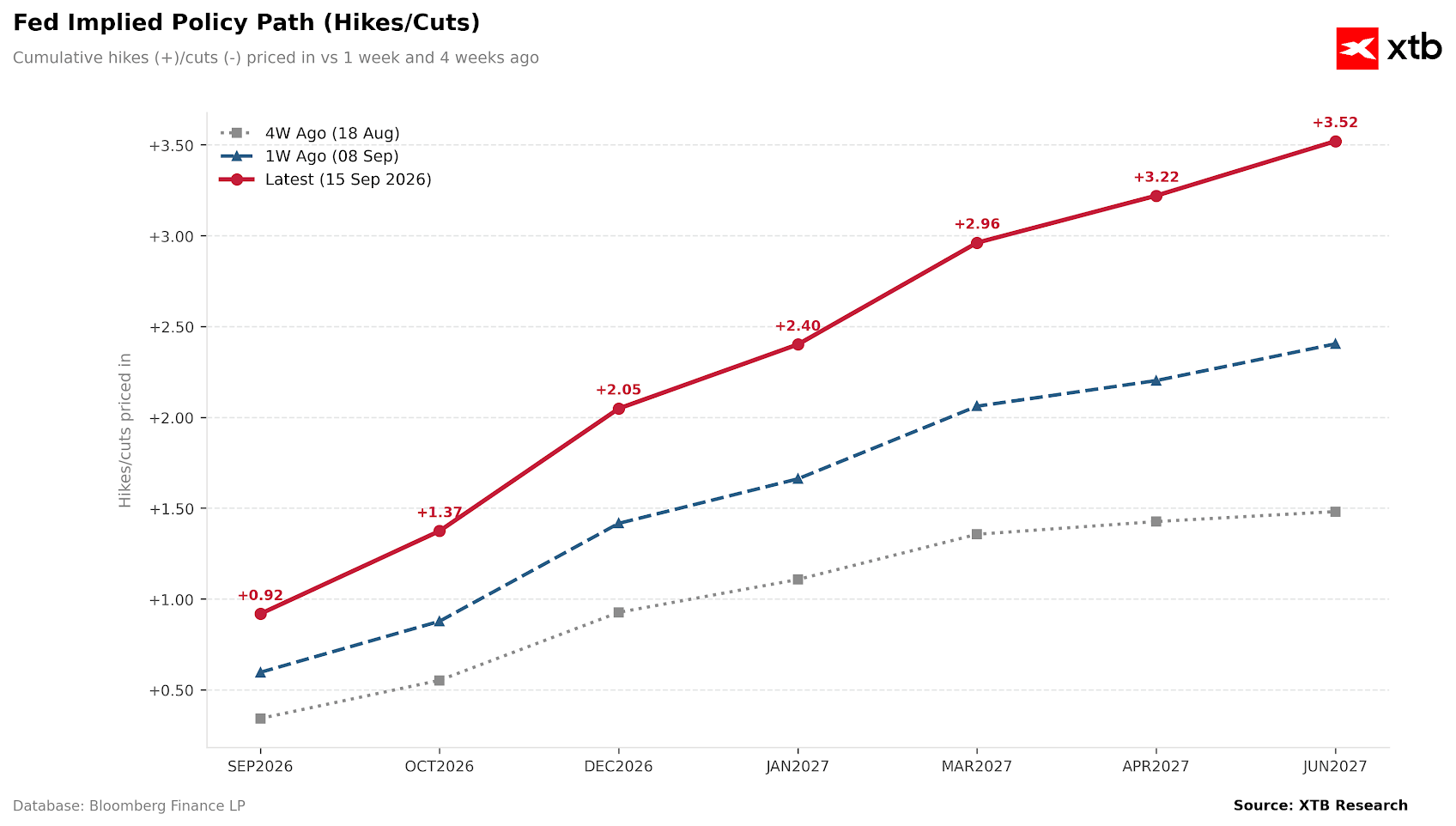
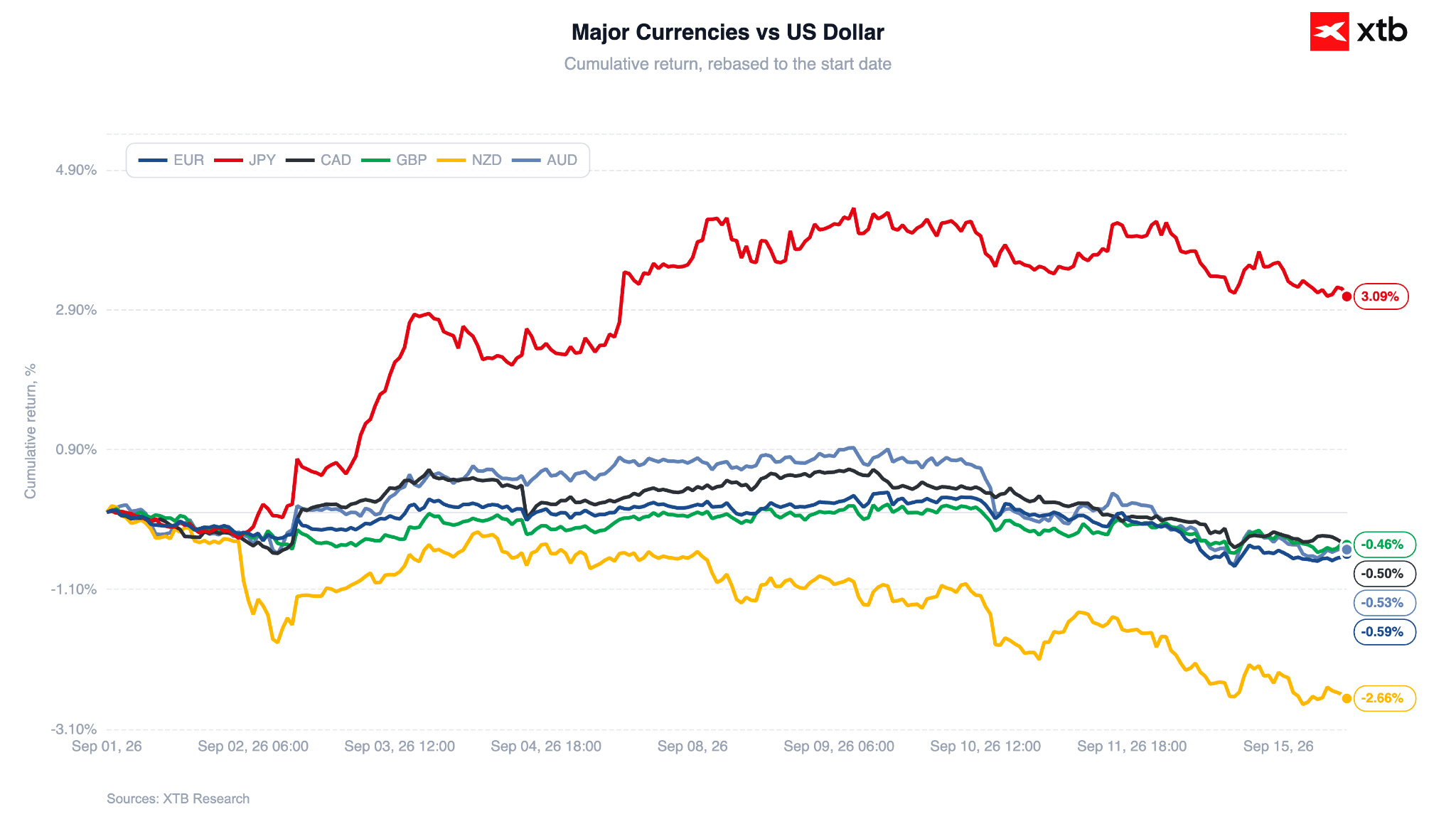
Source: XTB Research, 15.09.2026 This seems plausible. The hawkish repricing seen recently was, in our view, overly aggressive. We do not expect the market baseline scenario of four Fed rate hikes before the end of the first half of 2027 to actually materialise. A retreat in rate hike expectations would naturally not be good news for the dollar. Figure 6: Major Currency Performance Against the US Dollar (01.09.2026 – 15.09.2026)
Source: XTB Research, 15.09.2026