S&P 500 — US Large Cap Index
 FTSE 100 — UK Blue Chips
 Euro Stoxx 50 — Eurozone Leaders
 DAX 40 — German Equities
 CAC 40 — French Market Index
 Nikkei 225 — Japan Benchmark
 Hang Seng — Hong Kong Index
 Shanghai Composite — China Mainland
 ASX 200 — Australian Market
 TSX Composite — Canada Index
 Nifty 50 — India Large Cap
 STI Index — Singapore Market
 KOSPI — South Korea Index
 Bovespa — Brazil Equities
 JSE Top 40 — South Africa Index
 IPC Index — Mexico Market

Vietnam Industrial Production Surges 15% as Manufacturing, FDI and Record Trade Activity Strengthen Economic Outlook

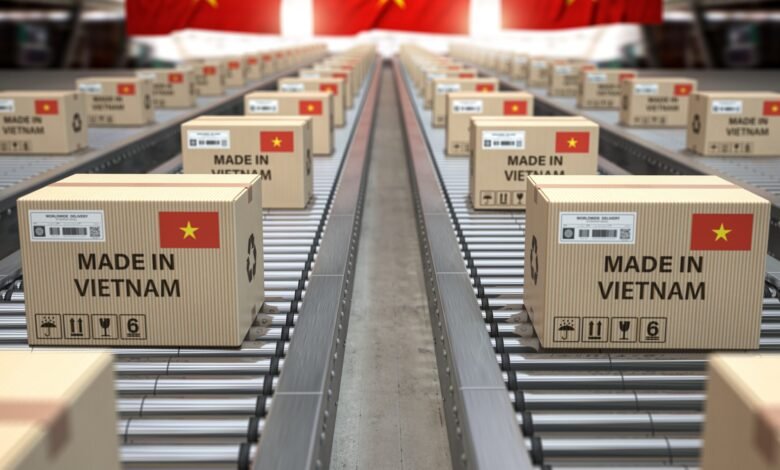
Vietnam’s economy is showing broad-based momentum, with industrial production accelerating to its strongest annual growth rate since January 2026. October’s 15% expansion reflects stronger manufacturing and electricity output, while retail sales, foreign direct investment and international trade figures point to continued strength across the wider economy.
The latest data also highlights some emerging pressures. Inflation has edged higher to a five-month peak, transport costs have accelerated sharply, and imports are growing faster than exports over the first ten months of the year.
For businesses and investors, Vietnam’s latest economic indicators reinforce its position as a major manufacturing and trade hub, while highlighting the importance of monitoring inflation, currency stability and the cost of international transactions.
Vietnam Economic Snapshot
| Indicator | October 2026 / Latest |
|---|---|
| Industrial production growth | 15.0% year-on-year |
| September industrial production growth | 14.2% |
| Monthly industrial production growth | 2.3% |
| January–October industrial production | +12.4% |
| Manufacturing and processing | +15.7% |
| Electricity production and distribution | +15.7% |
| International tourist arrivals | 1.85 million |
| Tourist arrivals growth | +7.0% year-on-year |
| Implemented FDI, January–October | $24.08 billion |
| FDI growth | +13.1% |
| Retail sales growth | +14.7% |
| October trade surplus | $7.31 billion |
| October exports | $64.67 billion |
| October imports | $57.36 billion |
| October annual inflation | 5.09% |
| Core inflation | 4.04% |
Vietnam Industrial Production Accelerates to 15%
Vietnam’s industrial production increased by 15.0% year-on-year in October 2026, accelerating from 14.2% in September and marking its strongest expansion since January.
The improvement was driven primarily by stronger activity in manufacturing and electricity production.
Processing and manufacturing output increased by 15.7%, compared with 15.1% in September. Electricity production and distribution also accelerated significantly, rising 15.7% against 10.4% in the previous month.
Within manufacturing, metal production recorded particularly strong growth, accelerating to 27.3% from 20.9%. Electrical equipment manufacturing also strengthened, with output growth increasing to 10.1% from 4.7%.
However, not all industrial sectors recorded improvements. Electronic products manufacturing growth moderated to 18.6% from 19.8%, while output growth in other transport vehicles slowed sharply to 14.2% from 28.8%.
Mining industry growth also eased to 4.9% from 6.6%, while water supply, waste management and wastewater treatment slowed to 7.8% from 10.9%.
On a monthly basis, industrial production increased by 2.3%. Across the first ten months of 2026, industrial production expanded by 12.4% compared with the same period last year.
The latest figures suggest that Vietnam’s manufacturing base continues to expand rapidly, although growth is uneven across individual industrial segments.
Foreign Direct Investment Continues to Strengthen
Foreign direct investment remains a major driver of Vietnam’s industrial and economic development.
Implemented FDI increased by 13.1% year-on-year to $24.08 billion during the first ten months of 2026.
Vietnamese investment abroad also increased substantially, reaching $3.41 billion, approximately 3.1 times the level recorded during the same period last year.
This included $1.87 billion in newly licensed projects across 132 investments and an additional $1.54 billion in adjusted capital across 34 projects.
Ho Chi Minh City remained the country’s leading FDI destination, attracting $19.1 billion during January–October. This represented 73.9% of its annual investment target, with nearly $5.7 billion in additional capital registered by existing projects.
Investment interest is increasingly focused on high technology, digital infrastructure, logistics and strategic infrastructure projects.
This investment profile is important for Vietnam’s longer-term economic outlook. Capital directed towards manufacturing capacity, infrastructure and technology can support industrial productivity, employment and export competitiveness.
Vietnam Retail Sales Growth Accelerates
Domestic consumption also strengthened in October, with retail sales increasing by 14.7% year-on-year compared with 14.1% in September.
Growth improved across several major categories.
Retail sales of goods increased by 13.7%, accelerating from 13.1% in September. Goods remained the largest contributor, accounting for 75.3% of total revenue.
Travel services recorded stronger growth of 21.8%, compared with 19.2% previously, while other services increased by 15.7%, up from 14.5%.
Accommodation and food services revenue remained strong but eased slightly, rising 19.5% compared with 19.7% in September.
On a monthly basis, total retail sales and consumer service revenue increased by 1.0%.
For January–October, total retail sales of goods and consumer services reached VND6,618.9 trillion, representing growth of 13.5% compared with the same period in 2025.
The acceleration in retail activity suggests that domestic demand remains an important contributor to Vietnam’s economic expansion alongside manufacturing and international trade.
Vietnam Records Largest-Ever Monthly Trade Surplus
Vietnam recorded a trade surplus of $7.31 billion in October 2026, compared with $2.38 billion in the same month last year.
This was the second consecutive monthly trade surplus and the largest on record.
Exports increased by 51.4% year-on-year to a record $64.67 billion, while imports surged by 43.1% to $57.36 billion.
The strong performance in both trade flows reflects continued activity across Vietnam’s manufacturing and export industries, alongside substantial demand for imported machinery and production materials.
However, the wider year-to-date picture is more complicated.
During the first ten months of 2026, Vietnam recorded a trade deficit of $12.07 billion.
Exports increased by 27.5% to $499.24 billion, while imports grew by a faster 37.4% to $511.31 billion.
Total exports and imports turnover reached $1.010 trillion, increasing by 32.3% compared with the same period last year and surpassing the $1 trillion threshold for the first time.
The United States remained Vietnam’s largest export market, while China continued to be its largest source of imports.
The difference between October’s record surplus and the cumulative year-to-date deficit highlights the importance of distinguishing monthly trade performance from the broader annual balance.
Tourism Growth Remains Positive but Slows
International tourist arrivals increased by 7.0% year-on-year to 1.85 million in October.
Although arrivals continued to rise, the pace of growth moderated considerably from 16.1% in September.
Tourism activity continues to benefit from favourable visa policies, promotional initiatives and the country’s expanding tourism offering.
Asian visitor arrivals increased by 4.6%, supported by stronger numbers from Japan, Malaysia, Taiwan and India.
- Japan: +36.5%.
- Malaysia: +11.7%.
- Taiwan: +2.9%.
- India: +4.6%.
- China: -0.2%.
- South Korea: -13.7%.
Arrivals from the United States declined by 0.6%, while Canadian visitor numbers fell by 8.1%.
Despite the slower October growth rate, cumulative international arrivals reached 19.5 million during January–October, representing an increase of 13.8% year-on-year.
Tourism therefore remains an important contributor to services activity and foreign-currency receipts, although the latest monthly figures suggest that growth momentum has moderated.
Vietnam Inflation Reaches Five-Month High
Vietnam’s annual inflation rate edged higher to 5.09% in October from 5.08% in September, marking its highest reading since May 2026.
The overall increase was marginal, but several important components recorded stronger price growth.
Transport inflation accelerated sharply to 15.57% from 11.67%, while housing and utilities inflation increased to 6.50% from 6.47%.
Price growth also strengthened in alcoholic beverages and tobacco, rising to 4.40%, and healthcare, increasing to 1.75%.
However, inflation eased across several other categories, particularly food, where annual price growth slowed to 3.58% from 4.44%.
Core inflation moved in the opposite direction to headline inflation, declining to 4.04% from 4.45%, its lowest reading since March.
Monthly consumer prices increased by 0.2%, slowing considerably from September’s 0.62% rise and recording the weakest monthly increase in three months.
The inflation picture is therefore mixed. Higher transport and housing costs are contributing to headline price pressures, while easing core inflation and slower monthly price growth provide some counterbalance.
Bullish Sentiment: Factors Supporting Vietnam’s Economic Outlook
- Industrial production accelerates: October growth reached 15.0%, the strongest annual expansion since January, supported by stronger manufacturing and electricity output.
- Manufacturing activity remains robust: Processing and manufacturing grew by 15.7%, while metal production accelerated to 27.3%.
- FDI continues to increase: Implemented foreign direct investment reached $24.08 billion during the first ten months, up 13.1% year-on-year.
- Record October trade surplus: The $7.31 billion surplus reflects exceptionally strong export activity, with shipments reaching a record $64.67 billion.
- Domestic consumption strengthens: Retail sales growth accelerated to 14.7%, while January–October sales increased by 13.5%.
- Tourism maintains positive annual growth: International arrivals reached 19.5 million during the first ten months, up 13.8% year-on-year.
- Monthly inflation moderates: Consumer prices increased by just 0.2% in October, while core inflation declined to 4.04%.
Bearish Sentiment: Risks Facing Vietnam’s Economy
- Imports are growing faster than exports year-to-date: Imports increased by 37.4% during January–October, compared with export growth of 27.5%, contributing to a cumulative trade deficit.
- Headline inflation reaches a five-month high: Annual inflation increased to 5.09%, with transport prices accelerating to 15.57%.
- Tourism growth loses momentum: October arrivals growth slowed to 7.0% from 16.1% in September.
- Industrial performance remains uneven: Growth moderated in electronic products, transport vehicles, mining and water-related services.
- Dependence on imported production inputs: Strong imports of machinery and materials support industrial expansion but also increase exposure to external supply costs and international currency movements.
- Currency and cost pressures: Higher transport and housing costs could complicate inflation management if price pressures become more persistent.
Vietnam Economic Forecast: What Markets Are Watching
Vietnam’s near-term economic outlook remains constructive, supported by strong industrial output, rising foreign investment, expanding retail activity and record monthly export performance.
The 15% increase in industrial production is particularly important because it suggests that manufacturing momentum is strengthening rather than simply maintaining its previous pace.
However, the divergence between October’s record trade surplus and the cumulative January–October deficit highlights a potential vulnerability. Imports are growing substantially faster than exports over the year-to-date period, reflecting strong demand for machinery, materials and production inputs.
Inflation will also remain an important consideration. Although monthly price growth slowed and core inflation eased, the increase in transport costs could place pressure on businesses and consumers if it persists.
For investors and businesses, the key question is whether Vietnam can sustain its industrial and export expansion while maintaining price stability and managing the cost of imported inputs.
Industrial and Investment Outlook
Vietnam’s industrial outlook continues to benefit from strong manufacturing activity and substantial investment commitments.
The acceleration in metal production and electrical equipment manufacturing suggests that industrial expansion is extending beyond traditional export categories.
FDI directed towards high technology, digital infrastructure, logistics and strategic infrastructure could provide further support for productivity and industrial capacity.
However, maintaining this momentum will depend on investment execution, infrastructure development, reliable energy supplies and access to imported production materials.
The continued expansion of electricity production and distribution is particularly relevant, with output growth accelerating to 15.7% in October.
Trade and Export Outlook
Vietnam’s international trade performance remains one of the most important indicators for the country’s economic trajectory.
October’s record exports of $64.67 billion demonstrate the strength of current external demand and manufacturing activity.
The United States remains the largest export destination, while China is the largest source of imports. This trade relationship reinforces Vietnam’s exposure to global supply chains and international demand conditions.
The cumulative trade deficit of $12.07 billion is an important consideration, however. Imports are increasing faster than exports, reflecting the substantial materials and equipment requirements of Vietnam’s expanding industrial sector.
If imported inputs continue to support higher-value manufacturing and export capacity, the current import growth could contribute to future competitiveness. The key will be whether export growth can eventually keep pace with rising import requirements.
Market Outlook for the Coming Sessions
Vietnam’s latest economic data presents a broadly positive growth picture, with industrial production, investment, consumption and October trade activity all showing considerable strength.
The strongest signal is the acceleration in industrial production to 15%, supported by manufacturing and electricity output. Record exports and rising FDI provide further evidence of continued economic expansion.
Nevertheless, investors will need to monitor the relationship between imports and exports, as well as the implications of higher transport costs for inflation and business margins.
The main developments to watch include:
- Industrial production: Whether manufacturing growth can remain near current levels.
- Foreign investment: Whether FDI continues to expand, particularly in technology and infrastructure.
- Trade balance: Whether export growth can narrow the cumulative trade deficit.
- Inflation: Whether transport and housing costs continue to place pressure on consumer prices.
- Retail demand: Whether domestic consumption maintains its double-digit annual growth.
- Tourism: Whether international arrivals regain stronger monthly momentum.
If industrial activity and exports remain strong while inflation pressures moderate, Vietnam’s economic outlook could remain favourable. However, persistent cost pressures and a widening cumulative trade imbalance could create challenges for policymakers and internationally exposed businesses.
Today Markets Analysis
Vietnam’s October economic data reinforces the strength of its manufacturing-led growth model.
Industrial production accelerated to 15%, its strongest annual increase since January, while processing and manufacturing and electricity output both recorded growth of 15.7%. Metal production was particularly strong, increasing by 27.3%.
Foreign investment is also providing an important foundation for future expansion. Implemented FDI reached $24.08 billion during the first ten months, with investment increasingly directed towards technology, logistics and strategic infrastructure.
The trade figures are equally significant. October delivered a record $7.31 billion surplus, supported by exports of $64.67 billion. However, the cumulative trade account remains in deficit, as imports have grown faster than exports during the first ten months.
Domestic demand is also improving, with retail sales growth accelerating to 14.7%. Tourism continues to expand, although October’s growth rate moderated sharply.
The main economic risk is inflation. While monthly price growth slowed to 0.2% and core inflation eased, transport inflation accelerated to 15.57%, highlighting the potential impact of higher operating and logistics costs.
Overall, Vietnam remains one of the more dynamic manufacturing and trade economies in the region. The next phase of growth will depend on sustaining industrial investment, converting production capacity into export revenue and managing the cost pressures associated with rapid expansion.
Currency Hedger View
Vietnam’s expanding manufacturing and international trade sectors create significant foreign-exchange considerations for importers, exporters, manufacturers and international investors.
Businesses importing machinery, components, metals, energy products and other production inputs may have substantial US dollar payment commitments, while their operating revenues may be received in Vietnamese dong or another currency.
Exporters face the opposite exposure when international sales are invoiced in foreign currencies but operating costs, wages and domestic expenses are paid locally.
The rapid growth in Vietnam’s imports, particularly machinery and production materials, makes currency planning an important consideration for businesses expanding their supply chains or entering longer-term procurement arrangements.
Exchange-rate movements can affect:
- The local-currency cost of imported machinery and raw materials.
- The value of export receipts when converted into operating currencies.
- Profit margins on international supply contracts.
- Cash-flow forecasts and future payment obligations.
- The financial return on investment in overseas production and infrastructure.
Currency Hedger helps businesses assess foreign-exchange exposure and explore suitable strategies for managing international payments, receipts and currency risk.
Manage your international currency exposure with Currency Hedger.
Disclaimer
This article is provided for informational and market commentary purposes only. It does not constitute investment advice, financial advice, a recommendation or an offer to buy or sell any financial instrument or currency. Foreign exchange and financial market transactions involve risk and may not be suitable for all businesses or investors. Economic data, market conditions and forecasts can change without notice. Businesses should assess their individual financial and currency exposures and seek appropriate professional advice before entering into hedging or trading transactions.