S&P 500 — US Large Cap Index
 FTSE 100 — UK Blue Chips
 Euro Stoxx 50 — Eurozone Leaders
 DAX 40 — German Equities
 CAC 40 — French Market Index
 Nikkei 225 — Japan Benchmark
 Hang Seng — Hong Kong Index
 Shanghai Composite — China Mainland
 ASX 200 — Australian Market
 TSX Composite — Canada Index
 Nifty 50 — India Large Cap
 STI Index — Singapore Market
 KOSPI — South Korea Index
 Bovespa — Brazil Equities
 JSE Top 40 — South Africa Index
 IPC Index — Mexico Market
Cashing Out – How Basel III and High Rates Triggered the Great Sell-off in Gold Prices


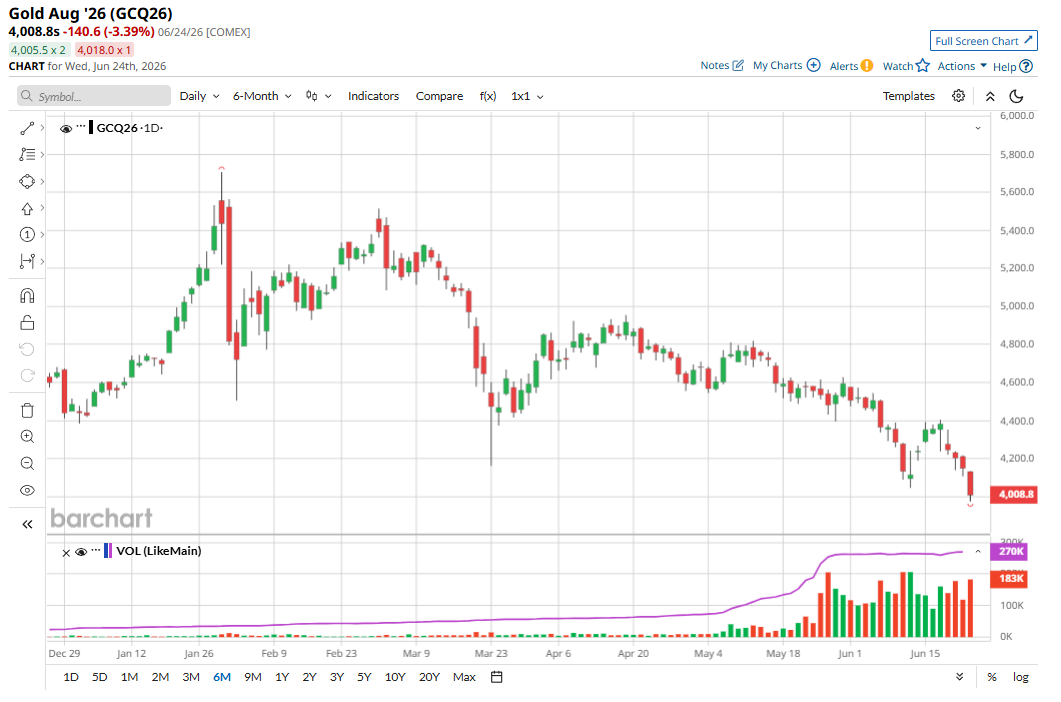
Looking at the stock market charts, investors are probably wondering why gold has been plummeting so hard recently. With the world turbulent, geopolitics stormy, and inflation not fully defeated, one would think the ultimate “safe-haven asset” should be growing or at least standing still right now. Instead, gold is diving, dragging silver, platinum, and palladium down with it.
Many may write this move off as investor panic or a strengthening dollar, but I have been watching this for a long time and have come to some very interesting conclusions. Of course, I could be wrong — financial markets are full of surprises. But dry logic and the timing of events point to an elegant mechanism at work that large banks are in no hurry to advertise. To understand what is happening, we need to look behind the scenes of the global banking system.
How Gold Became Bank ‘Cash’
To understand why gold is being sold so aggressively right now, we need to remember why it was bought so actively over the last few years.
Any bank operates by simple rules. It takes money from depositors and issues it as loans. But to ensure the bank doesn’t go bankrupt during a crisis, regulators force it to maintain a financial ”safety cushion” — a reserve requirement. Roughly speaking, out of every $100, banks are obligated to keep $10 in the safest possible place so that, in the event of a panic, they can simply hand it back to the people.
After the 2008 financial crisis, a set of new strict safety rules — the so-called Basel III standard — was implemented for banks. Between 2019 and 2023, a crucial nuance was added: Physical gold was essentially equated to cash and government bonds (Tier 1 assets).
For banks, this was a godsend. Imagine: You can keep your “safety cushion” in boring paper dollars that are slowly eaten away by inflation, or you can keep it in gold. Gold protects against inflation, appreciates in value on its own, makes the bank’s balance sheet look great, and at the same time regulators are completely satisfied. As a result, banks began to vacuum up the market, buying tons of the metal and inflating its price.
The Trap of High Interest Rates
Fast-forward to the present day. With the U.S. economy facing inflation, the Federal Reserve began fighting it. The Fed’s primary weapon against inflation is a high key interest rate. As a result of that, loans become expensive, people spend less, and prices stop rising. At least, that is what they usually tell us.
But behind the scenes, the banks started having a problem. A high rate often means an expensive dollar. Liquidity in the system became scarce, and it became hard for banks to breathe in this tight vise. Some regional banks even went bankrupt.
Accordingly, the Fed has found itself facing a difficult choice. The Fed can’t lower the rate to help the banks, because inflation would creep back up, but if they leave everything as is, banks will struggle.
The Fed and the Reserve ‘Selloff’
This is where regulators have come up with a brilliant move, punishing with one hand while pardoning with the other.
Publicly, the Fed has put on a stern face, declaring that the rate will remain high and that they are fighting inflation. But this spring, the Federal Reserve also released a massive document proposing a reduction in reserve requirements.
In other words, the Fed is quietly proposing that banks be allowed to hold a smaller safety cushion. In turn, that could allow banks to put the difference to work, potentially freeing up hundreds of billions of dollars for the banking system.
The Perfect Storm for Gold
Any such proposal from the Fed has a public comment period while the details of the law are ironed out. Exactly 90 days. Banks were waiting to see whether this festival of unprecedented generosity would be approved or not.
That 90-day period expired around June 20, 2026. Bankers have essentially gotten a green light, with reserve requirements poised to be reduced. Now, pure cold-blooded capitalism is kicking in.
Imagine being in the shoes of a major U.S. bank director right now. You no longer need to hold giant reserves of gold just to meet regulatory requirements. Furthermore, your gold has grown wildly in price over the last few years, harboring a colossal paper profit since you bought it. At the same time, gold itself is a “dead” asset — it just sits in a vault and doesn’t pay you interest, unlike dividend-paying stocks or coupon-paying bonds. Meanwhile, the Fed’s interest rate remains high.
What decision would the bank director make? Well, they would sell the gold at peak prices, locking in a huge profit and channeling those freed-up billions of dollars into commercial loans, putting the money back into circulation. With today’s high rates, sitting on gold under these conditions is simply unnecessary.
The Smart Money Is Always Ahead of the Curve
Here, an attentive reader might ask a set of absolutely fair questions. While the 90-day commentary period has passed, the Fed hasn’t officially signed the final document yet. When will this regulation actually come into effect? In the fall, or even next year? Why is gold falling right now?
This is the key detail, and it explains how big finance actually works.
In the U.S. bureaucratic machine, months can pass between the end of a public comment period and the actual implementation of a law. Physically, banks won’t have the right to hold fewer reserves for quite some time. But on Wall Street, there is an ironclad rule: Markets live in the future.
The biggest players — the “smart money” — don’t necessarily wait for an official piece of paper with a stamp. As soon as the 90-day period expired and it became clear that no one had blocked this easing project, the law moved from the “maybe” category to the “inevitability” category.
Here, the harsh mathematics of scale kicks in. A large bank cannot sell billions of dollars worth of gold in a single day. They would just crash the market to zero and earn nothing themselves. To lock in their colossal profits at a peak price, the giants have begun to act in advance, smoothly unloading their balance sheets day after day, week after week, and playing ahead of the curve. They’re getting rid of the asset before the new rules become official and a mass selloff begins.
Therefore, what we are seeing now on the charts is not the panic of ordinary investors or a random correction, but a systematic rebalancing of huge bank portfolios. Banks are simply extracting their money from gold bars. They are shifting those funds into high-yielding dollar cash, taking advantage of the fact that regulators will eventually remove the noose of strict reserve requirements.
Gold has fulfilled its function as a life preserver in hard times. Now, the system is elegantly putting it under the knife for the sake of fresh liquidity.
By Mikhail Fedorov