S&P 500 — US Large Cap Index
 FTSE 100 — UK Blue Chips
 Euro Stoxx 50 — Eurozone Leaders
 DAX 40 — German Equities
 CAC 40 — French Market Index
 Nikkei 225 — Japan Benchmark
 Hang Seng — Hong Kong Index
 Shanghai Composite — China Mainland
 ASX 200 — Australian Market
 TSX Composite — Canada Index
 Nifty 50 — India Large Cap
 STI Index — Singapore Market
 KOSPI — South Korea Index
 Bovespa — Brazil Equities
 JSE Top 40 — South Africa Index
 IPC Index — Mexico Market
Earnings CalendarMarketsOpinionStocksTechnical AnalysisWall Street

Who could surprise with earnings next week?


Next week will bring a real avalanche of extremely important earnings calls that may reveal the outlook not only for individual companies, but also for the broader market. An earnings calendar and the median forecast are not enough to prepare properly for reporting season. Price moves happen when the market is surprised (to the downside or the upside). Which companies next week have the best chance to surprise the market, and which metrics, besides revenue and EPS, could prove crucial?
Boeing
- The strongest argument for a positive surprise from Boeing is the number of deliveries, which rose in the second quarter to 171 aircraft from 143 in the first three months of the year.
- The company delivered 129 jets from the 737 family and 25 Dreamliners, clearly improving its product mix.
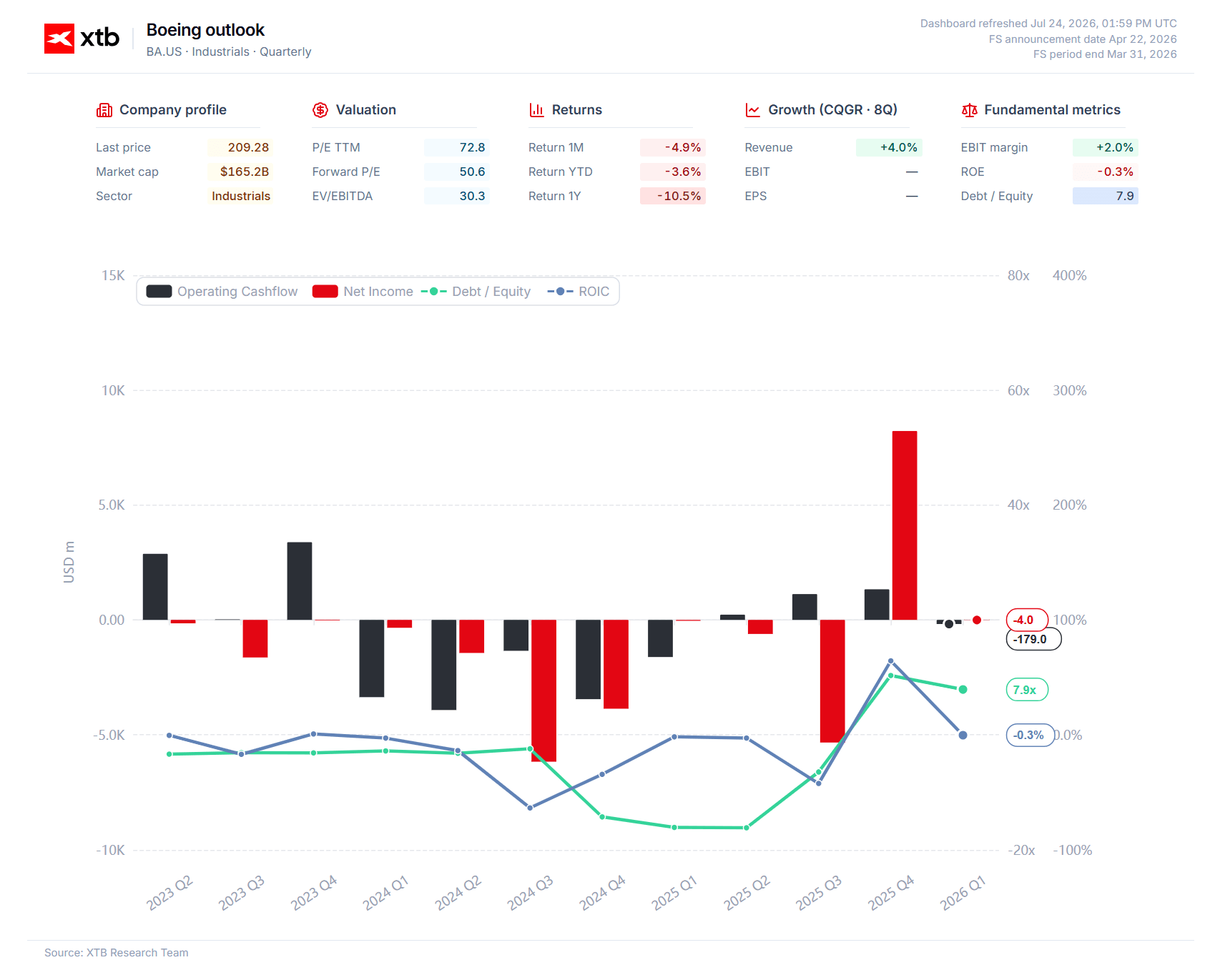
- That matters because for Boeing, more important than EPS right now are revenue from aircraft handed over to customers, inventory unwind, and cash flows.
- A positive surprise could therefore show up primarily in free cash flow. In the first quarter Boeing burned USD 1.45 billion in cash versus USD 2.29 billion a year earlier, despite more than USD 1.2 billion in capital expenditures.
- A higher number of deliveries, improvement in the defense segment, and an easy base mean the risk asymmetry is shifting in Boeing’s favor. In that light, the market may forgive weak net income if it remains soft.
Hilton
- Hilton has a chance to surprise thanks to a combination of rising revenue from existing hotels and rapid network expansion.
- In the first quarter comparable RevPAR rose 3.6%, while the number of rooms in the system increased 6.3% year over year. Even a moderate pickup in business and group travel could be enough to beat current expectations.
- The key is growth in franchise and management fee revenue. Hilton operates an asset-light model, so new openings can lift EBITDA faster than total network revenue.
Waste Management
- Waste Management could surprise positively primarily through margin quality.
- In the first quarter revenue was about USD 6.23 billion and adjusted operating EBITDA was USD 1.85 billion, implying a 29.8% margin.
- The company achieved these results despite falling volumes. The negative impact of weather and exiting some low-margin contracts was more than offset by price increases and automation.
- The biggest potential source of surprise, however, is cash flow and the integration of Stericycle. Free cash flow nearly doubled, from USD 475 million to USD 920 million.
- If WM improves margins again despite weak volumes, the market may start valuing the acquisition of medical waste operations as a source of durable growth. The quality of synergies within “HealthCare Solutions” and management’s guidance will be critical.
ARM
- Demand for its architecture is very strong, but that is exactly why the market expects near-perfect results. The risk of a negative surprise lies in costs and the ability to deliver, not in a lack of demand.
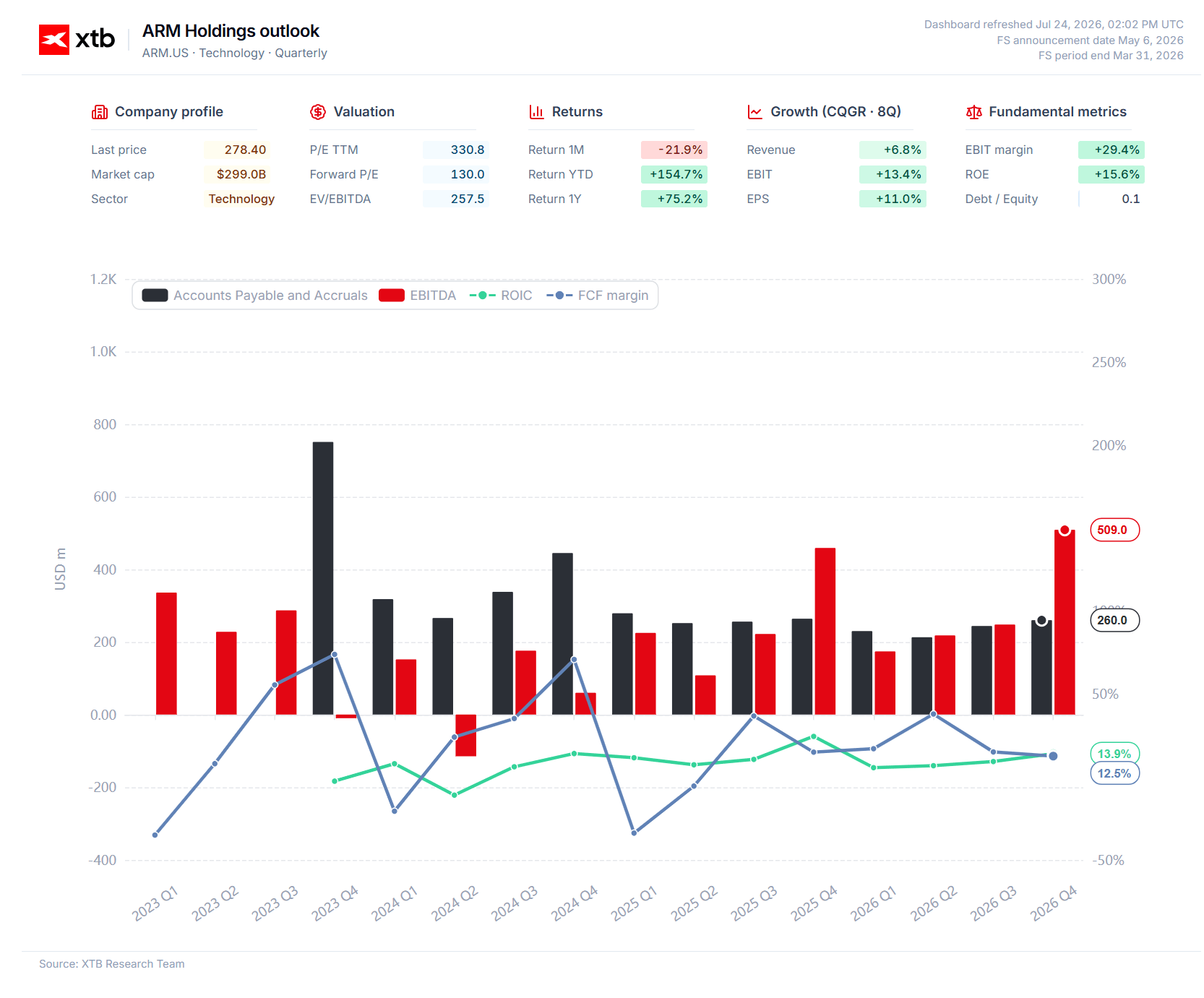
- The company ended the previous quarter with record revenue of USD 1.49 billion, and full fiscal-year revenue of USD 4.92 billion.
- For the current quarter, management is guiding revenue down to USD 1.26 billion and adjusted EPS of USD 0.40.
- Arm expects quarterly operating expenses to rise to around USD 760 million as it increases R&D spending.
- At the same time, limited component availability can push demand monetization into later periods. The market wants profits now, which may be difficult to deliver with supply chains this tight, and there is almost no margin for error.
Visa
- Visa could disappoint because the previous report set the bar extremely high. In fiscal Q2, net revenue rose 17% to USD 11.2 billion and adjusted EPS rose 20% to USD 3.31.
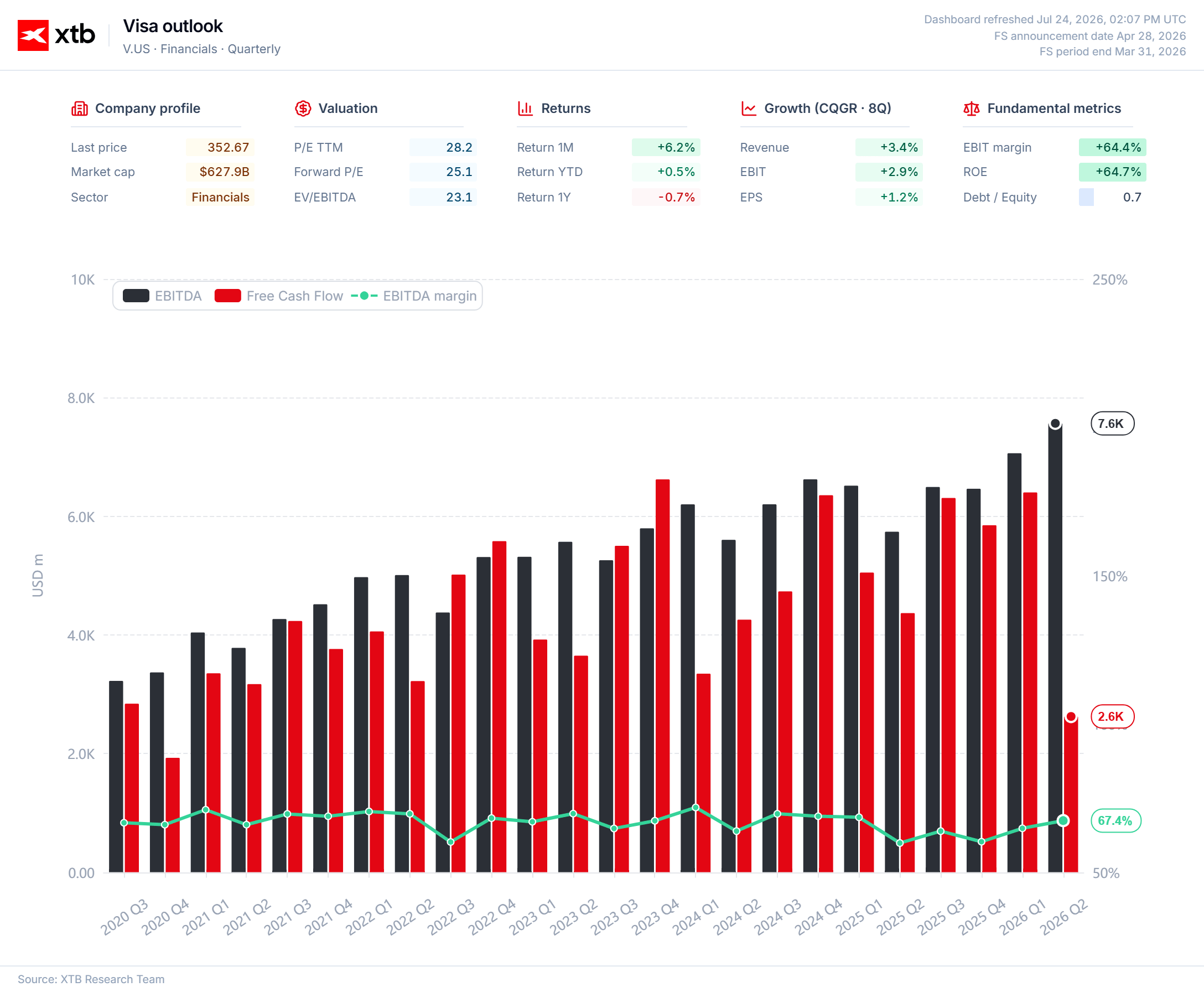
- Payment volume grew 9%. That was the company’s fastest revenue growth pace since 2022. Maintaining that pace in current conditions may prove very difficult, if not impossible. With that reference point, even solid results could be seen as a disappointment.
- Beyond growth, costs will matter as well, especially “client incentives,” which rose 14% in the previous quarter, and operating expenses up 17%. If incentives for banks and partners rise faster than volumes, revenue quality will weaken and the share price could suffer.
Apple
- Apple is also heading into earnings after an exceptionally strong quarter. The issue may be the composition of growth and the lack of a new catalyst.
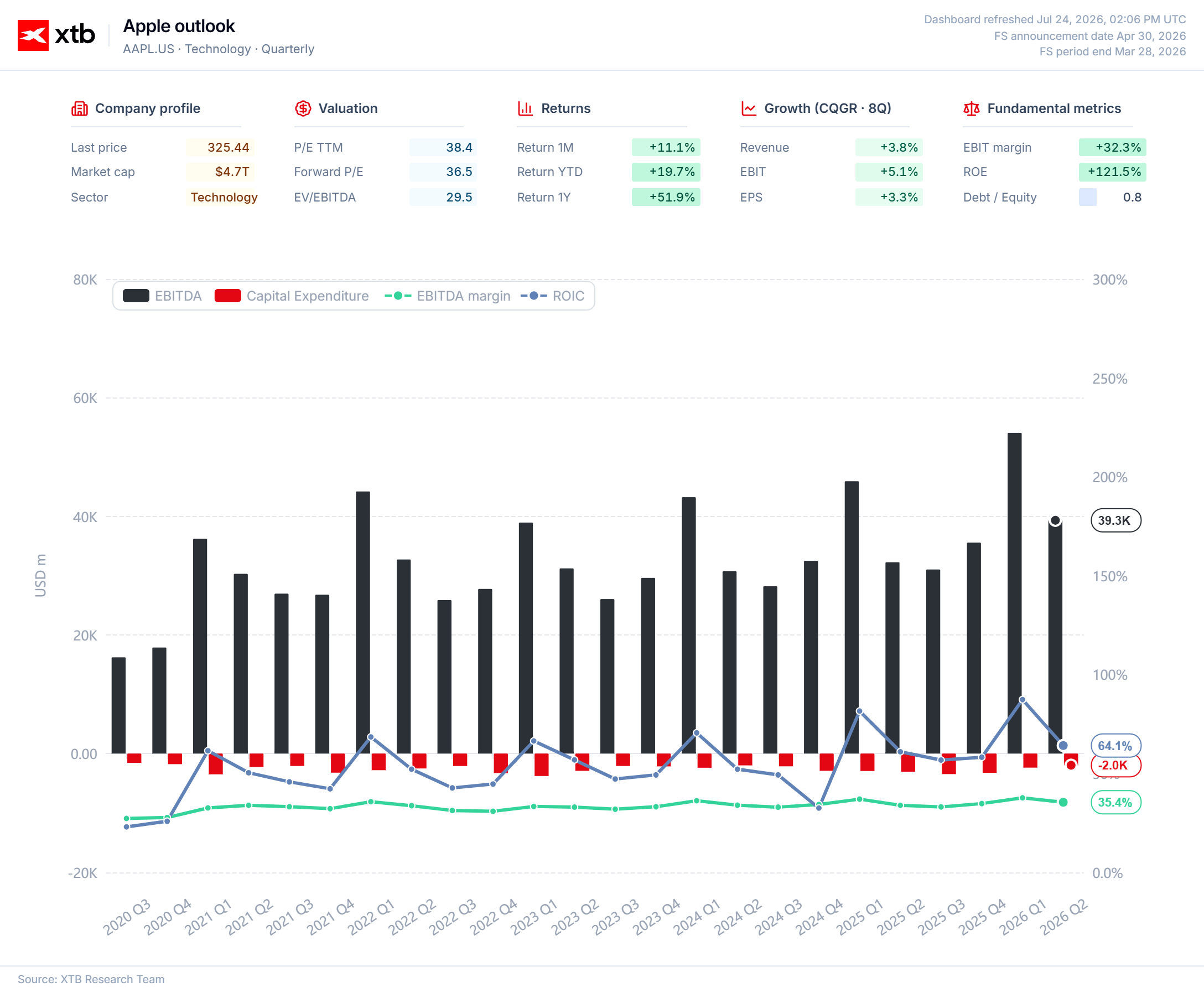
- Revenue rose 17% to USD 111.2 billion, diluted EPS rose 22% to USD 2.01, and the Services segment reached a record USD 30.98 billion in revenue. Greater China rebounded to USD 20.5 billion, and operating cash flow exceeded USD 28 billion. Repeating such broad-based growth will be difficult, especially since the market expects continued double-digit revenue growth.
- Investors will focus on Services growth and gross margin, China, and the guidance ahead of the next iPhone generation launch.
- At the same time, shareholders expect Apple to monetize new AI features without spending on a hyperscaler-like scale. On top of that comes pressure from component costs and the trade war between the US and China.