S&P 500 — US Large Cap Index
 FTSE 100 — UK Blue Chips
 Euro Stoxx 50 — Eurozone Leaders
 DAX 40 — German Equities
 CAC 40 — French Market Index
 Nikkei 225 — Japan Benchmark
 Hang Seng — Hong Kong Index
 Shanghai Composite — China Mainland
 ASX 200 — Australian Market
 TSX Composite — Canada Index
 Nifty 50 — India Large Cap
 STI Index — Singapore Market
 KOSPI — South Korea Index
 Bovespa — Brazil Equities
 JSE Top 40 — South Africa Index
 IPC Index — Mexico Market
Berkshire earnings: What do the reports say about the market’s direction?


Warren Buffett’s legendary fund, now without Warren Buffett, published its Q2 2026 results on Saturday, August 8. Expectations for the fund’s results were moderate, and although the “Oracle of Omaha” is already retired, the latest results suggest that the new management may still have trouble delivering the pace of growth and profit shareholders might expect.
Earnings
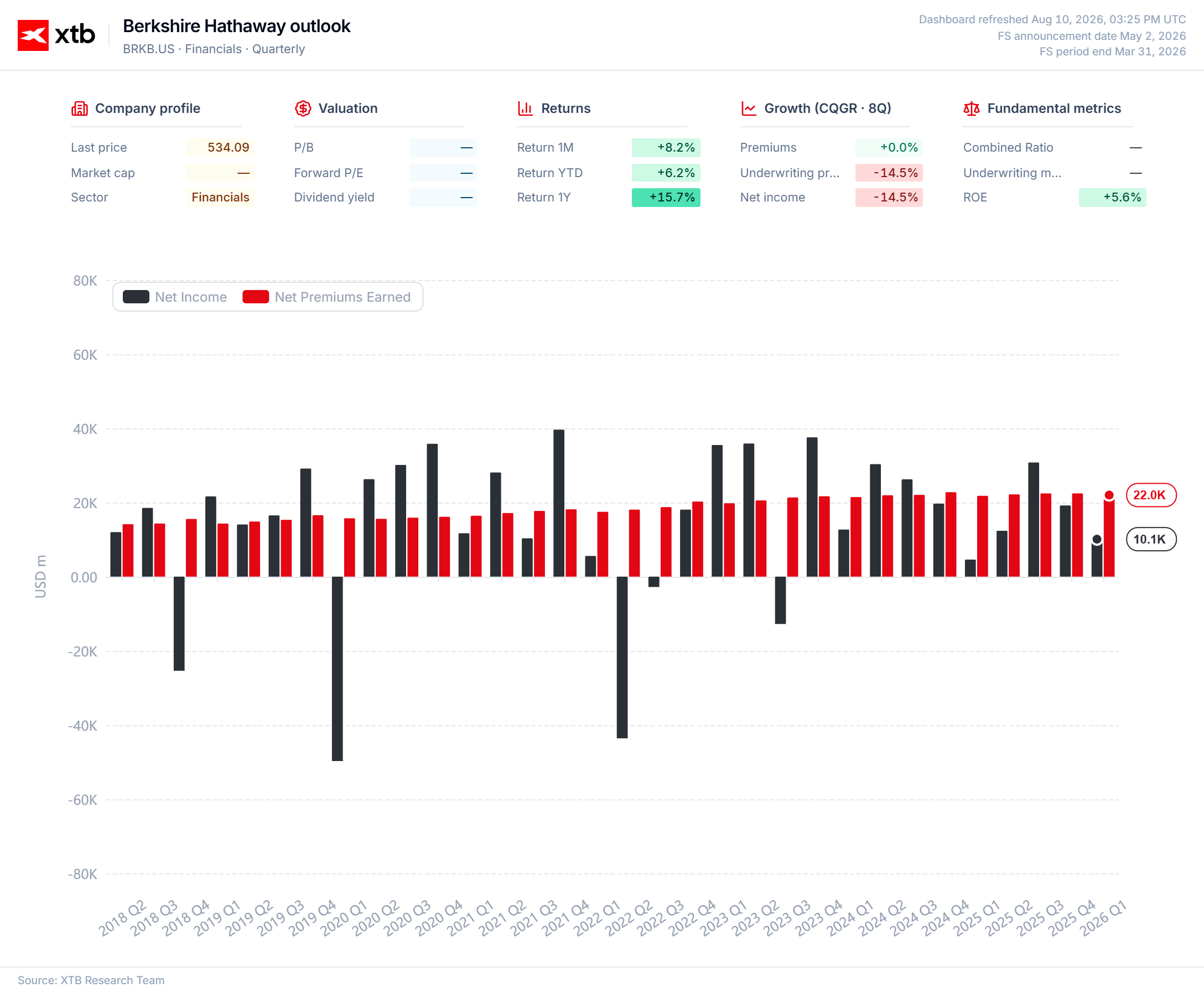
- Revenue rose to USD 101.8 billion, versus expectations of about USD 96.5 billion. This represents year-over-year growth of around 10%.
- Berkshire’s operating profit increased to USD 12.9 billion, up 16% year over year.
- Net income (GAAP) came in as high as USD 25.6 billion, which implies investment gains of USD 12.6 billion. This is an annual increase of 107% and 155%, respectively.
- This translates into EPS of USD 6, significantly above the consensus of USD 5.
However, the fund’s profit presented in this way is not a reliable reflection of the company’s situation in Q2 2026. Of Berkshire’s USD 12.9 billion profit itself:
- USD 326 million came from positive foreign-exchange differences (a year earlier, this was a loss of USD 877 million).
- Taking this dynamic into account, the real operating growth is only 5%.
Segments and industries
A segment breakdown of the holding company is more transparent.
- Insurance (underwriting) generated USD 1.7 billion in profit, down year over year, mainly due to GEICO, which is performing poorly.
- BNSF Railways delivered USD 1.56 billion, up 6%.
- Berkshire Energy and the service-and-retail segment increased by a further 27% and 24%, reaching more than USD 5 billion in profit.The energy segment is doing well mainly thanks to rising demand for the transmission of energy and goods.The service-and-retail segment, however, is not doing as well as the growth suggests, because a significant portion of the profit is a refund of previously paid tariffs.
- The energy segment is doing well mainly thanks to rising demand for the transmission of energy and goods.
- The service-and-retail segment, however, is not doing as well as the growth suggests, because a significant portion of the profit is a refund of previously paid tariffs.
Cash flows
- These results mean operating cash flow increased from USD 20.9 billion to USD 21.6 billion – up 3.2%.
- Free cash flow totaled USD 11.02 billion versus USD 11.85 billion a year ago – down 7%.
- Despite this, the new CEO announced a record share buyback worth USD 4.5 billion.
The market reaction is predictably cool. Shares at the open of the post-earnings session are hovering slightly below the previous close.
Allocation
Much more interesting for the broader market are the (still incomplete) disclosures about the company’s purchases. Purchases, because the enormous cash reserve Warren Buffett left behind (over USD 350 billion) has started to flow into the market. In Q2 2026 the fund made net purchases worth nearly USD 20 billion; this is a clear policy shift after as many as 14 consecutive quarters in which the fund was selling stocks.
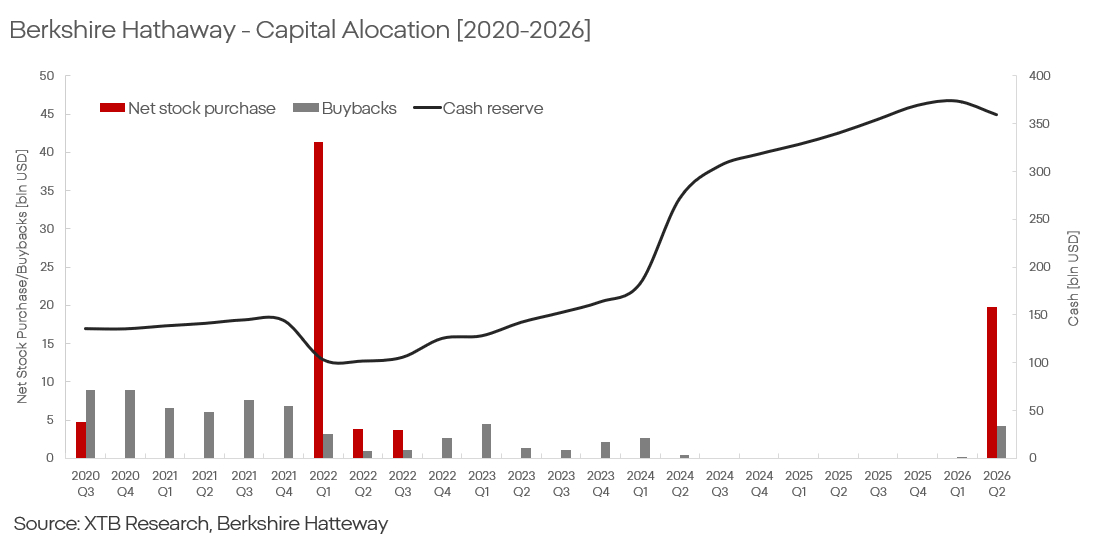
One of the fund’s most important positions is becoming Alphabet. The fund acquired additional shares in the technology company worth over USD 10 billion.
Berkshire [BRKA.US] performance vs US500 futures
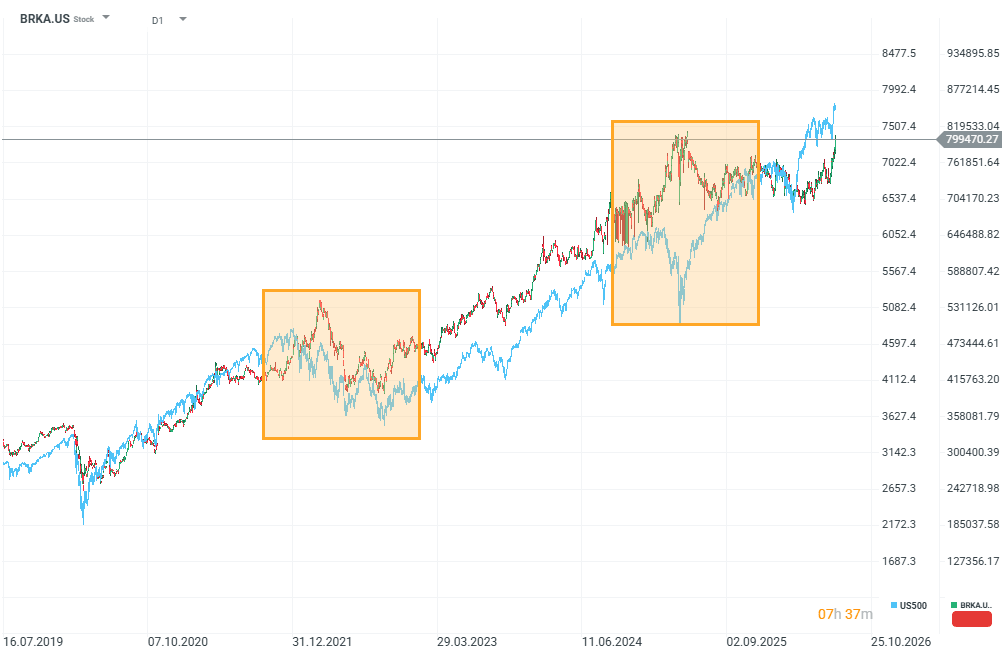
Souce: xStation5 This is a very important signal in the context of where markets are today. The fund waited as long as four years to start buying again, the last time it was buying was in 2022. It is worth remembering that from the COVID-pandemic crash to today, the fund has outperformed the broader market by about 5% on an annualized basis.