S&P 500 — US Large Cap Index
 FTSE 100 — UK Blue Chips
 Euro Stoxx 50 — Eurozone Leaders
 DAX 40 — German Equities
 CAC 40 — French Market Index
 Nikkei 225 — Japan Benchmark
 Hang Seng — Hong Kong Index
 Shanghai Composite — China Mainland
 ASX 200 — Australian Market
 TSX Composite — Canada Index
 Nifty 50 — India Large Cap
 STI Index — Singapore Market
 KOSPI — South Korea Index
 Bovespa — Brazil Equities
 JSE Top 40 — South Africa Index
 IPC Index — Mexico Market
Cocoa Prices Rebound as Ivory Coast Weather Raises 2026/27 Supply Risks

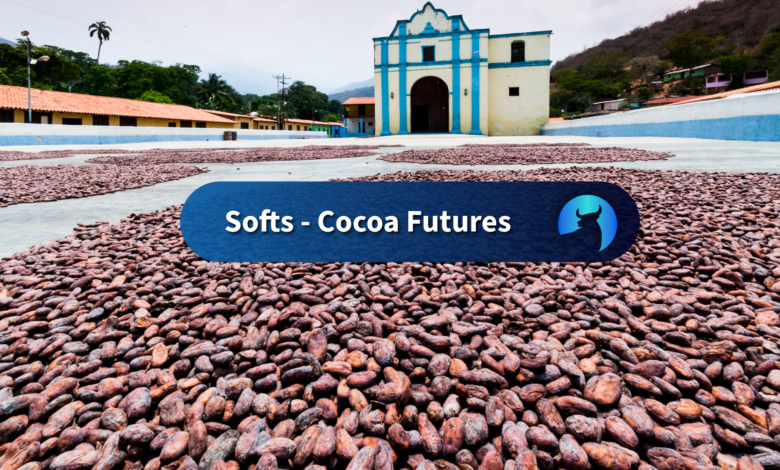
Cocoa prices are currently attempting to stabilise after a sharp correction from the highs reached around the turn of September, with renewed short covering emerging as traders assess the potential impact of drier weather on the developing 2026/27 West African crop. December ICE NY cocoa is currently trading around the recent recovery area after settling 51 points, or 0.95%, higher, while December ICE London cocoa #7 gained 37 points, or 0.93%.
The latest price action highlights the increasingly divided cocoa market. Current physical supply remains relatively strong, particularly in the Ivory Coast, while exchange inventories have risen substantially. At the same time, early assessments of the next Ivory Coast crop are raising concerns about poor pod development and below-average cherelle formation.
The key question for the market is whether improving current supply can continue to outweigh the risk of declining production during the 2026/27 season. Weather across West Africa, crop quality, inventories and global grinding data will remain central to that assessment.
Cocoa Market Snapshot
| Factor | Current Situation | Market Implication |
|---|---|---|
| NY Cocoa | Recovering from 1.75-month lows | Short-term bullish recovery |
| London Cocoa | Recovering from recent lows | Stabilising sentiment |
| Ivory Coast 2025/26 harvest | 2.06 MMT, up 30% y/y | Bearish current supply factor |
| Ivory Coast 2026/27 outlook | Early estimates around 1.8 MMT | Bullish forward supply risk |
| Ivory Coast shipments | 2.14 MMT under international calendar | Bearish current supply signal |
| New Ivory Coast marketing year deliveries | 26,000 MT in Sep. 1–13 | Potentially bullish early-season signal |
| ICE inventories | 3.435 million bags | Bearish |
| Ghana 2025/26 crop | 750,000 MT, up 25.6% | Bearish current supply factor |
| Ghana 2026/27 outlook | 450,000–650,000 MT estimates | Bullish forward factor |
| Global 2026/27 balance | Small surplus in some forecasts | Limits upside |
| West African weather | Dryness risk developing | Bullish supply risk |
| Cocoa demand | Mixed across regions | Neutral to mixed |
Current Cocoa Price Action
Cocoa prices are currently trading in a recovery phase after falling to approximately 1.75-month lows.
The recent decline followed a period of significant strength, with NY cocoa reaching an 11.75-month high on August 31 and London cocoa reaching a similar high on September 1. The market subsequently came under pressure as traders focused on evidence of strong current-season production and rising exchange inventories.
The latest rebound suggests that traders are beginning to look beyond the current crop and toward the next production cycle.
Dry-weather forecasts for the Ivory Coast are particularly important because the country is the world’s largest cocoa producer. If rainfall becomes insufficient during the early stages of the 2026/27 crop, the market could begin to price lower yields and reduced bean availability.
Short covering is also helping the recovery. After the recent decline, traders are reassessing whether downside expectations have become too aggressive given the emerging risks to next season’s production.
Ivory Coast Cocoa Supply Outlook
The Ivory Coast remains the most important supply variable in the global cocoa market.
The country’s cocoa regulator, Le Conseil du Café Cacao, reported that Ivory Coast harvested approximately 2.06 MMT between June 2025 and June 2026, an increase of 30% from 1.58 MMT a year earlier.
That substantial increase explains part of the recent pressure on cocoa prices and demonstrates that current physical supply is considerably stronger than during the previous production cycle.
However, the outlook for the next crop is considerably less comfortable.
Early field assessments indicate below-average cherelle formation and poor pod development, with preliminary estimates putting the 2026/27 Ivory Coast crop at approximately 1.8 MMT, around 18% below the estimated 2.2 MMT produced during 2025/26.
This creates a significant contrast between the current and forward markets.
Current production remains strong, while the developing crop is showing signs that supply could decline substantially during the next season.
Ivory Coast Cocoa Shipments
Shipment data also needs to be interpreted carefully because the Ivory Coast has changed its marketing-year calendar.
Bloomberg reported that cumulative Ivory Coast shipments reached approximately 2.14 MMT during the international cocoa marketing year from October 1, 2025 through September 13, 2026, up 18% from the comparable period.
That figure reinforces the picture of strong current supply.
However, the Ivory Coast has moved its domestic marketing year forward to September 1. Reuters reported that deliveries during September 1–13 were approximately 26,000 MT, down 45.8% from the comparable period under the previous calendar.
The difference between the two reporting systems is important. Traders should avoid treating the shipment figures as directly contradictory. They reflect different marketing-year reference periods.
Looking ahead, the pace of new-crop arrivals will provide an important indication of whether the current strong supply trend is continuing into the new season.
Cocoa Inventories
Rising exchange inventories remain one of the clearest bearish factors for cocoa.
ICE cocoa stocks reached a two-year high of 3,436,742 bags on September 4 and remained close to that level at approximately 3,435,088 bags.
Higher inventories indicate that physical cocoa is readily available for delivery against futures contracts.
This reduces the immediate scarcity premium that previously supported prices and provides fundamental resistance to sustained rallies.
The market will therefore need to see either declining inventories or evidence of deteriorating production before the supply situation can be considered structurally tighter.
West African Crop Conditions
Weather and disease remain important risks for the next crop.
Cloudy conditions and limited sunshine in the Ivory Coast and Ghana have allowed black pod disease to spread, potentially reducing both cocoa bean quality and usable production.
The impact of disease is particularly important because cocoa prices respond not only to total tonnage but also to the quality and availability of exportable beans.
The next stage of the crop cycle will therefore be closely watched for evidence of improving weather, disease containment or further deterioration.
Ghana Cocoa Production Outlook
Ghana is the world’s second-largest cocoa producer and represents another important source of forward supply risk.
Ghana’s Cocoa Board has estimated the 2026/27 crop at approximately 650,000 MT, down 13% from 750,000 MT in 2025/26.
COCOBOD has provided an even wider potential range, forecasting 2026/27 production between 450,000 and 550,000 MT, citing swollen shoot disease, aging farms and potential adverse weather associated with El Niño.
The contrast with the current season is substantial.
Ghana reported that 750,000 MT had been harvested during 2025/26, up 25.6% from 597,000 MT in 2024/25.
The market is therefore entering a period in which strong current production could coexist with significantly lower forward production expectations.
Global Cocoa Balance
The global cocoa balance is becoming tighter, but forecasts still point toward a relatively small surplus rather than an immediate structural deficit.
StoneX has reduced its 2026/27 global cocoa surplus forecast to just 25,000 MT, down from 149,000 MT previously, citing the potential impact of El Niño on West African production.
Transgraph Consulting has forecast the 2026/27 global surplus at approximately 80,000 MT, down sharply from 415,000 MT in 2025/26. The consultancy expects global production to decline from approximately 5.11 MMT to 4.87 MMT.
These projections indicate that the market could move considerably closer to balance.
However, the relatively small projected surplus means even modest production losses could materially alter the supply-demand equation.
El Niño and Future Weather Risks
Weather remains one of the most important medium-term cocoa variables.
The US Climate Prediction Center has previously indicated that the El Niño pattern emerging across the equatorial Pacific could become one of the strongest in more than seven decades.
An El Niño pattern can produce warmer and drier conditions across parts of West Africa, reducing soil moisture and increasing stress on cocoa trees.
For the coming crop cycle, the key issue is whether the weather pattern becomes sufficiently persistent to affect pod development, bean size and overall yields.
If dry conditions intensify during critical growing periods, the current forecasts for lower Ivory Coast and Ghana production could prove conservative.
Cocoa Demand Outlook
Demand remains mixed across the major processing regions.
European cocoa grindings fell 4.6% year over year to 316,366 MT in Q2, according to the European Cocoa Association. This was a larger decline than the 1.5% decrease expected and represented the lowest Q2 grinding level in six years.
That remains a significant bearish demand signal.
North American demand provided a contrasting picture. The National Confectioners Association reported that Q2 North American cocoa grindings increased 7.7% year over year to 109,659 MT, significantly outperforming expectations for a 1% decline.
Asian demand was even stronger, with the Cocoa Association of Asia reporting a 25% year-over-year increase to 224,646 MT during Q2.
The global demand picture is therefore not uniformly weak. Europe remains under pressure, while North America and Asia are showing considerably stronger processing activity.
Bullish Sentiment
1. Ivory Coast’s 2026/27 crop could decline sharply
Early crop assessments point toward poor pod development and below-average cherelle formation, with preliminary production estimates around 1.8 MMT.
2. Dry weather could stress West African cocoa
Forecast dryness in the Ivory Coast could reduce soil moisture and affect developing pods during the next production cycle.
3. Ghana production forecasts are falling
Estimates for Ghana’s 2026/27 crop range from approximately 450,000 to 650,000 MT, well below the 750,000 MT achieved in 2025/26.
4. Black pod disease remains a crop-quality risk
Cloudy conditions and limited sunshine are allowing black pod disease to spread in parts of the Ivory Coast and Ghana.
5. Global surplus forecasts have been sharply reduced
StoneX now sees only a 25,000 MT global surplus for 2026/27, while Transgraph expects an 80,000 MT surplus.
6. Asian cocoa demand is accelerating
Asian Q2 grindings increased 25% year over year, providing an important offset to weaker European processing.
7. Short covering is supporting prices
The recent decline has created conditions for traders to cover bearish positions when weather risks re-enter the market.
Bearish Sentiment
1. Ivory Coast current production is strong
The 2025/26 harvest reached 2.06 MMT, up 30% from the previous season.
2. Ivory Coast shipments remain elevated
Cumulative shipments under the international marketing-year calendar were approximately 2.14 MMT, up 18% year over year.
3. ICE inventories remain near two-year highs
Stocks around 3.435 million bags indicate substantial available supply against futures contracts.
4. The global market is still forecast to show a surplus
Even the tighter forecasts from StoneX and Transgraph continue to show a surplus for 2026/27 rather than a deficit.
5. European cocoa demand remains weak
European Q2 grindings fell 4.6% year over year and reached their lowest Q2 level in six years.
6. Ghana’s current crop is strong
The 2025/26 Ghana harvest reached 750,000 MT, up 25.6% from the previous season.
7. Barry Callebaut sees the market as well supplied
The world’s largest cocoa processor said in September that global cocoa supply is currently sufficient to manage risks more effectively than during the 2023/24 El Niño episode.
Cocoa Price Forecast: What Traders Are Watching
The key question for cocoa prices is whether the market will continue to price the strong current supply picture or increasingly focus on the possibility of a materially smaller 2026/27 West African crop.
The recent rebound suggests that weather risk is becoming increasingly important.
A sustained move higher would require more evidence that dry weather, disease and weak pod formation are translating into lower production. Conversely, continued strong arrivals from the Ivory Coast combined with elevated ICE inventories could keep rallies under pressure.
The current balance is therefore highly sensitive to new crop information.
Supply Outlook
The supply outlook is shifting from relatively comfortable current availability toward greater uncertainty for the next season.
The Ivory Coast’s strong 2025/26 harvest provides immediate bearish pressure, but early evidence from the 2026/27 crop suggests that production could fall sharply.
Ghana faces similar risks, with disease, aging farms and weather uncertainty threatening production.
The next major supply catalyst is likely to be confirmation of the actual condition of the Ivory Coast main crop as harvesting develops.
Demand Outlook
Demand remains mixed rather than uniformly weak.
Europe is showing significant pressure, while North America and Asia are reporting stronger grinding activity.
This divergence means that global demand cannot currently be characterised by a single trend. Future cocoa consumption will depend partly on chocolate demand, processor margins and how consumers respond to elevated cocoa costs.
A continued recovery in Asian and North American grinding would provide an important counterweight to weak European demand.
Market Outlook for the Coming Sessions
For the coming sessions, cocoa prices are likely to remain sensitive to Ivory Coast weather, new-crop arrivals, Ghana production expectations, ICE inventories and global grinding data.
The market is currently caught between strong physical availability and increasingly concerning forward crop conditions.
If dry weather becomes more persistent and early crop assessments continue to point toward poor pod development, traders could increasingly price a smaller 2026/27 crop.
If new-crop arrivals remain strong and exchange inventories continue to hold near two-year highs, however, the market could struggle to sustain a larger recovery.
The next major catalyst is likely to be fresh evidence regarding Ivory Coast crop conditions and the pace of early-season deliveries.
Currency Hedger View
Currency Hedger views the cocoa market through both the commodity and foreign-exchange channels.
For cocoa processors, traders and international businesses, changes in the US dollar and West African currencies can alter the effective cost of physical cocoa even when ICE futures prices remain relatively stable.
The interaction between cocoa prices, USD movements and international payment costs therefore remains important for businesses with significant cross-border commodity exposure.
Managing the currency component of cocoa transactions can help businesses reduce the impact of exchange-rate volatility while they remain exposed to changing global cocoa prices.
Analysis Louis Roche Today Markets
Cocoa is currently at an important point between a strong current supply picture and a potentially tighter 2026/27 production outlook.
The market has already shown how quickly sentiment can change when traders move from focusing on current inventories and strong Ivory Coast production to assessing future weather and crop risks.
The immediate bearish factors remain significant. Ivory Coast production has been strong, shipments have increased and ICE inventories are near two-year highs. European grinding activity also remains weak.
However, the forward picture is becoming less comfortable. Early Ivory Coast crop assessments indicate poor pod development, Ghana faces substantial production risks, black pod disease remains a concern and weather forecasts could introduce additional stress across West Africa.
The balance between these factors is likely to determine whether the recent recovery develops into a broader trend or remains a short-covering move.
For the coming market period, Ivory Coast weather and crop development should remain at the centre of cocoa analysis, while ICE inventories and global grinding data will provide the clearest evidence of whether the physical market is tightening or remaining well supplied.
Louis Roche
Today Markets