S&P 500 — US Large Cap Index
 FTSE 100 — UK Blue Chips
 Euro Stoxx 50 — Eurozone Leaders
 DAX 40 — German Equities
 CAC 40 — French Market Index
 Nikkei 225 — Japan Benchmark
 Hang Seng — Hong Kong Index
 Shanghai Composite — China Mainland
 ASX 200 — Australian Market
 TSX Composite — Canada Index
 Nifty 50 — India Large Cap
 STI Index — Singapore Market
 KOSPI — South Korea Index
 Bovespa — Brazil Equities
 JSE Top 40 — South Africa Index
 IPC Index — Mexico Market
Oil price higher, as no deal in sight for Iran and US


Key takeaways
- Investor enthusiasm mixed at start of the week
- Unclear when Strait of Hormuz will reopen
- ECB officials boost chances of a June rate hike to 90%
- Uber makes EUR 11BN offer for Delivery Hero, as M&A makes a comeback
- Ferrari goes flat, as EV monster fails to excite investors
Risk sentiment is mixed on Tuesday, the oil price is 2% higher, but Brent crude remains below $100 per barrel, European stocks are mostly lower, but the FTSE 100 is eking out a gain as it plays catch up after being closed on Monday. US stock index futures are pointing to a higher open later today. Markets are digesting mixed messages coming out of the White House regarding the war in Iran. Over the weekend, hopes were high that a deal between the US and Iran could be agreed in the short term. This caused a 6% decline in the price of oil on Monday, and a broad rally in stock and bonds.
Mixed messages on Iran peace deal
However, investor enthusiasm has partly shifted on Tuesday. The US launched fresh ‘defensive strikes’ against Iran, however, Iranian officials remain in Doha for peace talks to end the war. Hopes are fading for an imminent end to the conflict; however, markets want to believe that the war will end soon. This is why stocks remain elevated, and US indices remain close to record highs. The problem for investors is that the alternative, a prolonged war with no sign of the Strait of Hormuz reopening, could trigger long term economic damage to the global economy. The world cannot keep running down oil inventories, at some point, Middle East oil will be required to sustain economic growth, even if the global economy has been resilient so far. If we reach this point, this is when stock market will react, until then we could see a further grind higher in US stocks, with European and Asian indices more vulnerable to moves in the oil price.
Strait of Hormuz remains virtually closed for another week
Some parts of the stock market seems happy to swallow whatever the US administration says about peace deals, for now. Marco Rubio said that it will take days to reach a deal. Media in Asia have reported that the US and Iran are close to agreeing a reopening of the Strait of Hormuz. However, that would only happen 30 days after an initial peace deal has been agreed. During the 30 days, Iran would clear the Strait of mines, and after that would cease collecting transit fees from tankers traversing the water way. This sounds like a neat solution, and one that could keep market sentiment buoyant; however, it’s the peace deal that is the sticking point, and at some stage investor patience will run out. Bond yields rose marginally on Tuesday, after falling sharply at the end of last week. Global sovereign bonds have been volatile in recent days, especially in the UK, and we expect to see periods where yields fall back as geopolitical risks subside. However, the bigger picture remains that the ongoing war poses significant fiscal and inflation risks, and these are likely to remain sustained in the coming weeks. The UK 10-year yield is back below 5%, as the fall in the oil price, and signs that a new Labour PM will stick with the fiscal rules, are ameliorating a jittery debt market. The 10-year Gilt yield is currently trading at 4.86%, down from a peak of 5.17% in mid-May.
ECB set to hike rates next month
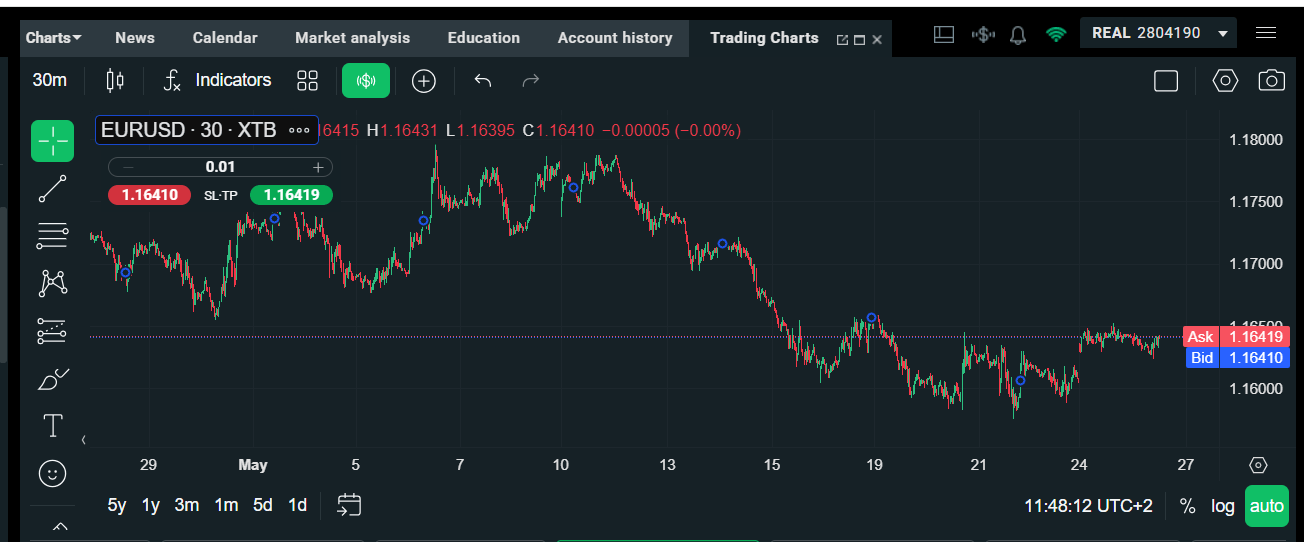
Commodity disruptions are likely to take months to resolve, and this is becoming an issue for the ECB. German ECB member Isabel Schnabel, saif on Tuesday that she would vote to raise interest rates in June, even if there is a deal to end the war in Iran. Her reasoning is that the war has been far longer than expected, and higher energy prices are spilling over into the broader Eurozone economy. The market expects the ECB to hike rates twice this year, after spending a year on hold. The central bank debated a hike last month, and currently there is a 90% chance of a hike at next month’s ECB meeting. The prospect of a rate hike has not boosted the euro, which is lower by 0.3% vs. the USD in the past month, and is down more than 1% in the past 3 months. The bigger driver of FX right now is the war in the Middle East, and demand for dollars. However, the prospect of a hawkish ECB that stands firm in the face of inflation, especially if there is no deal to end the war by next month’s meeting, could trigger a reversal. If EUR/USD can break through $1.1650, this opens the door to further gains, back towards $1.18 in the longer term.
Chart 1: EUR/USD
Source: XTB
Uber makes offer for Delivery Hero
There are a few things to watch this week, including US inflation data on Thursday, and some M&A news on the other side of the Atlantic. Uber has made an indicative offer for Delivery Hero, the German food delivery company. Its stock price surged 10% on the news, although there could be several antitrust hurdles to get over before the deal could get over the line. Uber’s offer values the company at just over EUR 11bn, and it already owns just under 20% of the company. The stock price is modestly higher on Tuesday, but we may need to see further progress on the deal before Delivery Hero gets anywhere near its pandemic high.
Ferrari’s EV dreams fall flat with investors
Ferrari is dominating the headlines for all the wrong reasons on Tuesday. The launch of its first fully electric vehicle has fallen flat with investors, and its share price is down 6% so far this morning. The share price is down nearly 9% YTD, and the path of least resistance is for further losses for performance car makers in 2026. The question is, for EUR 550,000 base, are customers willing to spend that on an EV when its performance is an unknown commodity, and its key market, the Middle East, remains mired in the US/ Iran war? For now, it is hard to see how Ferrari can boost its share price, and we don’t see today’s decline as a spring board for a recovery.