S&P 500 — US Large Cap Index
 FTSE 100 — UK Blue Chips
 Euro Stoxx 50 — Eurozone Leaders
 DAX 40 — German Equities
 CAC 40 — French Market Index
 Nikkei 225 — Japan Benchmark
 Hang Seng — Hong Kong Index
 Shanghai Composite — China Mainland
 ASX 200 — Australian Market
 TSX Composite — Canada Index
 Nifty 50 — India Large Cap
 STI Index — Singapore Market
 KOSPI — South Korea Index
 Bovespa — Brazil Equities
 JSE Top 40 — South Africa Index
 IPC Index — Mexico Market

Key takeaways
- UK Borrowing costs surge to highest level since 2008
- Could there be a new, worse, Liz Truss moment for the UK?
- Political turmoil hits at a bad time as oil prices rise once more
- The pound also weakens, and there is room for further downside
- Global risk takes a knock as Iran/ US ceasefire at risk
- US CPI in focus, as inflation threat rises
Will it be 5 years 5 PMs for the UK? The political risk premium is rising for UK bonds and the pound on Tuesday, as last week’s local election for Labour looks like it will be fatal for the prime minister. Pressure is building in the UK bond market, and the 10-year Gilt yield is higher by 10bps this morning. The bond market is reacting not only to Starmer’s potential departure, but also to who his successor could be, and to the prospect of a drawn-out leadership battle that leads to more fiscal promises that the UK cannot afford. A harder swing to the big spending left of the party is a major fiscal risk. Raynor and Burnham have already been open about their desire to remove the PM, however, Wes Streeting is the latest to reportedly make a move against the PM and launch his own leadership campaign. Looking ahead, a leadership race between the left and ‘right’ of the Labour party could make for a volatile summer for UK Gilts and the pound. Already, the UK’s 10-year Gilt yield is at its highest level since 2008, well above the peak reached when Liz Truss was premier.
The risk is that this Labour government takes the UK to another level of fiscal stress that is worse than 2022. The political turmoil in the UK has hit at a bad time for the bond market. Oil prices are rising again, and global bond markets are pricing in inflation risks. There is an upward bias for bond yields anyway, and the UK yields are facing a double whammy of an energy price spike and a political crisis. The risk is that we get a bond market meltdown in the UK in the coming days. If that happens, will it quiet the factions of the Labour party who have threatened to ignore the bond market, ditch fiscal rules and boost public spending even more? In the past, Rachel Reeves has been seen as vital to the stability of the UK’s bond market because she introduced the ‘iron clad fiscal rules’ to bring down the UK’s debt levels and finance day-to-day spending with tax take. If this is a drawn-out leadership battle, or if Starmer lays out a timetable to leave in the coming months, both Starmer and Reeves will be seen as lame ducks who have no control over the public purse.
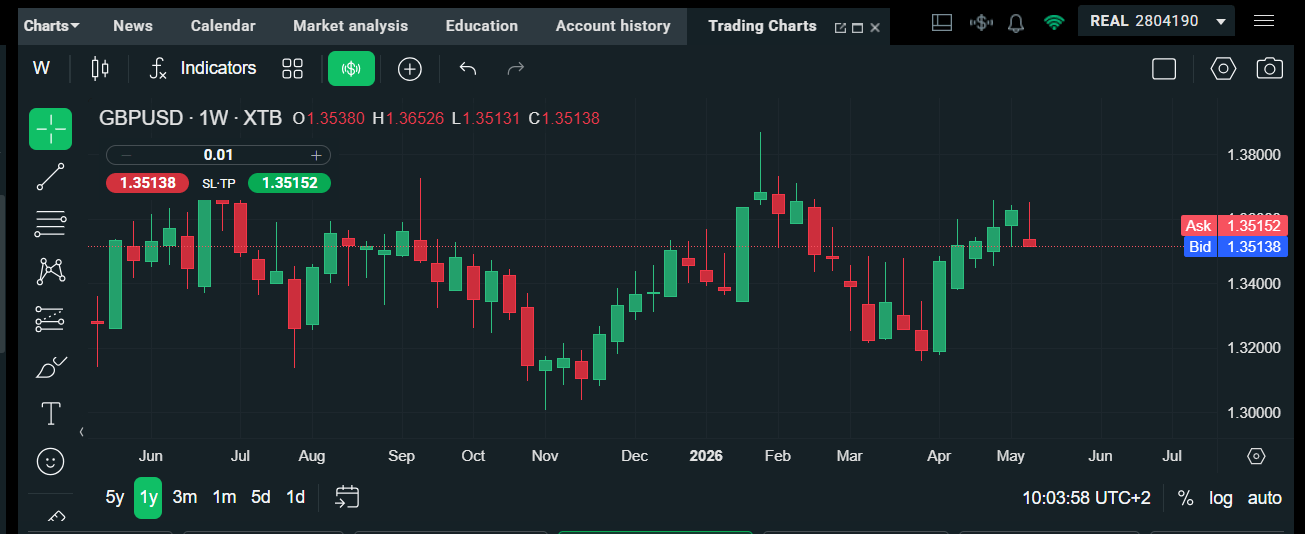
This would be a bad position for the UK to find itself in, especially since our last election was less than 2 years ago. Right now, it’s hard to see how the bond market can stabilize, and there could be further downside ahead. The pound is also suffering today, and it is the weakest currency in the G10 FX space. GBP/USD has lost nearly 0.5% in the past week, as political issues have finally worn down the pound. The currency has been resilient versus the dollar in recent months, the pound index is higher by 1.2% on a broad basis. This means that there is room for pound selling as political risks rise, and there could be more downside to come. Already GBP/USD has lost the $1.36 handle and is hurtling towards $1.35. Elsewhere, geopolitical risks are also rising and hurting overall risk sentiment. Brent crude futures are higher by nearly 2% today and are trading above $106 per barrel.
This has weighed heavily on European equities, which are sharply lower this morning. Hopes for an Iran/ US peace deal are fading fast, after President Trump called Iran’s demands ‘garbage’ and suggested that the ceasefire, which has been in place since April 7th is hanging by a thread. There are other cracks starting to appear that could threaten the recent strong run for risky assets, especially US stocks. Tech stocks like Alphabet, Amazon, Broadcom and Microsoft all fell on Monday. Nvidia’s share price was higher at the start of the week, as the market focused on the US/ China summit that is scheduled to take place on Wednesday.
Although chip deals are not expected to be on the agenda, President Trump has said the focus is aerospace, agriculture and energy exports, there could be hope that a closer US/ China relationship will be good for business. However, if the mega cap tech stocks start to falter, this could lead to questions about the future of the AI trade, and the sustainability of the recent rally to record highs for US indices. Without these big hitters pulling heir weight, further gains are unlikely. Overall, the focus will be on the UK today.
There is a cabinet meeting later this morning, which is seen as being make or break, and the market will be extremely reactive to all news out of Westminster. When bond yields rise at the same time as the pound falls, that is a clear signal of fiscal stress. Right now, it is hard to see how the market can stabilize when the PM’s own party are trying to oust him. US inflation is also in focus later today, and the market expects an increase to 3.7% YoY for CPI, up from 3.3% in March, as energy prices continue to bite.
Chart 1: GBP/USD in decline