S&P 500 — US Large Cap Index
 FTSE 100 — UK Blue Chips
 Euro Stoxx 50 — Eurozone Leaders
 DAX 40 — German Equities
 CAC 40 — French Market Index
 Nikkei 225 — Japan Benchmark
 Hang Seng — Hong Kong Index
 Shanghai Composite — China Mainland
 ASX 200 — Australian Market
 TSX Composite — Canada Index
 Nifty 50 — India Large Cap
 STI Index — Singapore Market
 KOSPI — South Korea Index
 Bovespa — Brazil Equities
 JSE Top 40 — South Africa Index
 IPC Index — Mexico Market

Non-Farm Payrolls preview: how strong is the US labour market? The US labour market data for April will be released on Friday at 1330 BST. The market is expecting a reading of 62k for last month, however, that would be considered a disappointment in our view, and leading up to the release the market seems to be positioning for a strong report that is more in line with March’s figure of 178k. The unemployment rate is expected to remain steady at 4.3%, and wage growth is expected to rise to 3.8% YoY, up from 3.5%.
US labour market resilience expected
The data leading up to this report suggests that the labour market is strengthening in the US. Initial jobless claims were 200k for last week, below expectations. The 4-week average is now 203k, which is an historically low level. Continuing claims also fell, which suggests that the US economy is resilient in the face of an energy price shock and several major tech firms announcing layoffs, including Meta and Coinbase, as they transition to using more AI in their workflows.
Where are the jobs getting created?
If there is a stronger reading for NFP on Friday, then investors will be scrutinize where the jobs have been created. Is the professional service sector defying the AI threat, or are there only low paid jobs being created by the US economy? So far in 2026, the sector that has created the most jobs has been healthcare. This is consistent across every month so far this year, and it has been driven by the needs of an aging population. While the jobs numbers have been more resilient than some expected, there are still concerns. If you strip out jobs linked to caring for the elderly, then job growth in other sectors has been anemic. Analysts will want to see if healthcare and education continue to be the main providers of US jobs as we move into Q2.
There is concern that the underlying picture for the US labour market is weak. We do not believe that it is near recession levels, but we do see cracks appearing. The Challenger Jobs Cuts data for April was 83,387, a rise of 38% compared with March, and the third highest monthly reading since 2009. Technology companies continue to lead other industries in job cutting, and the risk is that the pace picks up in the coming months. Aside from NFP’s, the other data point to watch will be wage growth. Wages slipped YoY in March to their lowest level in 5 years at 3.5%. However, they are expected to rise back to 3.8% YoY for last month. This may add to concerns about second-round inflation pressures from the energy price spike and the Iran war. However, in real terms, wage growth is barely positive. If wage growth rose to a 3.8% annual rate for last month, adjusted for inflation, which was 3.3% in March, it would mean wage growth is a mere 0.5%, which is unlikely to cause the Fed too much concern at this stage.
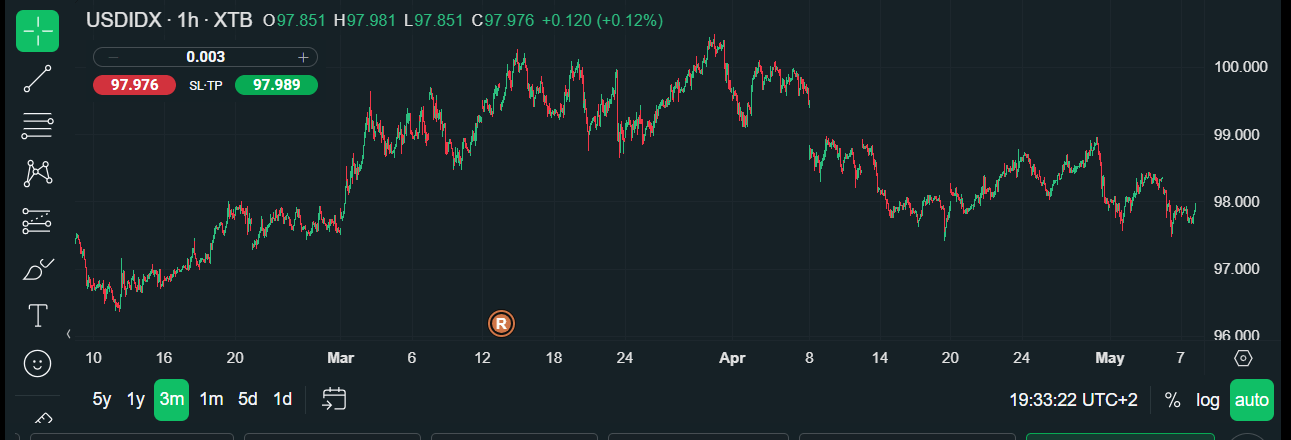
What’s next for the dollar The reaction in financial markets will depend on both the strength of the NFP number, and the prospect for a wage-price spiral that may impact on the future of Fed policy. Traditionally, the dollar is more positively correlated to the NFP report compared to stocks. A weak payrolls report could weigh on the dollar, while a strong payrolls report can push up US yields and drag the dollar with it. Since the market appears to be expecting a stronger reading for payrolls, the risk is a rebound for the dollar on Friday.
The dollar has been falling into this payrolls report and is the weakest currency in the G10 this week. It has also been in decline over the past month, as dollar longs placed during the peak of the Iran/ US war were unwound. While the path of least resistance is for a weaker dollar, it would need a catalyst like a stronger than expected payrolls report to give the greenback a boost. We believe that it will take a much weaker than expected NFP reading to boost hopes for a Fed rate cut this year, currently there are no rate cuts expected for 2026, with a 20% chance of a rate hike by year end. Today’s labour market report could be a test to see if inflation is starting to build in the US economy. Strong payrolls and strong wage growth could lead to fears about price pressure in the US. This may weigh on stocks, which have retreated from record highs in the last 24 hours.
Chart 1: The dollar index
Source: XTB