S&P 500 — US Large Cap Index
 FTSE 100 — UK Blue Chips
 Euro Stoxx 50 — Eurozone Leaders
 DAX 40 — German Equities
 CAC 40 — French Market Index
 Nikkei 225 — Japan Benchmark
 Hang Seng — Hong Kong Index
 Shanghai Composite — China Mainland
 ASX 200 — Australian Market
 TSX Composite — Canada Index
 Nifty 50 — India Large Cap
 STI Index — Singapore Market
 KOSPI — South Korea Index
 Bovespa — Brazil Equities
 JSE Top 40 — South Africa Index
 IPC Index — Mexico Market

Key takeaways
- Oil prices rise as more strikes across Middle East
- No sign that deal negotiations have stopped
- Momentum remains on the upside, for now
- Instinct to buy the dip remains strong
- US PCE data could add to pressure for Fed to ditch easing bias
- Are we heading to a summer correction for stocks?
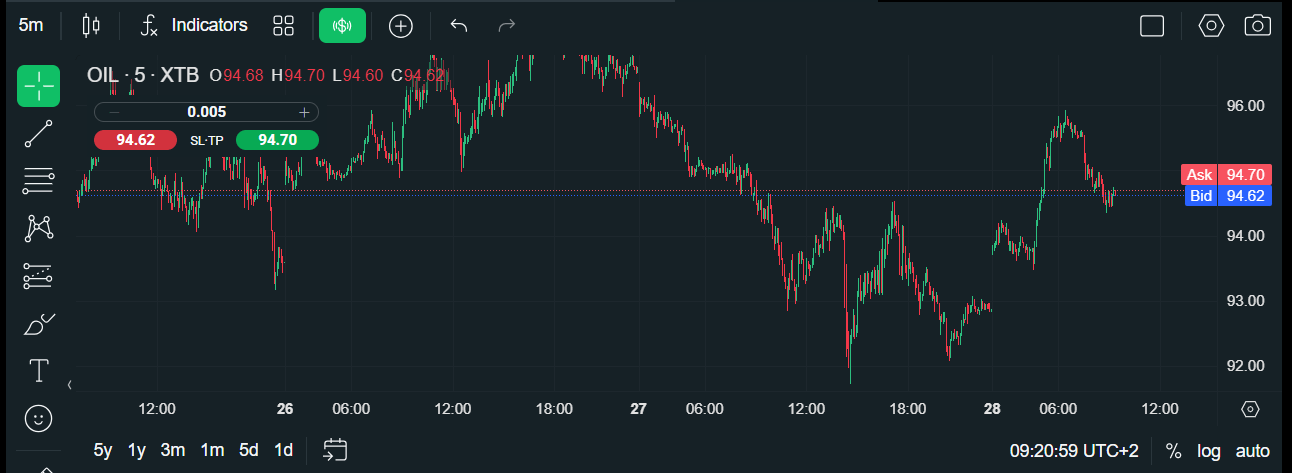
The narrative has shifted for financial markets in the last 12 hours, after Iran launched an attack on a US airbase in Kuwait, and the US carried out strikes against Iran. These events have led to fears that the ceasefire is in jeopardy, and have dashed hopes for an imminent peace deal that reopens the Strait of Hormuz. The oil price is higher by 3% this morning and is testing the $95 per barrel level for Brent crude, European indices are lower at the open and US futures also suggest that it could be another subdued session for US stocks as the AI-linked rally takes a breather.
Still hope that a deal can be reached
At this stage, there is no sign that negotiations to agree a deal have stopped, and the fact that the oil price is still below $100 per barrel for Brent is a sign that the market continues to think that an agreement to end the deal and reopen the Strait of Hormuz is more likely than not. In any delicate negotiation, narratives can shift quickly and we could see periodic escalations of the conflict as both sides try to extract concessions from the other. Thus, although stocks and bonds are experiencing a mild selloff on Thursday, the latest developments in the Middle East are not causing a rout. Oil prices and the dollar are rising, which is helping the FTSE 100 to eke out a small gain, and the dollar is at a one-week high, but it remains well below the peaks it reached earlier in the war. The US stock market rally has paused, and the tech sector had a mild sell-off on Wednesday, but overall, momentum remains on the upside.
3-month anniversary of the start of the war
Today’s move coincides with the 3-month anniversary of the outbreak of the war and is a keen reminder that the conflict has been ongoing for longer than expected. Even if there is a deal in the coming days, it is unlikely to stop central banks from hiking interest rates as an insurance against rising prices. Elevated oil prices make it extremely likely that the ECB will hike rates next month, before pausing over the summer to see how Middle East tensions play out.
More data supports Fed ditching easing bias
Today’s economic data could also take the Federal Reserve one step closer to dropping their easing bias. The PCE data for April, the Fed’s preferred measure of inflation, is released later today. Core PCE is expected to increase to 3.3% from 3.2% last month, headline PCE is expected to surge to 3.8% from 3.5% in March. A rise in the PCE rate is expected after the CPI rate surged to 3.8% for April. This is well above the Fed’s 2% inflation target, and it should justify a shift in the Fed’s stance from dovish to neutral/hawkish. Today’s data could derail the stock market rally, particularly in the US and parts of Asia like South Korea, as it reminds the market that the war in the Middle East is causing real economic damage through higher interest rates. We could see yields pop higher later today, after a strong rally in global sovereign bonds over the last month.
Will the market continue to buy the dip?
While risk sentiment has gone south since Wednesday, the market’s instinct to buy the dip so far this year is incredibly strong. However, there is a growing chorus questioning the sustainability of the rally, especially in AI-linked chip stocks, which are not immune to demand destruction caused by the energy price spike. Weakening market breadth, with only a few names benefitting from the recent rally, including Nvidia and Micron, is a major concern, as is frothy valuations for some tech companies. For example, Micron, which saw its valuation surge to $1 trillion this week, has a price to earnings ratio of 42 times earnings.
Is a summer sell off coming?
Chip stocks and semiconductors are in a boom cycle, but a bust cycle usually follows. Bank of America is warning of a summer correction for these reasons, with diverging momentum between tech and the rest of the market making it hard for indices to sustain a rally in the coming months. Deal or no deal in the Middle East might not protect the stock market.
Chart 1: Brent crude oil price
Source: XTB